About Avery Clark, MD

Attending Physician
Boston Medical Center

SAEM Clinical Images Series: First a Splash and then a Rash
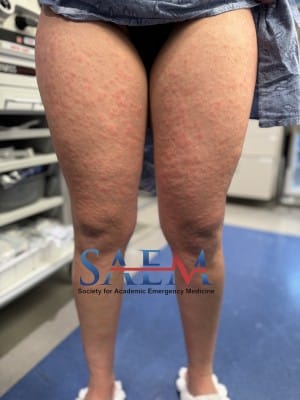
rash

The patient is a 25-year-old female with no significant past medical history who presents to the Emergency Department with a pruritic rash. She reported three days of progressive pruritus with an associated diffuse rash extending from the lower extremities to the proximal upper extremities with involvement of the chest and back. She denies fevers, chills, difficulty breathing, nausea, vomiting, or history of similar rash. She has no history of dermatologic or immunologic conditions. She has had no new exposures to new soaps or chemicals. She has no known allergies, is up to date on all vaccinations, and has not traveled in the last year other than a day trip to an indoor water park three days ago.
Vitals: Normal

General: No acute distress but uncomfortable from itching.
HEENT: Oropharynx clear without edema, erythema, or mucosal lesions.
Respiratory: Clear to auscultation bilaterally.
Skin: Key findings as shown in the image provided. There is a diffuse papular rash extending from the bilateral distal lower extremities up to level of the sternum with uniform involvement of the abdomen, chest, back, and upper extremities. Negative Nikolsky’s sign. No involvement of the head, neck, palms of the hands, or soles of the feet.

Pseudomonas aeruginosa folliculitis (“Hot Tub folliculitis”)

This patient presented with a history and exam classic for Pseudomonas aeruginosa folliculitis, or “hot tub” folliculitis. The primary risk factor for this condition is exposure to contaminated water, typically via public swimming pools or hot tubs with inadequate chlorine levels. Longer durations of exposure, female gender, and underlying skin trauma are additional risk factors. The infection is associated with a tender and pruritic rash which begins as papules and can progress to papulopustular or nodular lesions. The rash may develop on any body part that is exposed to the contaminated water. Symptoms classically begin within 8 to 48 hours of the initial exposure, however can develop up to five days later. A subset of patients may develop systemic symptoms of malaise and fever. Most cases are self-limited, resolving without treatment in one to two weeks. However, patients with significant cutaneous involvement or discomfort, systemic symptoms, or immunocompromised state should be treated empirically with an oral fluoroquinolone. Symptomatic

Take-Home Points

  • In patients presenting with follicular rashes, be sure to ask about public pool or hot tube exposures.
  • Hot tub folliculitis is a pseudomonas infection and can be treated with oral fluroquinolones.

1. Centers for Disease Control and Prevention (CDC). Pseudomonas dermatitis/folliculitis associated with pools and hot tubs–Colorado and Maine, 1999-2000. MMWR Morb Mortal Wkly Rep. 2000;49(48):1087-1091.

2. Tate D, Mawer S, Newton A. Outbreak of Pseudomonas aeruginosa folliculitis associated with a swimming pool inflatable. Epidemiol Infect. 2003;130(2):187-192. doi:10.1017/s0950268802008245

3. Jacob JS, Tschen J. Hot Tub-Associated Pseudomonas Folliculitis: A Case Report and Review of Host Risk Factors. Cureus. 2020;12(9):e10623. Published 2020 Sep 23. doi:10.7759/cureus.10623

4. Silverman AR, Nieland ML. Hot tub dermatitis: a familial outbreak of Pseudomonas folliculitis. J Am Acad Dermatol. 1983;8(2):153-156. doi:10.1016/s0190-9622(83)70017-4

5. Luelmo-Aguilar J, Santandreu MS. Folliculitis: recognition and management. Am J Clin Dermatol. 2004;5(5):301-310. doi:10.2165/00128071-200405050-00003

By |2025-10-27T08:34:29-07:00Oct 24, 2025|Dermatology, SAEM Clinical Images|

SAEM Clinical Images Series: Didn’t See That Coming

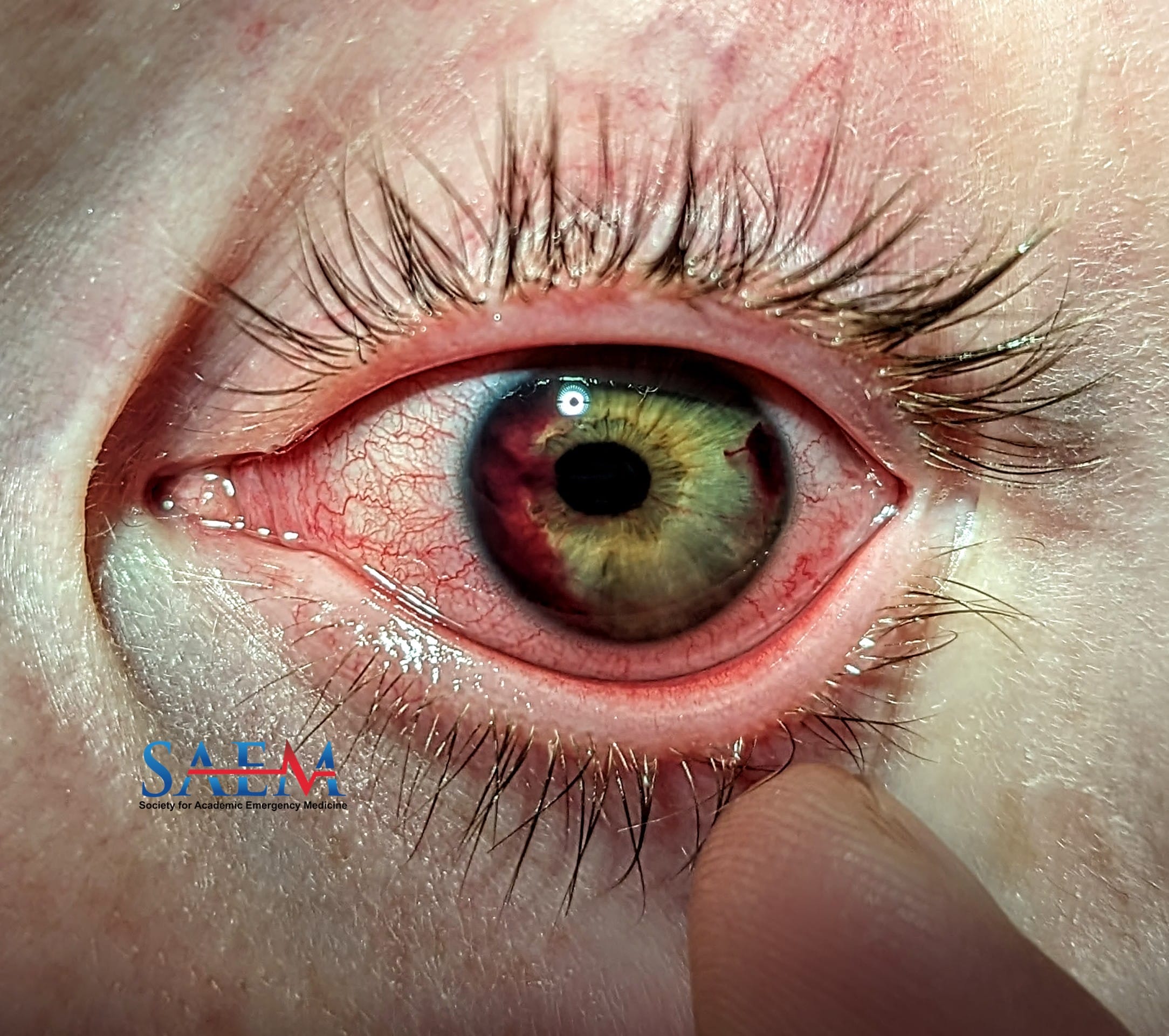
hyphema

A 23-year-old healthy male presented to the emergency department with left eye pain, soreness, and blurry vision after being hit in the left eye with a Nerf gun bullet two days prior. He had no prior ophthalmologic history and does not wear corrective lenses.

Left eye: Visual acuity 20/30. Intraocular Pressure 17. Pupil 3mm, irregular, minimally reactive. Slit lamp exam revealing 3+ RBCs, vertical layering of blood along the nasal aspect.

Vertical hyphema

Blunt trauma induces shearing forces upon the vasculature of the ciliary body and iris, resulting in the accumulation of red blood cells (RBCs) in the anterior chamber. This space normally contains only clear, aqueous humor. RBCs slowly settle to the bottom of the anterior chamber in a gravity-dependent manner. Classically this develops in a horizontal pattern, but patients who subsequently sleep on their side may experience vertical hyphema formation. Although trauma is the most common etiology, hyphema can occur due to any hematologic abnormality. It is a frequent complication of sickle cell disease. As in all cases of ocular trauma, globe rupture must be immediately ruled out before proceeding with a comprehensive ophthalmologic examination.

The patient had a Grade I hyphema.

Grade 0: No visible layering, but red blood cells within the anterior chamber (microhyphema)

Grade I: Layered blood occupying less than one-third of the anterior chamber

Grade II: Blood filling one-third to one-half of the anterior chamber

Grade III: Layered blood filling one-half to less than total of the anterior chamber

Grade IV: Total filling of the anterior chamber with blood (also known as 8-ball hyphema)

Take-Home Points

  • A hyphema is a collection of blood in the anterior chamber of the eye.
  • Before measuring intraocular pressure, remember to inspect the anterior ocular anatomy with consideration for globe rupture. If this is not excluded, avoid tonometry as it can cause extrusion of aqueous humor and further damage to the globe.
  • Blunt trauma is the most common cause of hyphema. However, non-traumatic hyphema should prompt investigation for hematologic disorders such as Sickle cell disease.

  • Brandt MT, Haug RH. Traumatic hyphema: a comprehensive review. J Oral Maxillofac Surg. 2001 Dec;59(12):1462-70. doi: 10.1053/joms.2001.28284. PMID: 11732035.
  • Gragg J, Blair K, Baker MB. Hyphema. 2022 Dec 26. In: StatPearls [Internet]. Treasure Island (FL): StatPearls Publishing; 2024 Jan–. PMID: 29939579.

By |2024-09-28T21:19:11-07:00Sep 30, 2024|Ophthalmology, SAEM Clinical Images|

SAEM Clinical Images Series: Below the Chin, Badness Lies Within

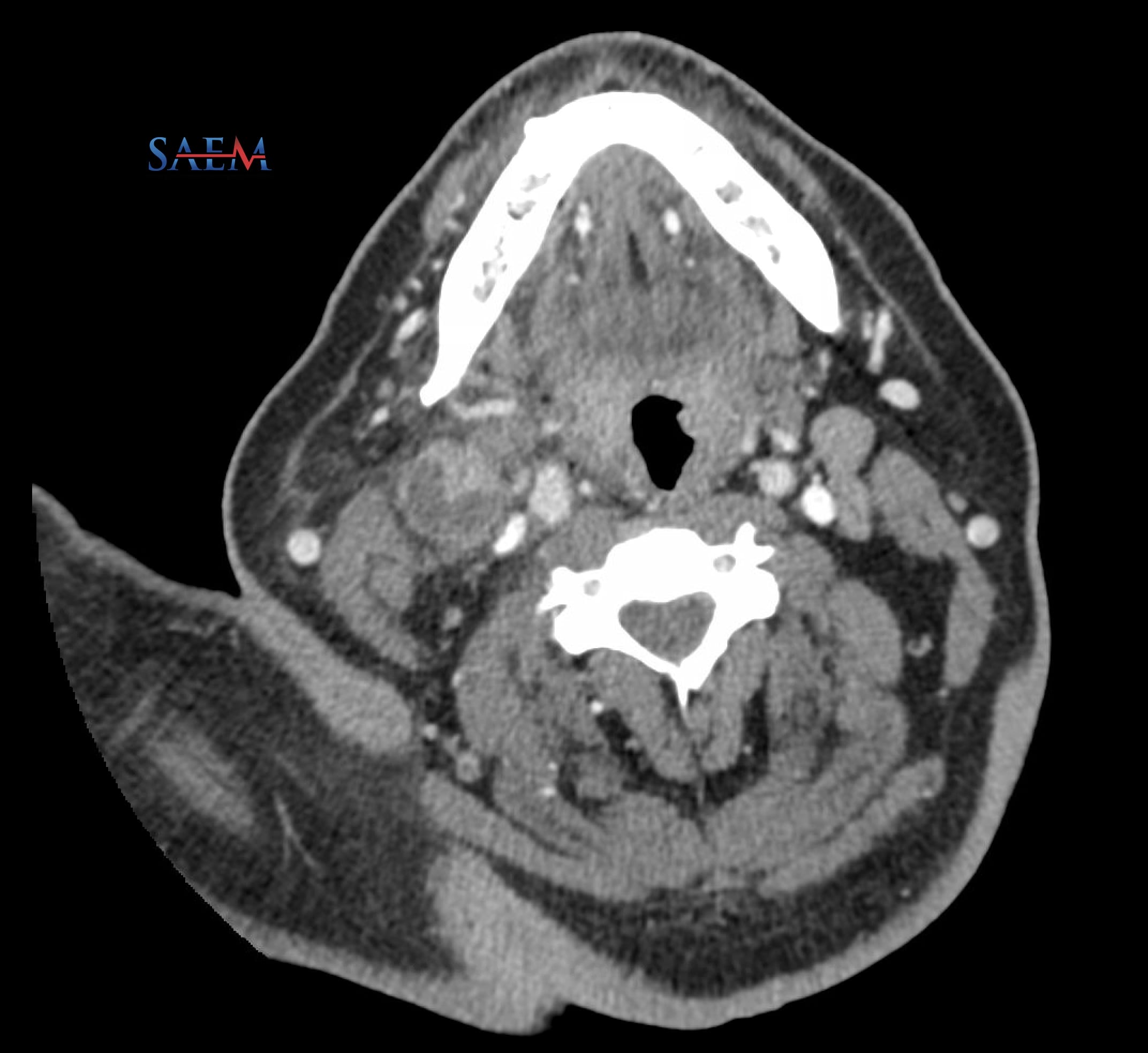
neck swelling

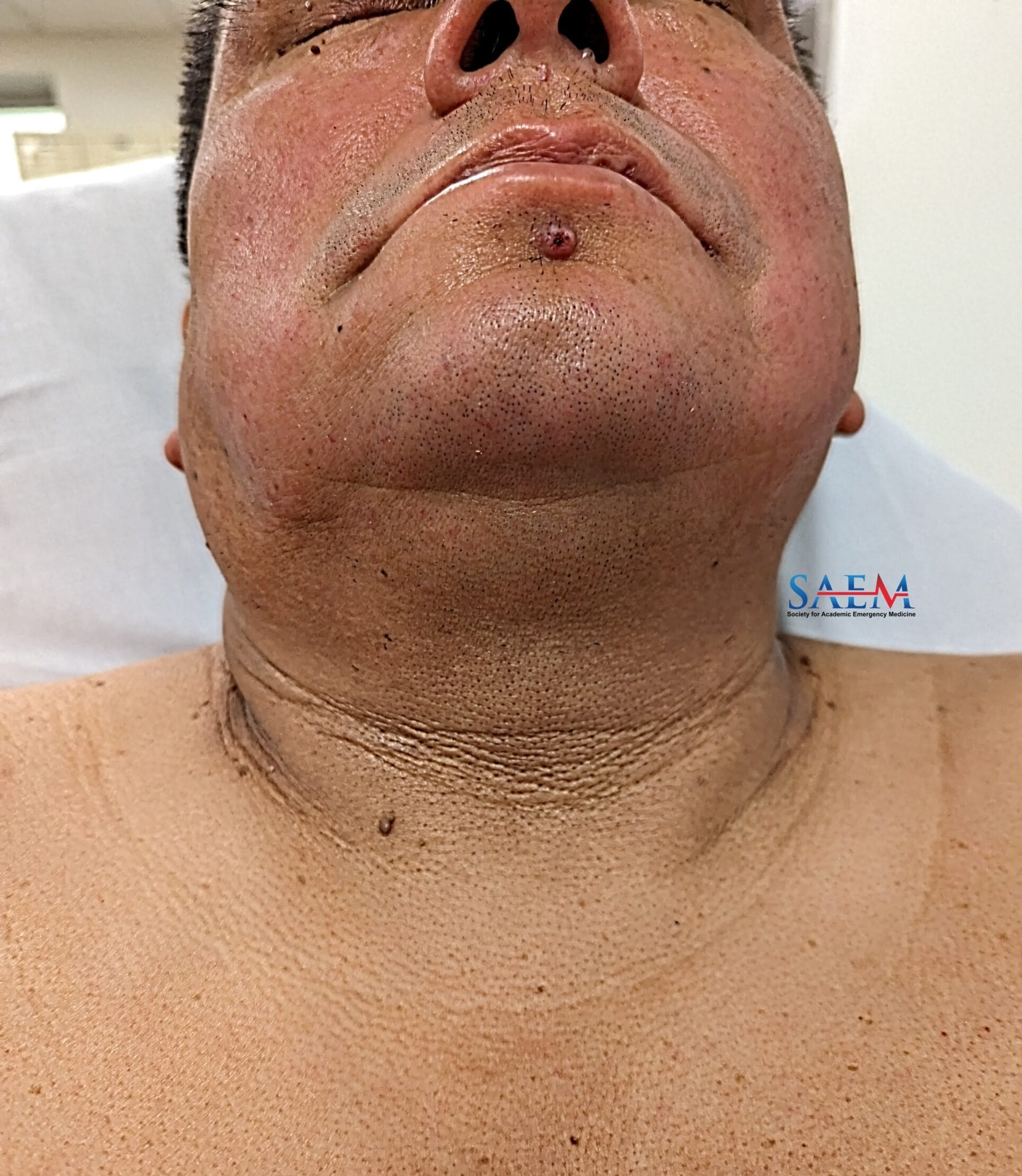
A 50-year-old male with insulin-dependent Type 2 Diabetes presented to the emergency department with three days of pain and swelling on the right side of his neck. He endorsed progression of his symptoms, reporting that he was now having fevers, myalgias, and intermittent difficulty swallowing solid foods.

Vitals: BP 153/96; HR 110; T 100.0°F; RR 16; O2 sat 97%

General: Appears uncomfortable

HEENT: Mild right-sided facial swelling. No trismus. No gingival inflammation or swelling or induration to suggest abscess. There is focal swelling and tenderness to palpation, without overlying erythema, throughout the right submandibular triangle, and along the sternocleidomastoid.

MSK: Limited active right shoulder range of motion secondary to pain

WBC: 10.4

Hgb: 14.4

Plts: 213

Na: 131

K: 3.7

A1C: 13

Lemierre syndrome (LS) is a rare complication of bacterial pharyngitis/tonsillitis and involves an extension of the infection into the lateral pharyngeal spaces of the neck with subsequent septic thrombophlebitis of the internal jugular vein (as seen on CT). Patients may present with trismus, dysphagia, and fever. Due to the possibility of widespread septic emboli, patients may experience sequelae of systemic infection with dyspnea, focal neurologic deficits, and abdominal pain. Treatment consists of prompt antibiosis and rapid source control.

Most cases of bacteremia in Lemierre syndrome are caused by Fusobacterium necrophorum, an anaerobic gram-negative rod that colonizes the oropharynx. This bacterium causes platelet aggregation and thrombus formation through hemagglutinin production and direct activation of the coagulation cascade. However, up to one-third of patients are found to have a polymicrobial infection with streptococcus and staphylococcus species frequently present.

Take-Home Points

  • Lemierre syndrome (LS) is a rare infection. However, the incidence of LS has been increasing in recent decades due to more judicious use of antibiotics for pharyngitis.
  • A high index of suspicion must be maintained to diagnose Lemierre syndrome, with special attention to alternative diagnoses such as Ludwig angina, retropharyngeal abscess, or meningitis.
  • A thorough investigation of associated symptoms is imperative as these may represent sequelae of septic emboli.

  • Foo EC, Tanti M, Cliffe H, Randall M. Lemierre’s syndrome. Pract Neurol. 2021 Oct;21(5):442-444. doi: 10.1136/practneurol-2021-002928. Epub 2021 May 7. PMID: 33963085.
  • Forrester LJ, Campbell BJ, Berg JN, Barrett JT. Aggregation of platelets by Fusobacterium necrophorum. J Clin Microbiol. 1985 Aug;22(2):245-9. doi: 10.1128/jcm.22.2.245-249.1985. PMID: 4031037; PMCID: PMC268368.

By |2024-09-06T22:10:20-07:00Sep 20, 2024|ENT, Infectious Disease, SAEM Clinical Images|

SAEM Clinical Images Series: Wolf in Sheep’s Clothing

wolf

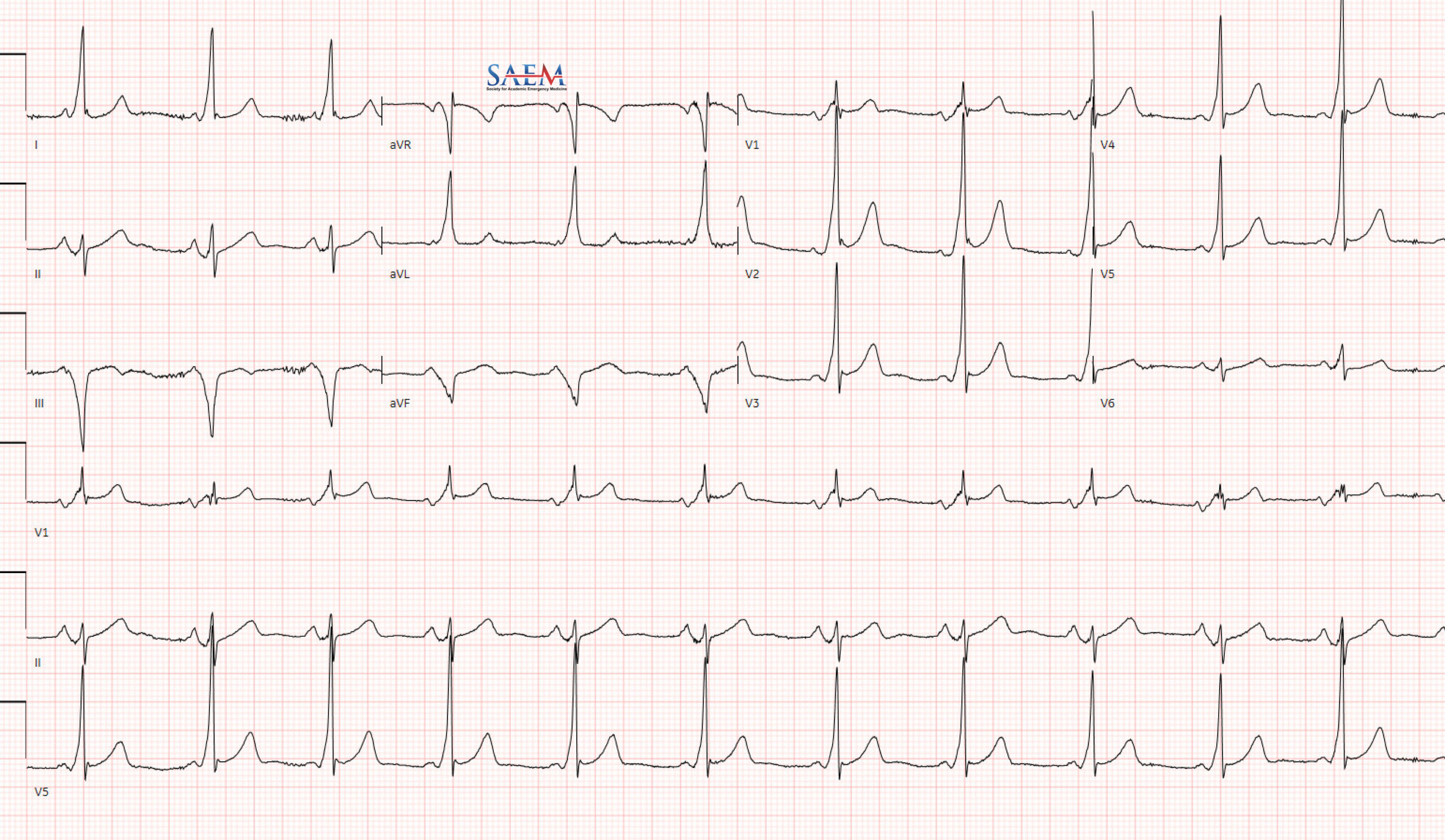
A 55-year-old female with a history of hyperlipidemia presents after a syncopal episode. She had mild nausea and diarrhea on the morning of presentation but otherwise had no prodromal symptoms before suddenly losing consciousness in a grocery store. Of note, she recalls a similar syncopal episode in the remote past, also preceded by gastrointestinal symptoms at that time. At present, she is symptom-free.

Vitals: BP 135/71; HR 52; Temp 98°F; RR 18; SpO2 100% on room air

General: Tired appearing

CV: 2+ peripheral pulses. Regular rate and rhythm, no murmurs, rubs, or gallops.

Pulmonary: No increased work of breathing. Lungs clear to auscultation bilaterally.

GI: Soft, non-distended, non-tender to palpation.

Non-contributory

Wolff-Parkinson-White Syndrome (WPW)

Short PR interval (< 0.12 seconds) and slowed upstroke of the QRS complex, referred to as a delta wave, which are both seen in our patient. These particular EKG findings define a “Wolff-Parkinson-White Pattern.”

WPW is a pre-excitation syndrome characterized by an accessory pathway caused by a congenital failure of cells to resorb near the AV valves. This accessory pathway conducts impulses faster than the AV node, causing a short PR interval. WPW Syndrome consists of characteristic EKG findings as well as symptomatic arrhythmias. Patients with WPW may classically present after a syncopal episode due to an arrhythmia involving the accessory pathway. Most commonly, WPW is associated with atrioventricular nodal reentrant tachycardia (AVNRT) and atrial fibrillation.

First-line treatment for WPW-mediated tachyarrhythmia consists of procainamide, which blocks conduction through the accessory pathway. An exception to this would be the hemodynamically unstable patient, who should be cardioverted. AV nodal blocking agents should be avoided in patients with tachyarrhythmias as they can cause increased conduction to the ventricles through the accessory pathway, leading to potential ventricular arrhythmias and hemodynamic instability. Ablation of the accessory pathway is indicated in those with symptomatic tachyarrhythmias and leads to successful remission in about 90 percent of cases.

Take-Home Points

  • The WPW pattern on EKG consists of a short PR interval and a delta wave.
  • Patients with WPW Syndrome classically present with symptomatic arrhythmias (including syncope) and EKG findings consistent with WPW pattern.
  • The most common arrhythmias seen in WPW include AVNRT and atrial fibrillation, which should be managed with procainamide. Avoid the use of AV nodal blocking agents.

  • Conover MB. Diagnosis and management of arrhythmias associated with Wolff-Parkinson-White syndrome. Crit Care Nurse. 1994 Jun;14(3):30-9; quiz 40-1. PMID: 8194348.
  • Dagres N, Clague JR, Kottkamp H, Hindricks G, Breithardt G, Borggrefe M. Radiofrequency catheter ablation of accessory pathways. Outcome and use of antiarrhythmic drugs during follow-up. European heart journal. 1999 Dec 1;20(24):1826-32.
  • Wolff L, Parkinson J, White PD. Bundle-branch block with short P-R interval in healthy young people prone to paroxysmal tachycardia. 1930. Ann Noninvasive Electrocardiol. 2006 Oct;11(4):340-53. doi: 10.1111/j.1542-474X.2006.00127.x. PMID: 17040283; PMCID: PMC6932258.

By |2023-11-12T13:55:35-08:00Nov 6, 2023|Cardiovascular, ECG, SAEM Clinical Images|
Go to Top