

A Recipe for Success: Virtual Alternatives to Residency Pre-Interview Receptions

The COVID-19 pandemic forced sweeping changes to graduate medical education over the last several months, and as we plan for the new academic year, it is clear that residency recruitment will fundamentally change as well. The Association of American Medical Colleges (AAMC) released a position statement encouraging medical school, residency, and faculty interviews to be held virtually [1]. While there is precedent for holding residency and fellowship interviews online [2-4], these new circumstances present significant challenges for applicants and residency programs alike.

One important change will be the loss of the pre-interview reception. Information exchange between students and residents over dinner at these receptions influences rank order list decisions [5,6]. These receptions provide opportunities for applicants to learn about resident life, satisfaction with their training, cost of living, and many other topics not authentically covered during the interview day. How can residency programs address the information gaps that will result from the loss of pre-interview receptions? Well-designed virtual receptions can provide a unique welcome to applicants and a means to communicate directly with faculty and residents. Here are some suggestions for the use of video conferencing to create ‘virtual receptions.’

(more…)

By |2020-08-26T16:13:14-07:00Sep 4, 2020|Academic, Medical Education|

HOT OFF THE PRESS: Free ALiEM MEdIC Series Book – Volume 5

medic series book 5

This is a bittersweet moment for the MEdIC Editorial team – the launch of our 5th and final volume of our Medical Education in Cases ebook. We are very excited to showcase the compilation of our final season and hope that it serves you well as you all look to expand your online learning and teaching resources during this incredible time in medical history. We hope that you, your colleagues, and the greater FOAMed community enjoy this collaborative collection of high-quality cases and curated online commentary centered on educational, ethical, and professionalism-based quandaries. Your support, contributions, and enthusiasm for the MEdIC series over the years is greatly appreciated!

(more…)

IDEA Series: Pre-recorded Video Simulation Series for Residency Conference

During medical simulation, the inherent unpredictability of learners’ performances and decisions can make it challenging to consistently achieve desired learning objectives. The amount learned and the errors made can vary wildly between groups. Paradoxically, a stellar student can minimize the learning for the other providers if he or she takes over and effortlessly completes the case. Likewise, the visceral impact of seeing a case go horribly wrong can have tremendous teaching value.1

In addition to these challenges, the COVID-19 pandemic has introduced additional barriers to medical simulation training; physical distancing measures have resulted in limited or canceled simulation activities for most emergency medicine residency programs.

(more…)

IDEA Series: Big Screen Ultrasound in Resuscitation Bays

Bedside ultrasound (US) often plays a crucial role in medical and trauma resuscitations in the emergency department (ED) [1]. Performing and interpreting bedside US studies such as the Extended Focused Assessment with Sonography for Trauma (E-FAST) during traumas or echocardiography during medical resuscitations are key skills for emergency medicine residents to learn during their training and adopt into clinical practice [2]. During trauma resuscitations timely and efficient dissemination of critical information is paramount. Information obtained via bedside US can be critical in determining further clinical actions (need for urgent thoracostomy for a pneumothorax, need for urgent exploratory laparotomy in a hypotensive patient with free fluid in the abdomen, etc.) through shared decision making between ED and trauma teams [3]. Information obtained via bedside US, however, is often difficult to convey during resuscitations given crowded rooms, simultaneous interventions, and limited viewing of the US screen. For ED and trauma providers wishing to better understand the utility of bedside US during resuscitations and how this powerful tool can change clinical management, a clearly visualized representation of what is displayed on the US screen could provide an ideal learning opportunity.

(more…)

By |2020-07-17T10:35:07-07:00Jul 24, 2020|IDEA series, Medical Education, Ultrasound|

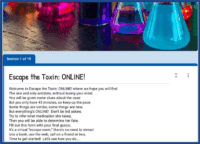
IDEA Series: Toxicology Virtual Escape Room during COVID-19

In order to enhance emergency medicine (EM) residents’ knowledge of toxicology core content, we previously created an immersive escape room experience complete with team-based puzzle solving in a geographical maze to find an antidote. The subsequent COVID-19 pandemic and physical distancing guidelines resulted in canceled in-person EM conferences, thereby requiring a rapid adaptation to virtual formats [1-4]. Our toxicology division sought a novel method of engaging learners with toxicology core content remotely. 

(more…)

IDEA Series: An asynchronous EMS curriculum implemented during COVID-19

asynchronous emsThe novel coronavirus pandemic (COVID-19) resulted in the cancellation of educational experiences for emergency medicine (EM) residents at many institutions, including emergency medical services (EMS) ambulance ride alongs. The Accreditation for the Council of Graduate Medical Education (ACGME) requires that residents have educational experiences related to EMS, emergency preparedness, and disaster medicine. EMS experiences must include ground unit runs, direct medical oversight, and participation in multi-casualty incident drills [1]. There are few dedicated EMS curricula published in the literature, and those in existence incorporate physical ride-alongs [2].
(more…)

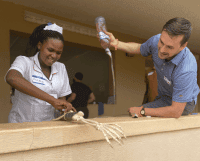
IDEA series: The Bleeding Arm Tourniquet Simulation

Tourniquet simulation

Education in emergency response to trauma is a global health priority [1]. Mortality rates are nearly twice as high in patients with trauma in low-income as compared to high-income countries [2]. With uncontrolled bleeding as the number one cause of death from trauma, tourniquet application has been the focus of training programs, like the “Stop the Bleed” campaign in the United States [3]. Although understanding how to apply a tourniquet is a life-saving intervention, use of a windlass tourniquet may not be intuitive [4].  The windlass tourniquet in its simplest form is the “stick-and-rope.” Winding the stick in the tourniquet creates a mechanical advantage for providing compression. Simulation of the windlass technique can be used to teach management of uncontrolled bleeding. Here we describe a low-cost simulation model that combines low- and high-fidelity techniques to train healthcare personnel on windlass tourniquet application.

(more…)

Go to Top