


Extensor Tendon Lacerations to the Foot
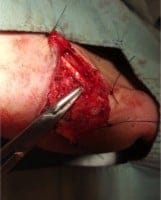 A young man is brought into an emergency department after an electric lawn edger cut through his work boot and into the dorsum of his right foot. He has a clearly contaminated 5 cm x 1 cm laceration on the lateral side, and an underlying tendon is exposed. Sensation is diminished around the wound and he is unable to actively extend his 5th toe past a neutral position. How would you diagnose and repair his extensor tendon injury?
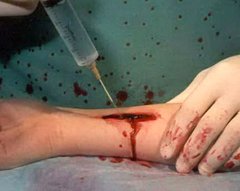 Wound irrigation is arguably one of the most important steps in closing a laceration, because all lacerations should be considered to be contaminated. Irrigation is considered the foundation in preventing infection. A common way to cleanse a wound is to irrigate a wound using a 20 cc syringe, angiocatheter, and splash protector. To achieve 500 cc of irrigation, however, it would require 25 syringe refills! Is there a better, cost-effective alternative?
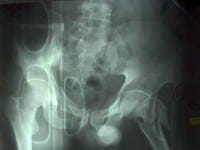 Pelvic trauma frequently is associated with other injuries from the high force required to break the pelvis. Management is focused on stabilizing the pelvis and stopping the bleeding. Due to other injuries requiring emergent surgical stabilization, pelvic trauma is primarily managed surgically with pre-peritoneal packing and external fixation, followed by angioembolization for continued bleeding. Emergency physicians must quickly resuscitate patients while gathering vital information to direct the correct definitive bleeding control strategy. New endovascular techniques such as REBOA (Resuscitative Endovascular Balloon Occlusion of the Aorta) may change future emergency department strategies and improve mortality in severe pelvic trauma.
 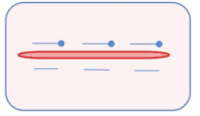 Laceration repair and suturing are foundational skills for the Emergency Department. This pocket card serves as a quick reference guide for clinicians, and provides a much-needed update and design upgrade from the
 Orthopedic injuries are commonly managed in the emergency department. Often a quick bedside reference card is needed to remind the clinician about the acute management decisions. This is the third of a series of orthopedic quick reference cards written by a team from the 2015-16
  Orthopedic injuries are commonly managed in the emergency department. Often a quick bedside reference card is needed to remind the clinician about the acute management decisions. This is the second of a series of orthopedic quick reference cards written by a team from the 2015-16