SAEM/CORD slides: Social Media for Emergency Educators
As requested by an audience member at today’s talk at SAEM, Drs. Rob Cooney, Mike Bond, and I are sharing our slides and handout on Social Media for Emergency Medicine Educators with you here.



As requested by an audience member at today’s talk at SAEM, Drs. Rob Cooney, Mike Bond, and I are sharing our slides and handout on Social Media for Emergency Medicine Educators with you here.

The app EMRA Basics of Emergency Medicine covers the 20 most common EM complaints in a concise manner. I first heard about it from Dr. Rob Orman’s (@emergencypdx) podcast (ERCast) where he endorsed it when it was only in book format. The book is great, thin, and it fits in a white coat pocket.
Here is an in-depth review of the app.
 In the past few months, this blog has been successful in working with Google to remove pirating sites, which directly cut and paste all of our content (including PV cards!) directly into their own blog as their own. This broaches the greater question of disclaimers, copyright, and privacy.
Last month, Dr. Steve Carroll (EM Basic) nicely summarized these issues and constructed nice language for anyone’s social media productions. In fact, with his permission, I have incorporated much of the wordings into this blog’s disclaimer section (bottom of About Us). (more…)
Residencies using websites to communicate with their residents are certainly not a new phenomenon. However, usually they are not visually appealing, rarely are controlled by the residents themselves, and are infrequently updated. Resident-run blogs are also not usually part of these websites.
In this write up, I wanted to highlight a fantastic and dynamic resident-run website and blog: ClinicalMonster.com

It’s all about luck, opportunity, and timing.
I will be releasing the blog’s first ever Paucis Verbis (PV) native app this year. After a few years of brainstorming and lots of reader inquiries about an app, we were approached by two different app-building companies in the same week. I’m incredibly humbled to be approached by organizations, who can see the potential of these pocket cards (which started as actual index cards while I was in residency). It is an incredibly exciting time to be in the world of education and social media!
I need your help with step 1.
 Yesterday I had the pleasure of sharing my thoughts to an enthusiastic crowd of UCSF preclinical medical students on one of my favorite topics “Technology and Social Media in Emergency Medicine”. This is the perfect target audience to teach about developing a workflow habit for keeping up with digital information, since they are only starting to grow their clinical knowledge foundation.
On the morning of my noon talk, I regretted not recruiting some fellow FOAMed (Free Open Access Meducation) supporters to email me their thoughts about why social media is here to stay in medical education. How great would it have been to share the collective thoughts of leaders in this area?
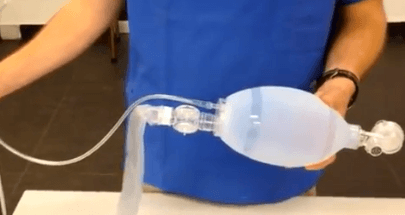 In line with the philosophy and awesomeness of FOAM, Dr. Almero Oosthuizen and the EM Physicians at Cape Town South Africa have created the EM Cape Town YouTube Channel for the purposes of demonstrating critical EM procedures. This great series was created with zero budget, limited time, and only with the use of an iPhone for recording purposes. This group is very passionate about teaching, and it shows through the videos.