How I Educate Series: Michael Gisondi, MD

This week’s How I Educate post features Dr. Michael Gisondi, the  Vice Chair of Education at Stanford University. Dr. Gisondi spends approximately 80% of his shifts with learners which include emergency medicine residents, off-service residents, medical students, and physician assistant students. He describes his practice environment as a busy, high-acuity, university-based, suburban hospital with an annual ED census of 85,000. One-third of the patients speak a language other than English and one-third are without health insurance. Below he shares with us his approach to teaching learners on shift. 

Name 3 words that describe a teaching shift with you.

Direct observation & autonomy

What delivery methods do use when teaching on shift?

Hypothetical questioning

What learning theory best describes your approach to teaching?

Relational autonomy

What is one thing (if nothing else) that you hope to instill in those you teach?

Patients deserve comprehensive evaluations. That doesn’t mean sending every test on every patient, but it does mean considering broad differentials and testing when appropriate.

How do you balance your flow with on-shift teaching? Does this come at the expense of your documentation?

Every interaction is teaching, though perhaps it isn’t signposted as such. For instance, how much time I spend with one patient relative to another speaks volumes to those who are paying attention.

What is your method for reviewing learners’ notes and how do you provide feedback on documentation?

I read them all, and I point out errors of omission or misstatements that need correction.

Do you feel departmental flow and metrics adversely affect teaching? What is your approach to excelling at both?

Absolutely not. Being efficient is one of the most important learning outcomes during emergency medicine training. Metrics are measures of these learning outcomes and are not at odds with training in any way. Residents must learn how to excel as attendings and operational metrics are part of their future.

It can be difficult to sit back and let senior learners struggle what is your approach to not taking over prematurely?

I’ve learned to give a long leash to the senior residents. I stalk the board constantly and read all the notes, both from physicians and nursing. I sneak in to examine patients when the residents aren’t looking. I know what’s happening on my team and can gauge how much autonomy to give my residents.

Do you start a teaching shift with certain objectives or develop them as a shift unfolds?

I let the shift play itself out.

Do you typically see patients before or after they are presented to you?

I try to see as many patients with residents as possible. There are so few direct observation opportunities in training that I try to create them as much as possible. It helps me give better feedback to residents and it improves efficiency.

How do you boost morale amongst learners on shift?

Everyone gets a meal break. I try to help chart or disposition patients when busy. I liken myself to a good second-year resident.

How do you provide learners feedback?

Again, I’m giving feedback constantly, whether it is signposted or not. Simply agreeing with a plan is feedback. I find that I don’t have much to say on end-of-shift feedback forms because I’ve been teaching and giving feedback throughout the shift.

What tips would you give a resident or student to excel on their shift?

Stop for 3 minutes after every patient and write the H&P in the chart. It will save so much time later in your shift. Similarly, complete your entire note before calling report. It saves you and the admitting team a lot of time on the phone.

Are there any resources you use regularly with learners to educate during a shift?

Equianalgesic opioid dosing charts.

What are your three favorite topics to teach during a shift?

Running a code, motivational interviewing, and how to remove an ingrown toenail

What techniques do you employ when teaching on shift?

Relational autonomy, direct observation, The Feedback Formula.

What is your favorite book or article on teaching?

Fostering the Development of Master Adaptive Learners: A Conceptual Model to Guide Skill Acquisition in Medical Education

Who are three other educators you’d like to answer these questions?

Holly Caretta-Weyer, Abra Fant, Sara Krzyzaniak


How I Educate Series logo

Read other How I Educate posts for more tips on how to approach on-shift teaching.
 

By |2022-07-29T09:06:43-07:00Aug 3, 2022|How I Educate, Medical Education|

IDEA | Airway Series: Reviewing Intubation Footage in Conference to Improve Airway Mastery

IDEA video airway

Airway management is one of the most critical skills learned by emergency medicine (EM) residents and can be difficult to teach in traditional lectures. Increasingly, video laryngoscopy has been utilized by emergency departments partially due to its increasing first-pass success in certain situations [1]. Additionally from a training perspective, video laryngoscopy has proven to be beneficial as attendings can have the same view as residents and provide real time feedback [2]. However, this valuable real-time feedback and anatomy visualization ability has not always been utilized in other situations such as resident conferences. In this post, we highlight how to use videos from the GlideScope (or any video laryngoscopy tool) of actual airway attempts to teach airway skills and anatomy recognition at resident educational conferences.

The Innovation

Using Video Laryngoscopy Recordings to Improve Identification of Airway Anatomy

This innovation utilizes the recording function on certain GlideScope machines to capture videos of intubations. The videos can be used during conference didactics to quiz learners on airway anatomy. They also allow learners to see a variety of difficult intubations and the different troubleshooting techniques employed.

The Learners

Although this innovation targets PGY1 EM residents, it can be beneficial to medical students or any residents struggling with intubation. It can also serve as a refresher of airway anatomy and aid in advanced troubleshooting techniques for senior residents.

Equipment

  • GlideScope machine (or any other video laryngoscopy unit) with a video record function
  • Lecture slides for material review

Description of the Innovation

During the resident didactic conference, residents, students, and attendings were presented with a series of pictures and videos recorded on a GlideScope machine, showcasing intubations performed in our ED. They then completed a timed quiz, assessing the following areas:

  • Anatomy identification
  • Airway grading
  • Identification of difficulties
  • Critique of the techniques used
  • Methods for improving the intubation

Subsequently, a brief lecture reviewing airway anatomy and intubation techniques. Finally, learners were presented with the same series of images and quizzed again.

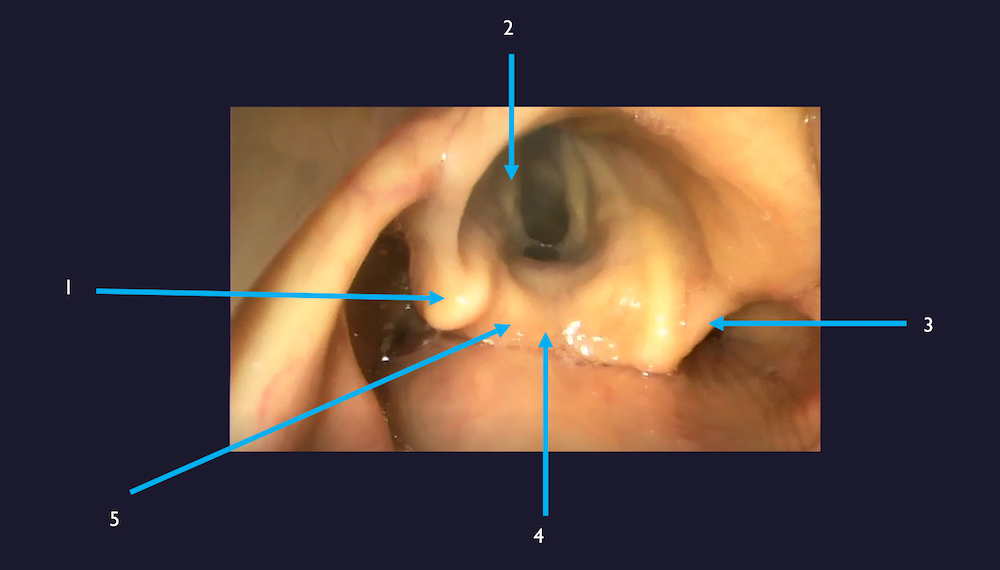
Figure 1. Example of quiz question featuring a difficult airway image assessment question

IDEA video airway

Figure 2. Example of a match-format quiz question assessing airway anatomy

Lessons Learned

Our GlideScope machine automatically records all intubation procedures, which made putting this together easier. For institutions unable to record videos, several blogs have collections of airway footage that could be utilized, such as AirwayCam.

Quizzes were performed before and after the airway lecture. Automated grading showed significant improvement in learner performance after the lecture.
Audience feedback was overwhelmingly positive with 96% of the participants stating that the innovation would help them with real-time airway evaluation. Sample audience comments:

  • “Love this. Very educational and entertaining”
  • “Excellent session and informative”
  • “Please continue providing videos for us to learn.”

Educational Theory

This project is based on visual and applied learning. Additionally it utilizes a “learning from errors” framework which Tulis proposes can trigger emotional and motivational self regulatory learning processes [3].

Closing Thoughts

The innovation is logistically simple, is easy to replicate, received overwhelmingly positive feedback, and markedly improved scores post-lecture. Even considering the high volume of intubation experiences in the emergency department, there is always room for improvement in the learning process for this high-stakes procedure. Often we do not take the take the time to stop and critique our technique in real-time to reflect and improve. The applied and visual learning concepts serve to reinforce skills of advanced learners and build the skills of novice learners. The hope and expectation is that with serial utilization of recordings, learners will have improved recognition of difficult airways and anatomy. This in turn will hopefully lead to improving our first-pass intubation success rates.

The authors and ALiEM do not have any financial affiliations with GlideScope or any other video laryngoscopy companies.

References

  1. Brown CA 3rd, Kaji AH, Fantegrossi A, et al. Video Laryngoscopy Compared to Augmented Direct Laryngoscopy in Adult Emergency Department Tracheal Intubations: A National Emergency Airway Registry (NEAR) Study. Acad Emerg Med. 2020;27(2):100-108. PMID 31957174
  2. Monette DL, Brown CA 3rd, Benoit JL, et al. The Impact of Video Laryngoscopy on the Clinical Learning Environment of Emergency Medicine Residents: A Report of 14,313 Intubations. AEM Educ Train. 2019;3(2):156-162. Published 2019 Jan 15. PMID 31008427
  3. Tulis M, Steuer G, Dresel M. Learning from errors: A model of individual processes. Frontline Learning Research; 2016. https://doi.org/10.14786/flr.v4i2.168

By |2022-04-15T15:58:15-07:00Apr 19, 2022|IDEA series, Medical Education|

Dear emergency physicians: We see you

The COVID-19 pandemic has placed incredible stress and strain on the personal work lives of emergency physicians. We have endured these almost 2 years of misinformation, PPE shortages, fear, frustration, grief, and death. So much going on in the world politically and socioeconomically, we at ALiEM wanted to share a message that WE SEE YOU. We’re with you, and we’re in this together.

Credits

Thank you for the tireless work on this video by animator Spencer Evans, who is a soon-to-be-emergency physician attending medical school currently at the University of Colorado. Also thanks to the entire ALiEM team for contributing to the message and storyboard, especially Drs. Al’ai Alvarez, Andy Little, Carl Preiksaitis, Chris Belcher, Christian Rose, Felix Ankel, Jason Woods, and Teresa Chan.

Education Theory Made Practical (Volumes 4 & 5): An ALiEM Faculty Incubator eBook Series

education theory made practical, volumes 4 and 5 cover book

Back by popular demand and thanks to a generous grant from the Government of Ontario’s eCampus initiative, the ALiEM team is delighted to announce the publication of 2 new eBook publications: Volumes 4 and 5 of the Education Theory Made Practical eBook series [ALiEM Library]. Like all of the others that have come before, these books were a labor of love brought to you by the dedicated Faculty Incubator alumni. On behalf of all the editors of both editions, we are very proud of all our Faculty Incubator alumni who made this happen. 

Their amazing contributions have been compiled in these FREE, peer-reviewed eBooks. We sincerely feel that these will be a useful resource for all the educators out there, wrestling with the issue of integrating theory into practice. Special shout-out to the incredible Dr. Jonathan Sherbino (Volume 4) and Dr. William Bynum (Volume 5) who authored the forewords and provided us with their thoughtful insights on how theory can relate to a clinician educator’s practice.  


Education Theory Made Practical volume 4 ETMP

Brought to you by the ALiEM Faculty Incubator Class of 2019-20

How to Cite This Book
Krzyzaniak, Messman, Robinson, Schnapp, Li-Sauerwine, Gottlieb, Chan (Eds). Education Theory Made Practical, Volume 4. McMaster Office of Continuing Professional Development, Hamilton, ON, Canada. ISBN: 978-1-927565-46-9 Available at: https://books.macpfd.ca/etmp-vol4/


Brought to you by the ALiEM Faculty Incubator Class of 2020-21

How to Cite This Book
Fant, Gottlieb, Li-Sauerwine, Krzyzaniak, Natesan, Schnapp, Chan (Eds). Education Theory Made Practical, Volume 5. McMaster Office of Continuing Professional Development, Hamilton, ON, Canada. ISBN: 978-1-927565-47-6Available at: https://books.macpfd.ca/etmp-vol5/


About the Books

The Education Theory Made Practical series aims to make the theoretical underpinnings of education psychology come alive for health professions teachers who are seeking to use theory to inform their clinical and classroom teaching.

Notes from Dr. Sara Krzyzaniak, the lead editor of Volume 4: I am proud of the authors’ work in writing primers on some of the core theories in medical education. The theories covered in this volume will help educators design (Cognitive Load Theory) and evaluate (Miller’s Pyramid) their curriculum. It will help us understand why our learners behave in a certain way (Maslow’s Hierarchy of Needs) and how we approach and organize abstract concepts in education (Prototype Theory). Check out the 10 chapters in Volume 4 to help you understand how we can use education theory to be more successful educators, learners, and scholars. 

Notes from Dr. Abra Fant, the lead editor of Volume 5: This volume explores 10 new theories which again cover the educational design process from start to finish. The IDEO Design Theory helps educators disrupt while designing, R2C2 provides an exceptional model for delivering feedback and the Logic Model is a wonderful resource for evaluating curricula. We invite you to explore these and other chapters to help provide background and context as you design, enact and evaluate your educational interventions. 

Our Process

As part of the Faculty Incubator program, a 2 -3 person team authored a primer on a key education theory on the International Clinician Educator (ICE) blog. These posts were published serially over a 10-week period. Each post featured a key educationally-relevant theory by starting with a vignette that situated the theory. Following this vignette, there was an explanation and short history of the theory followed by an annotated bibliography for further reading. To ensure high quality, we then asked the #MedEd and #FOAMed online communities to join us in peer-reviewing these posts. After incorporating many of the peer review comments, each blog post was converted into a book chapter within this volume of a series of books for budding clinician-educators – the Education Theory Made Practical series. We believe this will serve as a valuable tool on how to incorporate educational theory into the clinical realm in a practical way.

How I Work Smarter: Simiao Li-Sauerwine, MD

One word that best describes how you work?

Efficiently!

Current mobile device

iPhone 12

Computer

MacBook Air

What is something you are working on now?

I’m working on a research study examining the impact of EM faculty demographics on learner evaluations.

How did you come up with this Idea/Project?

I’ve always been interested in the impact of implicit bias on physician professional development and advancement. We use learner evaluations of attendings for promotion, for compensation, for recognition with departmental awards. So, I was interested to know how the demographics of a faculty member might impact a resident’s expectations of how they teach at the bedside and on shift. Do they impact those metrics that affect advancement?

What’s your office workspace setup like?

My office in the Department of EM at OSU is right across from our Program Managers – very convenient for quick questions and discussions! I have a PC but often also bring my laptop for a centralized work machine. I have a French press with coffee and tea and mugs so that folks can get a caffeine fix when they stop by. I also make sure to have snacks available for quick nutrition between meetings.

My home setup is my MacBook Air on a laptop stand. About a year into the pandemic as I was continuing to work from home, I purchased the stand and it’s been a game-changer! Less neck strain and better angles for Zoom :). I usually work on the couch in our home office or wherever I can find a quiet space for deep work.

What’s your best time-saving tip in the office or home?

I have no magical time-saving tips but I keep an aggressively up-to-date to-do list which I re-prioritize every day. If it’s not on paper (or on my Notes app), it tends to fall off my radar. So everything gets written down.

What’s your best time-saving tip regarding email management?

Triage your email. I either glance at it, respond if necessary, and move on, or flag the email if it requires more thought or an in-depth response. Then, when I have blocks of time to sit down, the flagged emails become their own TO DO list. I try to keep this down to less than one page.

What apps do you use to keep yourself organized?

The Reminders app is nice because I can sync it across all my Apple devices. I use this primarily for groceries and personal TO-DOs. I use Notes for work-related tasks; each line is a deadline for a task (either real or self-imposed) with a title and descriptor.

How do you stay up to date with resources?

I go to our resident conference every single week – it’s a privilege to continue to learn. Free knowledge! Who doesn’t love that?

What’s your best time-saving tip in the ED?

Save your teaching until after you’ve seen a patient, so you can focus on discussing the most relevant and high yield educational pearls.

ED charting: Macros or no macros?

No macros! It takes time to click through. I use dot phrases and change the text – it goes much quicker.

Advice

  • What’s the best advice you’ve ever received about work, life, or being efficient?

    Choose your projects based on 1. Are you passionate about the topic? 2. Are you really excited to work with the people involved? and 3. Will it build your dossier for promotion? Hitting one is great, two is better, and ideally all three! Wise words from Jorge Fernandez that have guided my junior faculty years.

  • What advice would you give other doctors who want to get started, or who are just starting out?

    • Find your passion, and academic products will follow.
    • You are entitled to mentorship from anyone and everyone – don’t be afraid to ask for it.
    • Your personal brand is important – are you solutions-oriented, do you get things done, are you timely.
    • Work time is work time, and make it count – but protect your non-shift weekends and evenings for family and the stuff that matters.
  • Is there anything else you’d like to add that might be interesting to readers?

    I am an avid foodie who loves to read up on local and regional specialties – so if you find me at a conference, ask me where to eat!

Read other How I Work Smarter posts, sharing efficiency tips and life advice.

How I Work Smarter: Al’ai Alvarez MD

One word that best describes how you work?

Compassion

Current mobile device

iPhone 12

Computer

MacBook Pro

What is something you are working on now?

Where do I begin? The pandemic has opened doors for virtual talks and conferences, so I’m just taking it week by week sometimes. I’m also doing a fellowship, the Stanford Byers Center for Biodesign Faculty Fellowship. I’m learning how to apply design thinking to well-being interventions in the ED, and hopefully collaborating with other high-performance teams. I am also co-directing a conference in May 2022 on High-Performance Resuscitation Teams.

How did you come up with this Idea/Project?

re: High-Performance Resuscitation Teams Conference, I have been attending the Mission Critical Teams Institute summits over the past several years. We wanted to create a conference focused on healthcare and high-performance teams. I’ve had the opportunity to center my areas of interests in Medical Education, Process Improvement (Quality and Clinical Operations), Recruitment (Diversity), and Well-being (Inclusion) through human-centered design. A natural area was focusing on team performance and professionalism under stress.

What’s your office workspace setup like?

I’m in the middle of 5 people-office space. I have a plant, some snacks, and a big monitor. I haven’t been there in months. My home office is somewhat similar.

What’s your best time-saving tip in the office or home?

Paper and pen writing of big deadlines in a week. I’ve tried calendaring after learning from Dr. Jennifer Kanapicki, though I have yet to develop the discipline to do this weekly. My coach offered an alternative, which is focusing on 3 big projects a week to focus my energy. This helps me put things in perspective, as opposed to having so many loose ends, and writing it down cognitively frees up memory space for me.

What’s your best time-saving tip regarding email management?

Quick run-through in the morning, and start deleting.

What apps do you use to keep yourself organized?

On Chrome: OneTab for all my tabs. Omnifocus for my to-do stuff. My calendar is a part of my life so my calendar is an extension of my brain. When2meet to find mutual availability for meetings plus My calendar with zoom links.

How do you stay up to date with resources?

Twitter. I know.

What’s your best time-saving tip in the ED?

Eyeball patients immediately so I have a sense of who’s sick and who’s not. Talk to the nurses. They know more about the patient most of the time. For the rest, I follow the mantra, “Quality care takes time,” and I am on the faster end of the dispositions in my group, as I’ve learned to be more comfortable with managing uncertainties.

ED charting: Macros or no macros?

No macros. I also don’t chart as much as I should. I write for the sake of documenting and not for billing. I’m OK with that. We can’t do it all.

Advice

  • What’s the best advice you’ve ever received about work, life, or being efficient?

    #selfcompassion. Can’t do everything perfectly. Show up. Learn to say no. The power of perspectives. In 1 week, 1 month, 1 year, 10 years will this really matter? This grounds me on how I tackle tasks and often the emotions surrounding deadlines.

  • What advice would you give other doctors who want to get started, or who are just starting out?

    Easier said than done, practicing self-compassion has allowed me to really develop a growth mindset. To start, simply doing a daily mindfulness practice of even 5-10 minutes. This trains my mind to slow things down when things become chaotic. This also trains me to be attuned to how my body reacts to stress, and therefore, tending to it whenever I notice these sensations (neck stiffening up, etc).

  • Is there anything else you’d like to add that might be interesting to readers?

    I may be doing a ton of stuff, and in the background, I’m doing a ton more and failing. For me, the more things I’m working on that I’m truly passionate about, the more I get done. I’m OK with failure, and whenever I do (and not if I do), these offer me a great opportunity to learn how to be better (or choose better opportunities). Last and also very important, I find the collaborations bring more meaning to my work.

Read other How I Work Smarter posts, sharing efficiency tips and life advice.

By |2022-01-18T09:55:16-08:00Jan 21, 2022|How I Work Smarter, Medical Education|

IDEA Series: Escape the Snake Room

IDEA series snake room

The Problem

A snakebite from a venomous snake can result in a potentially life-threatening toxin-mediated disease (1). The WHO considers snakebites to be an important occupational disease in Southeast Asia (2). Particularly in rural areas of Pakistan, snakebites represent a common public health concern. The relatively rare nature of this condition in urban environments, however, limits exposure to it by emergency medicine (EM) residents. Thus, additional focused training is necessary to prepare EM physicians to manage snakebites in a timely and effective manner. 

The Innovation

The “Snake Room” gamification-based, timed activity teaches and assesses clinical practice essentials in the management of snakebites among EM residents. 

The Learners

The target learners were EM residents of all class years, although a similar instructional model could be applied for teaching other uncommon diseases in under-resourced settings to any relevant learner group.

Group Size

Snake Room requires 4 total facilitators (1 facilitator per station for 4 stations). Each facilitator supervises 5-7 participants in each group during the time they attempt the station, for a total of up to 28 participants and 4 facilitators. 

Equipment

This activity utilizes simple and readily available materials, including the following:

  • WHO manual of snakebite management (3): The manual is a comprehensive guide for snakebite management specifically in Southeast Asia. The manual provides management strategies for low-resource settings of relevance to rural areas of our country. The stations were therefore developed in accordance with this reference.
  • Online stopwatch: An online stopwatch was projected on a large screen. A 15-minute timer was started at the beginning of the activity for each group, and was reset before the entry of the next group. 
  • Laptops and speakers: In 2 of the sub-stations, a computer was utilized to display PowerPoint slides as a part of the activity. For example, participants had to view images on the slides and rapidly identify different grades of snake bites, as well as differentiate images of venomous snake bites from other bites (i.e., rodent bites) that patients may present in rural areas. The slides automatically cycled after every 30 seconds. The speakers played snake charmer music in order to create an auditory distraction for the participants to mimic the distracting environment of the ED. 
  • Materials for low-fidelity wound simulation
    • Red slime to mimic features of myonecrosis 
    • Clear occlusive dressings to hold the red slime in place
    • Red, orange, and yellow dry pastel to demarcate inflammation around the bite wound
    • Manikin to demonstrate the bite marks on the lower limb

Description of the Innovation

The “Snake Room” activity took place over a 3-hour period. Four groups consisting of 5-7 members participated. There were 4 stations with 4-5 sub-stations in each station. Each station incorporated gamification and competitive-learning methodology. The substations featured clinical cases, image identification, puzzles, finding the right answer card hidden in the room, and/or low-fidelity wound simulation.

Each group of participants included residents from each class year in order to mimic the team composition most commonly encountered in our clinical environment, where senior level residents supervise a team of junior residents. The activity organizers intentionally formed teams with uniformity in academic and clinical skills to create a level playing field.

Before the start of each station, facilitators also provided a briefing to the group of participants regarding the task and amount of time available to complete it. A projector displayed the time. Groups had 15 minutes to complete each station, and each group attended the stations in the sequential order. Group members had the option to utilize online and/or in-print resources in addition to recall to complete the tasks. 

Effective use of technology was assessed. One of the groups used the Google scan app to identify the key word and obtain the answer to the puzzle.

During the activity, the course director and facilitators actively assessed participant performance as they attempted to work through the stations utilizing a questionnaire with Likert scales measuring the following:

  • Knowledge of snakebite management
  • Problem-solving
  • Leadership skills
  • Communication among team members
  • Allocation of roles among team members
  • Utilization of technology (i.e., mobile devices)
  • Understanding of the task
  • Ability to finish the activity on time
IDEA series snake room completed tasks
Successful completion of the tasks and escape from the Snake Room

The group that completed all of the puzzles and stations successfully in the allotted amount of time and achieved the highest score on the assessments of leadership, task delegation, and communication skills won the competition. 

IDEA Snake Room debrief
Debriefing session with one of the groups

At the conclusion of the activity, participants completed an evaluation form to provide feedback about the activity to the faculty organizers. Participants also received feedback during a debrief session, where faculty identified gaps in knowledge and skills and provided suggestions for how to translate lessons learned to future clinical performance. Later that day, the winning group was announced and each group’s feedback was shared in a single email to all participants, allowing groups to compare their performance. 

Materials for the activity are available upon request by contacting Dr. Shahan at [email protected].

Lessons Learned

  1. The activity allowed faculty to assess core EM skills apart from medical knowledge, such as leadership and communication. EM residents had the opportunity to practice navigating team dynamics, and working in a group within a safe learning environment facilitated collegiality among junior and senior residents.
  2. The faculty who planned the activity sought feedback from participants to optimize future iterations through short-mini interviews with group participants at the end of the activity.
  3. The assessment questionnaire was developed according to local considerations and may warrant adjustment depending on the institution and location in which the activity occurs. Internal and external validation of the assessment tool is in process. 
  4. Substations require careful, intentional planning such that they focus on an isolated aspect of the main theme, such as presentation of the disease or diagnostic test interpretation. 
  5. We incorporated audio distractions to mimic the challenges inherent to the ED environment, where residents must commonly navigate complex clinical scenarios as a team amidst frequent interruptions and competing demands. Visual distractions could also be incorporated. 
  6. Simulations (low- or high-fidelity) can be introduced while planning these sessions, but it should align with the intended learning outcomes and must be appropriately timed to maintain gamification principles. 
  7. The Snake Room activity was well received by EM residents, who requested additional iterations of this activity adapted to other topics. Participants shared their general impression that this activity offers a fun, unique educational experience with a team-based approach. 

Theory behind the innovation

We successfully combined competitive-learning theory with gamification in the Snake Room didactic to result in a positive, impactful educational experience for learners (4). Teaming participants in small groups encouraged collaboration and co-construction of new knowledge in a social constructivist approach. 

Interested in reading more innovations in education?

Read other Ideas in Didactics and Educational Activities (IDEA) series posts on ALiEM.

References

  1. Alirol E, Sharma SK, Bawaskar HS, Kuch U, Chappuis F. Snake bite in South Asia: a review. PLoS neglected tropical diseases. 2010;4(1):e603. PMID: 20126271
  2. Warrell DA. Guidelines for the management of snake-bites. Guidelines for the management of snake-bites. 2010. (https://apps.who.int/iris/handle/10665/204464
  3. World Health Organization. Guidelines for the clinical management of snake bites in the South-east Asia region. 2005.
  4. Robson K, Plangger K, Kietzmann JH, McCarthy I, Pitt L. Is it all a game? Understanding the principles of gamification. Business horizons. 2015;58(4):411-20.
Go to Top