


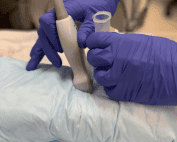
IDEA Series: Just-in-Time Training for Diagnostic Paracentesis
According to the National Health And Nutrition Examination Survey, approximately 630,000 adults in the United States have cirrhosis of the liver, 69% of which are reportedly unaware of having liver disease. A diagnostic paracentesis is a simple procedure for identifying spontaneous bacterial peritonitis in cirrhotic patients with ascites. A just-in-time training (JITT) model incorporating low-fidelity equipment readily available in the ED can facilitate procedural teaching of the diagnostic paracentesis. [+]

EM Match Advice: Deep Dive into the SLOE
A high-stakes component in a medical student's application for an emergency medicine (EM) residency is the Standard Letter of Evaluation, or SLOE. This is a standardized templated letter, written by an group (e.g. department) or faculty from an EM-residency program. This episode of EM Match Advice gives a behind-the-scenes peek into what letter writers are thinking and a deeper dive into the mechanics of the SLOE. Panelists Dr. Abra Fant (Northwestern University) Dr. David Gordon (Duke University) Dr. Michael Takacs (University of Iowa) Listen to all the episodes of the EM Match Advice Series Resources FAQ on SLOE for medical [+]
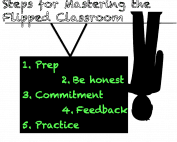
Making Heads or Tails of the Flipped Classroom: Tips and Tricks for Students
Now more than ever, medical educators are excited about the flipped classroom, defined by Bishop and Verleger as “a new pedagogical method, which employs asynchronous video lectures and practice problems as homework, and active, group-based problem-solving activities in the classroom” [1]. The premise is that students will learn basic concepts during self-study, at their own pace, and come to the classroom ready to dive into small groups and problem-based application [2]. This approach may be unfamiliar and you may find yourself asking: Why should I care? and How do I get the most out of it? Let’s begin with the first [+]

Is Digital Attendance Enough?
Many medical schools have responded to student requests and begun to record and stream didactic lectures. Students report watching these lectures can be more convenient and allow them to personalize the time, location, and speed to their specific needs. Meanwhile, faculty are freed up from giving the same Powerpoint lecture every semester and schools can highlight their “digital presence.” It seems to be a win on all sides, except when you look at the outcomes. [+]
The Leader’s Library: Radical Candor | Curated Summary of the Discussion
Welcome back to The Leader’s Library! In our second installment, throughout the week of October 14, 2019, a group of selected learners across the globe tackled Radical Candor by Kim Scott [ALiEM book summary], and generated another fascinating asynchronous dialogue on Slack. This go-round, we had 3 days of discussion with days for reflection in between. Below are the main points that emerged from our robust conversation. [+]
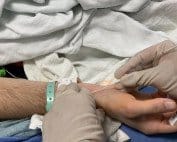
Just-in-Time Training for Emergency Medicine Radial Arterial Line Placement
A 63-year-old male presents for acute onset of headache, neck pain, and altered mental status. He has a prior history of hypertension and hyperlipidemia but recently lost his insurance and has been unable to fill his medications. As a well-informed 2nd year resident, you suspect the presence of a ruptured subarachnoid hemorrhage and arrange an expedited trip to the CT scanner. The patient’s blood pressure continues to remain elevated and you initiate an antihypertensive drip. You decide that in order to have accurate titration, you need more reliable data and decide to place a radial arterial line. However, the last [+]
TLDR Book Review: Deep Work – Rules for Focused Success in a Distracted World
Do you struggle when you try to focus on one task for a prolonged period? When you’re reading or writing a paper, are you frequently tempted by social media, a click-bait HuffPo article, or what the latest Instagram celebrities have been doing? Most of us are not used to spending large periods of time doing deep work. Like any skill, the ability to focus is something that we have to develop and train. This book, Deep Work, by Cal Newport will explain why it is so critical to develop our ability to focus deeply, and how to do it. [+]

2019-20 ALiEM Deputy Editor in Chief, Dr. Luz Silverio
With 1000+ posts over 10 years, we are thrilled to add 1 superstar to the ALiEM blog team. We officially announce Dr. Luz Silverio as our new Deputy Editor in Chief to help shape the direction and educational content of the blog. She graduated from the UCSF-SFGH Emergency Medicine Residency program, is an emergency physician at Kaiser Permanente at Santa Clara and a clinical assistant professor (affiliate) at Stanford University, hosts her own infrequently edited blog, Silverio Lining, has been a guest podcaster for EM:RAP and ERCast, serves as an Orthopedics Editor for DynaMed, and has had her watercolor artwork [+]
EM Match Advice: How to “Swipe Right” this Interview Season
Applying for residency programs has often been compared to the modern world of dating. So in this 26th installment of the EM Match Advice series, we discuss finding the right-fit program for applicants using modern dating terminology. Join us in this fun and informative episode in navigating the residency match process. Podcast Episode A high-stakes component in a medical student's application for an emergency medicine (EM) residency is the Standard Letter of Evaluation, or SLOE. This is a standardized templated letter, written by an group (e.g. department) or faculty from an EM-residency program. This episode of EM Match Advice gives [+]
Beyond the Abstract | Resident Motivations and Experiences in Listening to Educational Podcasts
Podcasts are all the rage these days, and it is not surprising that some residents spend more time with podcasts than any other educational resource.1–3 But why? And how do podcasts fit with other forms of learning, like lectures, textbooks, and clinical teaching? In our recent article published in Academic Medicine, we explored these questions. Using qualitative interviews and analysis, we identified 3 overarching themes that shed light on residents’ podcast listening behaviors and the tensions with which listeners wrestled.4 [+]

Director of Growth, Strategic Alliance Initiative, Center for Innovation and Digital Health
Massachusetts General Hospital;
Chief Scientific Officer, Conductscience.com
Latest posts by Shuhan He, MD (see all)
- The Discharge Severity Index: Early Research on ED Readmission Risk Assessment - August 14, 2025
- Suboxone and the Emergency Physician: Get Waivered Training - August 12, 2022
- A Tale of Two Epidemics: COVID-19 and the Opioid Crisis - April 23, 2020