



Article review: Inconvenient truths about effective teaching
At the CDEM meeting during the SAEM national meeting this past week, the keynote speaker (Dr. Charles Hatem from Harvard) mentioned a great editorial article called “Inconvenient Truths About Effective Clinical Teaching.” Here’s a summary of the opinion article from Lancet: [+]
SAEM National Meeting a success!
The national SAEM meeting in Boston just concluded and was a success. As part of the SAEM Social Media Committee, I was encouraged to see how many people were tweeting events from the meeting. Check out the tweets with the #SAEM11 hashtag. To view beyond the most recent 100 tweets, you can view here.

Internet CME: EMedHome.com
Two weeks before renewing your license, you realize that you’re short 7 CME credits. Uh-oh…what to do now? Unfortunately, not enough time to go to a conference. Reading always gets boring after a while. Lie on your renewal application (NOT!)? If only there was a one-stop method of getting a variety of CME to keep you interested. [+]
Article review: Improving case presentations with theater training
"To be or not to be?" What could be more strange on a medical school curriculum than a theater training course? The authors of this study in Medical Humanities innovatively designed a 1-week elective course to help medical students at Mayo Medical School to improve their case presentation skills in partnership with the Guthrie Theater. In this pilot course, seven medical students (six 1st year students, one 4th year student) participated. The learning objectives were: Hear stories: those told by patients, colleagues and in written narratives Identify the elements of a narrative, and examine stories for narrative structure Share stories: through case [+]

Poster resource: Better posters blog
I am in the midst of generating posters for the Canadian Association of Emergency Physicians (CAEP) conference. My residents and I came across this resourceful site about making them. Better Posters http://betterposters.blogspot.com/ [+]

Director of Growth, [+]

Article review: Clinician attitudes about commercial support of CME
Did you know that a cup of coffee can cost over $9… when planning a CME conference? In an interesting survey-based publication by Dr. Tabas (one of my colleagues) that just came out in Archives of Internal Medicine, we learn more about the ins and outs of CME activities. The authors set out to determine the audience members’ opinions about: Commercial/ pharmaceutical support and its impact on bias Their willingness to pay extra conference registration fees to eliminate outside support [+]
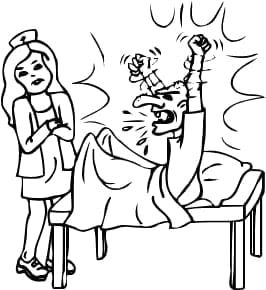
Article review: Teaching learners about ‘difficult’ patients
Your capable resident comes to you, looking frustrated. He says, ‘What a difficult patient. I think you need to get involved.’ This article provides a framework for teachers to allow learners to appreciate these encounters in the Family Medicine. Their points are highly relevant to Emergency Medicine. Strategies include: [+]

Article review: What’s wrong with self-guided learning?
There is a constant tug-of-war between self-guided learning and supervised learning. With the advances in technology for medical education such as asynchronous learning modules, simulation, there has been a movement away from traditional, instructor-led teaching and towards more independent, self-guided learning. There is less supervision of learning. But left unsupervised, are learners learning the right things and doing so optimally? The authors, in this review, say yes and no. [+]

Article Review: Medical education can learn from the neurobiology of learning
The brain is a mysterious thing. How do we learn? Can we apply what we know about the neurobiology and sociology of learning towards medical education? This review article in Academic Medicine presents 10 strategies to improve teaching and curricular development. [+]
Nancy Duarte at TedxEast: The anatomy of a great speech
Nancy Duarte, the author of “Resonate — Present Visual Stories that Transform Audiences” and CEO of Duarte Design, recently gave a talk at TedxEast. The title was: You Can Change The World [+]
Director of Growth, Strategic [+]
Director of Growth, Strategic Alliance Initiative, Center for Innovation and Digital Health
Massachusetts General Hospital;
Chief Scientific Officer, Conductscience.com
Latest posts by Shuhan He, MD (see all)
- The Discharge Severity Index: Early Research on ED Readmission Risk Assessment - August 14, 2025
- Suboxone and the Emergency Physician: Get Waivered Training - August 12, 2022
- A Tale of Two Epidemics: COVID-19 and the Opioid Crisis - April 23, 2020