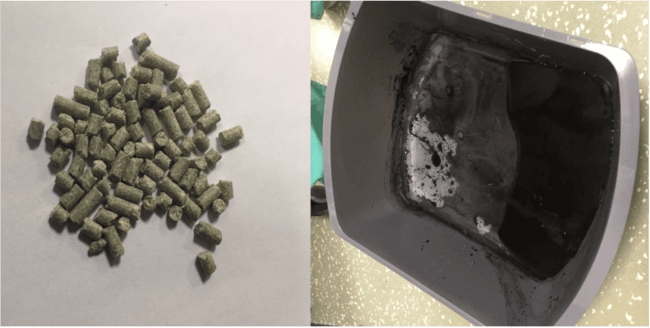
Which of the following substances available in black pellet form causes rapid onset of black emesis with a garlicky or fishy odor when ingested?

  1. Acephate
  2. Brodifacoum
  3. Iron sulfate
  4. Zinc phosphide

[Author’s own image]

4. Zinc Phosphide

Background [1-3]

Zinc and aluminum phosphide rodenticides are available in pellet form and, when ingested, cause a rapid toxidrome with nausea and vomiting of dark emesis with a garlicky or fishy odor and a high risk of cardiovascular collapse.  Poisoning with metal phosphides is relatively rare in North America; however, in agricultural regions of South Asia, the Middle East, and North Africa, it represents a leading cause of mortality due to their widespread use and low cost.  Case fatality rates range from 30% to 70% secondary to refractory shock.

What are metal phosphides? [1,2]

  • Inorganic compounds made of phosphorus bound to a metal, most commonly zinc and aluminum
  • Can be solid pellets, tablets, or granules, which are typically used as rodenticides for mice, rats, or gophers, and as agricultural fumigants, especially in stored grains for shipping
  • When exposed to water or acid, metal phosphides release highly toxic phosphine gas.
    • Aluminum phosphide (Al P) + 3H2O —–> Phosphine gas (PH3) + aluminum hydroxide (Al (OH3))

How do metal phosphides cause illness? [1-4]

  • Toxicity is secondary to the released phosphine gas which is colorless and easily absorbed via the lungs or the GI tract.
  • Phosphine gas
    • Inhibits mitochondrial oxidative phosphorylation
    • Disrupts electron transport
    • Causes cellular hypoxia despite normal oxygen delivery
    • Leads to oxidative stress and membrane damage
  • The myocardium is especially vulnerable, resulting in:
    • Profound shock
    • Myocarditis
    • Arrhythmias
    • Rapid cardiovascular collapse
  • Phosphine gas can be generated for hours after ingestion and can expose health care workers via secretions, emesis, or stool.

What is the clinical presentation after ingestion of metal phosphide? [1-3]

  • Symptom onset is almost immediate due to rapid production of phosphine gas.
    • Headache and dizziness
    • Nausea, vomiting, and abdominal pain
    • Vomitus can smell garlicky or fishy.
    • Significant gastrointestinal irritation results in mucosal damage and bleeding, leading to coffee-ground or black emesis.
  • Patients may initially appear stable but often decompensate rapidly.
  • Serious toxicity presents within six hours:
    • Myocardial depression leading to heart failure
    • Pulmonary edema
    • Metabolic acidosis
    • Hypotension, often severe and refractory
    • Cardiac arrhythmias
  • Most deaths occur within the first 12 – 24 hours.
    • Mortality approaches 30 – 70% in patients who have this toxicity.
  • Patients surviving the initial phase will often develop complications such as acute kidney injury, liver injury, ARDS, and persistent cardiogenic shock within 24 – 72 hours after ingestion.
    • Survival beyond 72 hours is a favorable prognostic sign.

How can you diagnose metal phosphide toxicity? [4-7]

  • History and exam are imperative to recognize this toxicity.
  • Ask about occupational exposures, rodenticide or fumigant use.
    • If an exposure occurs, it is important to determine timing, route, concentration, and amount ingested if possible.
  • Garlic or fishy smell can be suggestive, as well as dark colored emesis.
  • Silver nitrate paper often reacts with phosphine gas, changing color to dark gray or black.
    • May be used on breath or vomitus to detect the presence of phosphine gas.
  • Laboratory testing often demonstrates severe acidosis with an elevated lactate.
  • Metal phosphides may be radiopaque on X-ray.
  • ECG findings may display nonspecific arrhythmias, heart blocks, and STEMI mimics.
  • Pulmonary edema is often seen on chest x-rays.
  • Bedside echo may demonstrate hypokinesia and a significantly reduced ejection fraction.

What is the management of metal phosphide toxicity? [3-10]

  • It is imperative to ensure bedside teams have appropriate PPE and handle waste with care, as phosphine gas can be inhaled and is highly toxic even at low concentrations.
    • Recommended PPE includes skin, eye, and respiratory protection.
    • If there is concern for off-gassing, then rubber gloves, chemical-resistant suits, and full-face respirators are recommended.
    • Ensure adequate room ventilation; consider a negative-pressure room if there is a large ingestion or a high-risk procedure.
    • Place bodily fluids in sealed containers when able.
  • Be aware that phosphine gas can continue to be generated for hours after ingestion.
  • There is no antidote, and supportive care is the cornerstone of management.
  • GI decontamination can be considered early in presentation.
    • Emerging studies show that GI decontamination with oils such as paraffin oil can reduce mortality and the need for intubation by encapsulating metal phosphide pellets and decreasing phosphine gas production. [9, 10]
  • Secure the patient’s airway if there is significant vomiting, agitation, or respiratory concerns.
  • IV fluid resuscitation
  • Cardiac monitoring for arrhythmias
  • Correction of electrolyte abnormalities
  • Early vasopressors and hemodynamic monitoring are crucial.
  • In severe refractory shock, ECMO and CRRT may be utilized if available.
  • Some exploratory treatments such as Vitamin E, NAC, high-dose insulin, Coenzyme Q, and pralidoxime have been tried; however, results are variable, and more studies are needed.

Bedside Pearls

  • Metal phosphides are rodenticides or agricultural fumigants that release phosphine gas upon interaction with water or acid.
  • Globally, they are one of the leading causes of suicide-related poisoning.
  • Clinical presentations include early GI symptoms with garlicy smelling and black colored emesis followed by profound shock, cardiac arrhythmias, and severe metabolic acidosis.
  • No antidote is available; the quality of resuscitation affects overall survival.
  • Emerging studies suggest that GI decontamination with oil can improve outcomes.
  • Off-gassing of phosphine gas in the patient’s vomit, secretions and other bodily fluids may occur, and treatment teams must ensure they have appropriate PPE.

References

  1. Juárez-Martínez A, Madrigal-Anaya JDC, Rodríguez-Torres YP, Dorado-García R, Montes-Ventura DM, Jiménez-Ruiz A. Zinc Phosphide Poisoning: from A to Z. 2023;11(7):555. doi:10.3390/toxics11070555 PMID: 37505522.
  2. Hashemi-Domeneh B, Zamani N, Hassanian-Moghaddam H, et al. A review of aluminum phosphide poisoning and a flowchart to treat it. Arh Hig Rada Toksikol. 2016;67(3):183-193. doi:1515/aiht-2016-67-2784 PMID: 27749266.
  3. Bumbrah GS, Krishan K, Kanchan T, Sharma M, Sodhi GS. Phosphide poisoning: a review of literature. Forensic Sci Int. 2012;214(1-3):1-6. doi:1016/j.forsciint.2011.06.018 PMID: 21763089.
  4. Hamade H, Sahin A, Sukhn C, et al. Human Zinc Phosphide Exposure: A Case Report and Review of the Literature. Clin Pract Cases Emerg Med. 2021;5(1):50-57. doi: 5811/cpcem.2020.10.47397 PMID: 33560952.
  5. Hosseini SF, Forouzesh M, Maleknia M, Valiyari S, Maniati M, Samimi A. The Molecular Mechanism of Aluminum Phosphide poisoning in Cardiovascular Disease: Pathophysiology and Diagnostic Approach. Cardiovasc Toxicol. 2020;20(5):454-461. doi: 1007/s12012-020-09592-4 PMID: 32712815.
  6. Sedaghattalab M. Treatment of critical aluminum phosphide (rice tablet) poisoning with high-dose insulin: a case report. J Med Case Rep. 2022;16(1):192. doi: 1186/s13256-022-03425-4 PMID: 35578361.
  7. Allen R, Furlano ER, Su M, Wiener SW. Cookie monster of a pediatric ingestion of zinc phosphide. Am J Emerg Med. 2022;58:349.e5-349.e7. doi: 1016/j.ajem.2022.04.043 PMID: 35527098.
  8. Çakmakcı Karakaya, S; Yavuz, Cl. Aluminum phosphide: Toxicological profiles, health risks, environmental impact, and management protocols: A review. Turk J of Emerg Med. 2025; 25(3):178-190. Published 2025 Jun1. DOI: 4103/tjem.tjem_49_25 PMID: 40746573.
  9. Hafez ASAF, Elgazzar FM, Sobh ZK, El-Ebiary AA. Gastrointestinal decontamination using oil-based solutions in patients with acute aluminum phosphide poisoning: a systematic review and meta-analysis. Crit Rev Toxicol. 2024 Apr;54(4):235-251. PMID: 38656260.
  10. De Santi O, Orellana MJ, Di Niro CA, Lashin HI, Greco V. The adjuvant effect of oil-based gastric lavage on the outcome of acute Aluminum phosphide poisoning: a systematic review and meta-analysis. Toxicol Res (Camb). 2024 Mar 6;13(2):tfae029. PMID: 38496382.

Jessica Zavadak Tkatch, MD

Jessica Zavadak Tkatch, MD

Emergency Medicine Resident
Carolinas Medical Center, Charlotte, NC
Jessica Zavadak Tkatch, MD

Latest posts by Jessica Zavadak Tkatch, MD (see all)

Kathryn T. Kopec, DO

Kathryn T. Kopec, DO

Emergency Medicine and Medical Toxicology Faculty
Carolinas Medical Center, Charlotte, NC