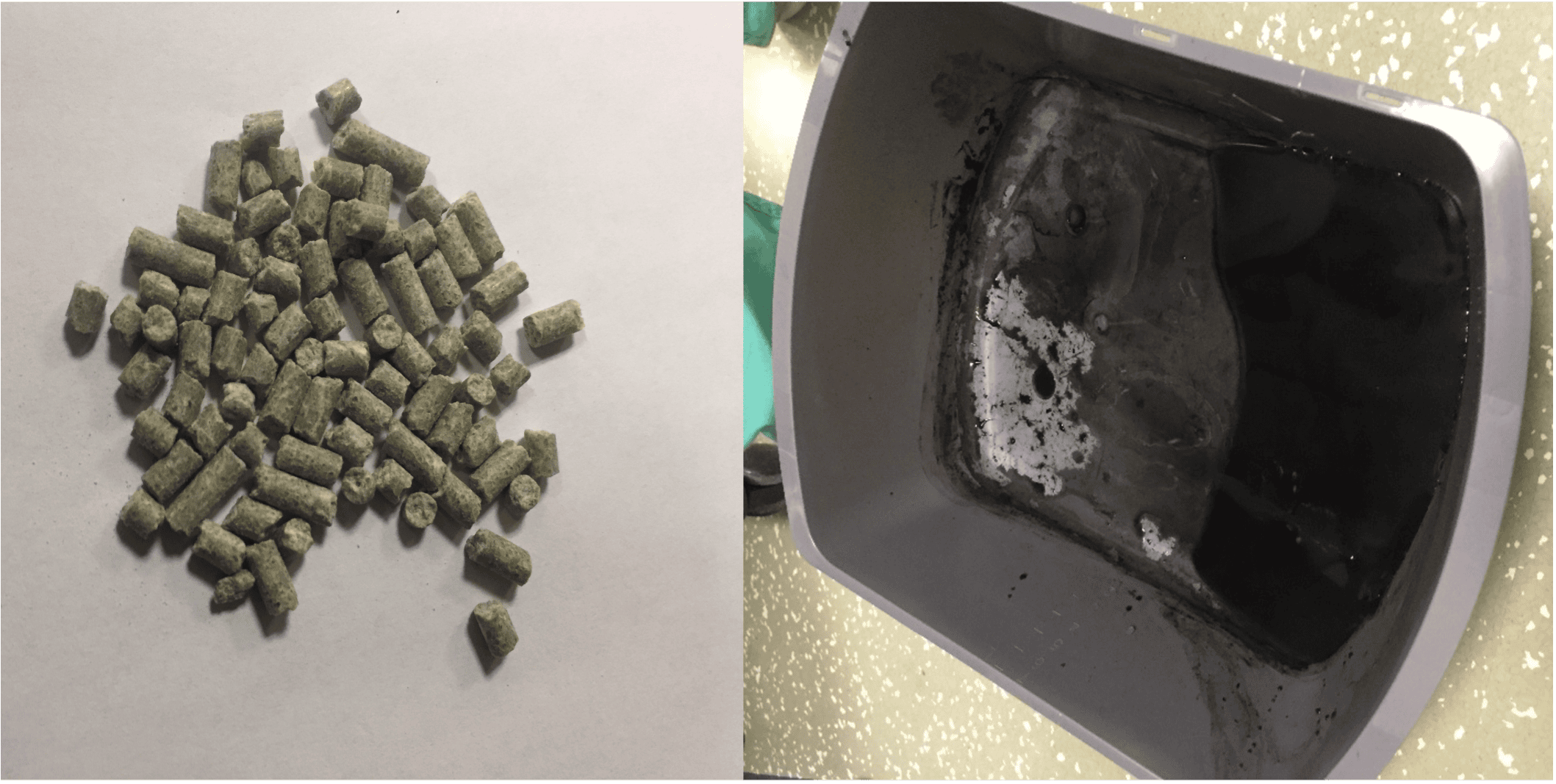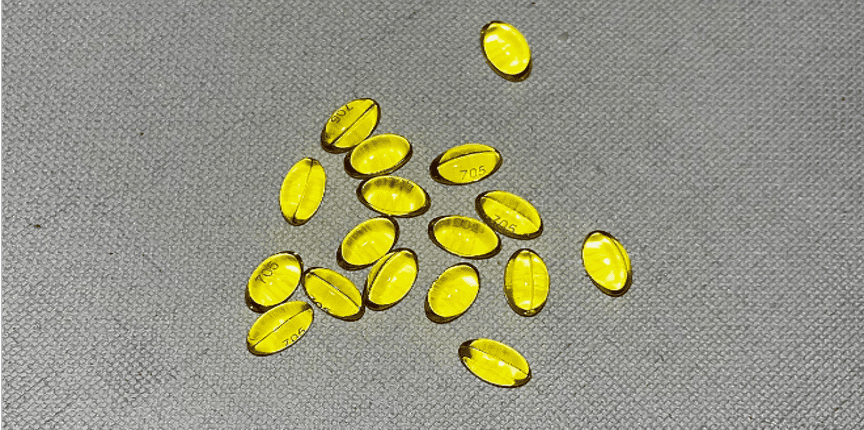
What type of EKG changes may be seen following ingestion of this medication, often prescribed for an upper respiratory infection?
- AV block
- Diffuse ST elevation
- Prolonged QTc
- Widened QRS
[Author’s own image]

The American College of Medical Toxicology hosts this Toxicology Visual Pearls series. The post was peer-reviewed on behalf of ACMT by Drs. Howard A. Greller, Louise Kao, and Jillian Theobald.
References
- Thimann DA, Huang CJ, Goto CS, Feng SY. Benzonatate toxicity in a teenager resulting in coma, seizures, and severe metabolic acidosis. J Pediatr Pharmacol Ther. 2012;17(3):270-273. PMID: 23258970.
- FDA Drug Safety Communication: Death resulting from overdose after accidental ingestion of Tessalon (benzonatate) by children under 10 years of age. Published online June 28, 2019. Available at: FDA Drug Safety Communication: Death resulting from overdose after accidental ingestion of Tessalon (benzonatate) by children under 10 years of age | FDA. Accessed April 22, 2026
- Bishop-Freeman SC, Shonsey EM, Friederich LW, Beuhler MC, Winecker RE. Benzonatate Toxicity: Nothing to Cough At, Journal of Analytical Toxicology, 2017; 41(5): 461–463. PMID: 28334901.
- Minhaj FS, Leonard JB. A description of the clinical course of severe benzonatate poisonings reported in the literature and to NPDS: A systematic review supplemented with NPDS cases. Hum Exp Tox 2021; 40(12_suppl):S39-S48. PMID: 34219543.
- Cicci CD, Theobald J, Stanton M, Feldman R. Outcomes of benzonatate exposures reported to a single United States poison center: a 20-year review. Clin Toxicol (Phila). 2025 Jul;63(7):488-494. doi: 10.1080/15563650.2025.2512817. Epub 2025 Jun 13. PMID: 40511470.
- American Society for Regional Anesthesia and Pain Medicine: Checklist for Treatment of Local Anesthetic Systemic Toxicity (LAST). Published November 1, 2020. Available at: https://asra.com/guidelines-articles/guidelines/guideline-item/guidelines/2020/11/01/checklist-for-treatment-of-local-anesthetic-systemic-toxicity. Accessed April 22, 2026.
Stephanie Teeling, MD
Emergency Medicine Resident
Carolinas Medical Center, Charlotte, NC
Carolinas Medical Center, Charlotte, NC
Latest posts by Stephanie Teeling, MD (see all)
- ACMT Toxicology Visual Pearl: Clutching your Perles - June 9, 2026
Anna Dulaney, PharmD, DABAT
Clinical Toxicologist
Division of Medical Toxicology
Department of Emergency Medicine
Atrium Health’s Carolinas Medical Center
Division of Medical Toxicology
Department of Emergency Medicine
Atrium Health’s Carolinas Medical Center
Latest posts by Anna Dulaney, PharmD, DABAT (see all)
- ACMT Toxicology Visual Pearl: Clutching your Perles - June 9, 2026
- ACMT Toxicology Visual Pearl – Master of Deceit - March 10, 2026
- ACMT Toxicology Visual Pearl – Hidden Danger - January 20, 2026