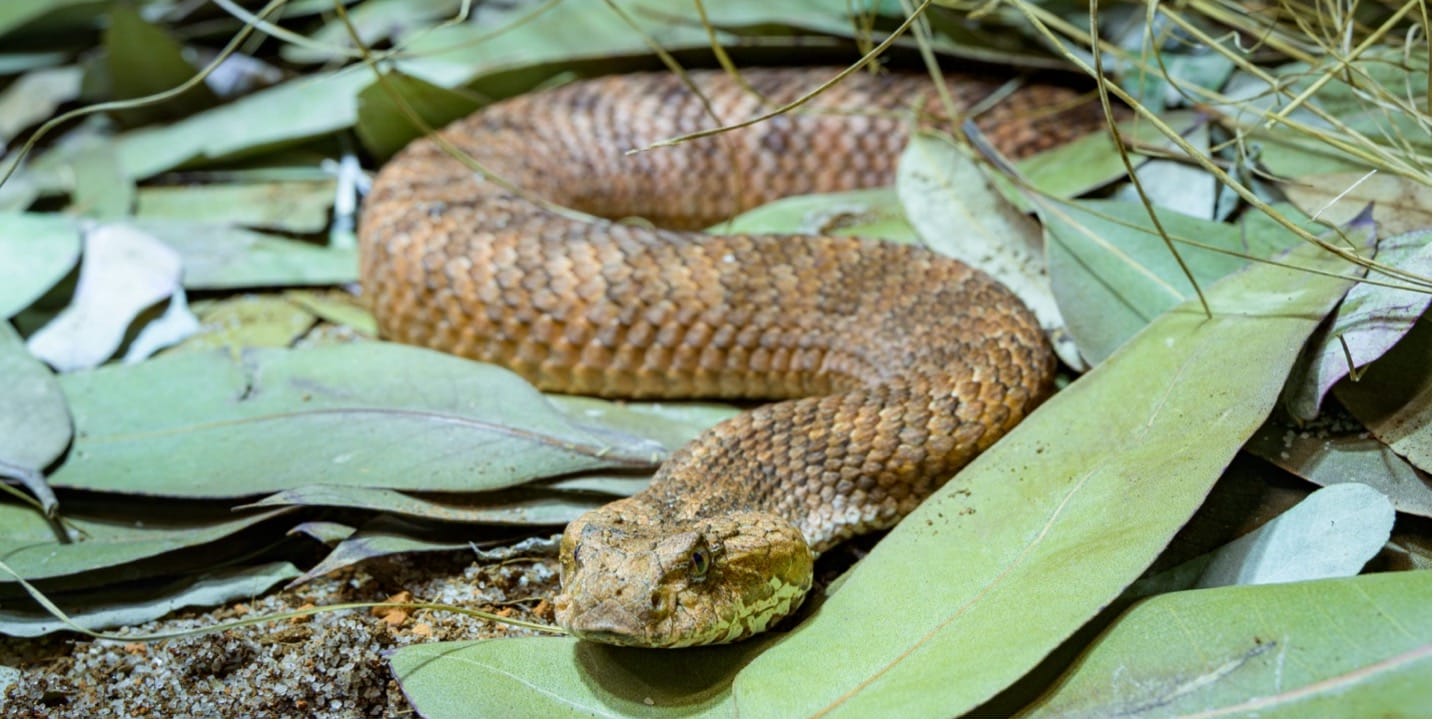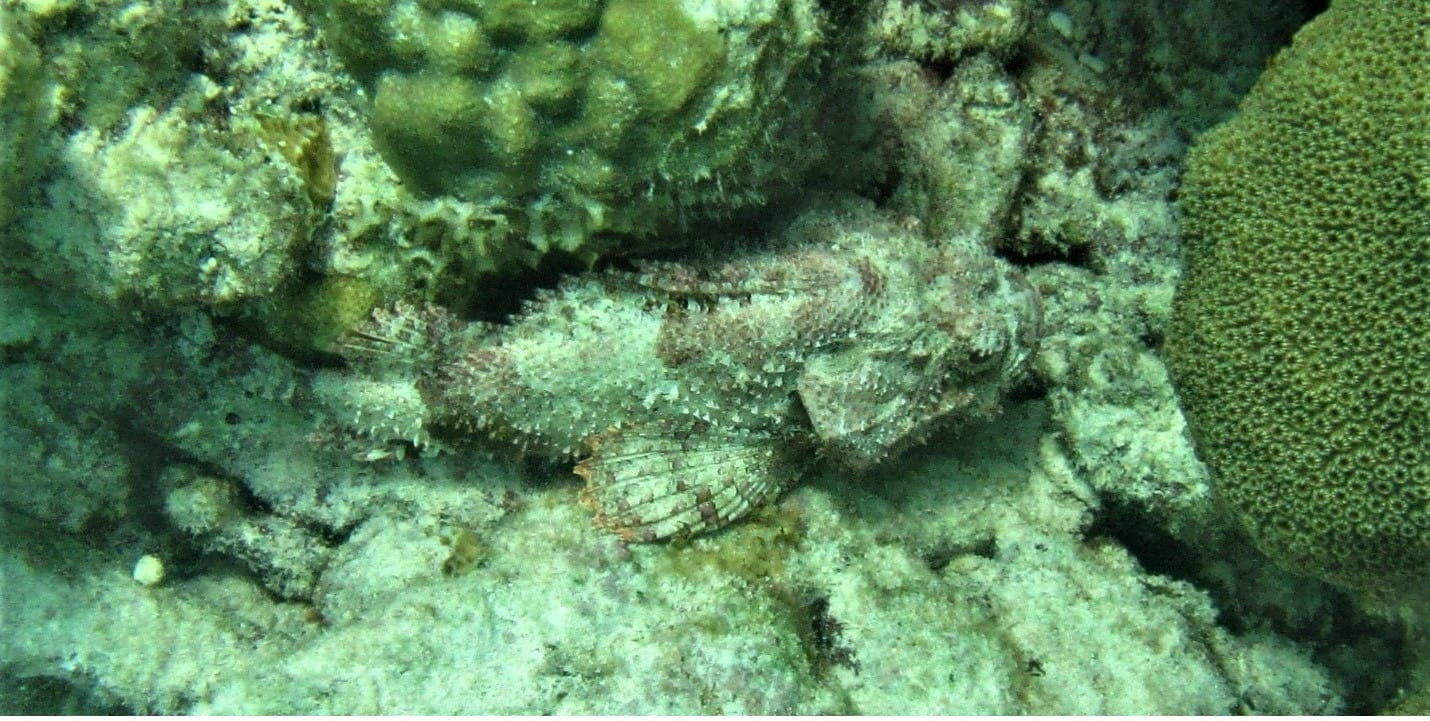
What venomous marine animal is pictured?
- Fire coral
- Lionfish
- Sea urchin
- Stonefish
[Image from Rapheal Duprat via Wikimedia]

The American College of Medical Toxicology hosts this Toxicology Visual Pearls series. The post was peer reviewed on behalf of ACMT by Drs. Howard A. Greller, Louise Kao, and Anselm Wong.
References
- Saggiomo SL, Firth C, Wilson DT, Seymour J, Miles JJ, Wong Y. The Geographic Distribution, Venom Components, Pathology and Treatments of Stonefish (Synanceia spp.) Venom. Mar Drugs. 2021 May 24;19(6):302. PMID:34073964.
- Lee JYL, Teoh LC, Leo SP. Stonefish Envenomations of the Hand – A Local Marine Hazard: A Series of 8 Cases and Review of the Literature. Ann Acad Med Singapore 2004;33(4):515-20. PMID: 15329767.
- Currie, B J. Marine Antivenoms. Journal of Toxicology: Clinical Toxicology, 2003; 41(3), 301–308. PMID: 12807313.
- Ziegman R, Undheim EAB, Baillie G, Jones A, Alewood PF. Investigation of the estuarine stonefish (Synanceia horrida) venom composition. J Proteomics. 2019 Jun 15;201:12-26. doi: 10.1016/j.jprot.2019.04.002. Epub 2019 Apr 4. PMID: 30953730.
- Barnett S, Saggiomo S, Smout M, Seymour J. Heat deactivation of the stonefish Synanceia horrida venom – implications for first-aid management. Diving Hyperb Med. 2017 Sep;47(3):155-158. doi: 10.28920/dhm47.3.155-158. PMID: 28868595.
- Rensch G, Murphy-Lavoie HM. Lionfish, Scorpionfish, and Stonefish Toxicity. 2023 Jul 31. In: StatPearls [Internet]. Treasure Island (FL): StatPearls Publishing; 2025 Jan–. PMID: 29489204.
- Docter TA, Altschuh LB, Medak AJ, Statum SM, Chung CB, Van Hoesen KB, Coffey CH. Comparison of Radiographic, Ultrasound, and Magnetic Resonance Imaging for the Detection of Retained Stingray Barb: A Cadaveric Study. Wilderness Environ Med. 2021 Sep;32(3):302-307. doi: 10.1016/j.wem.2021.03.012. Epub 2021 Jul 20. PMID: 34294537.
- Therapeutic Guidelines Ltd. Marine envenoming and penetrating marine injuries section. Therapeutic Guidelines: Toxicology and Toxicology (V1, 2020). Https://app.tg.org.au

Andrew Scott, MD
Emergency Medicine Resident
Atrium Health Carolinas Medical Center
Atrium Health Carolinas Medical Center
Latest posts by Andrew Scott, MD (see all)
- ACMT Toxicology Visual Pearl – Master of Deceit - March 10, 2026
Anna Dulaney, PharmD, DABAT
Clinical Toxicologist
Division of Medical Toxicology
Department of Emergency Medicine
Atrium Health’s Carolinas Medical Center
Division of Medical Toxicology
Department of Emergency Medicine
Atrium Health’s Carolinas Medical Center
Latest posts by Anna Dulaney, PharmD, DABAT (see all)
- ACMT Toxicology Visual Pearl: Clutching your Perles - June 9, 2026
- ACMT Toxicology Visual Pearl – Master of Deceit - March 10, 2026
- ACMT Toxicology Visual Pearl – Hidden Danger - January 20, 2026