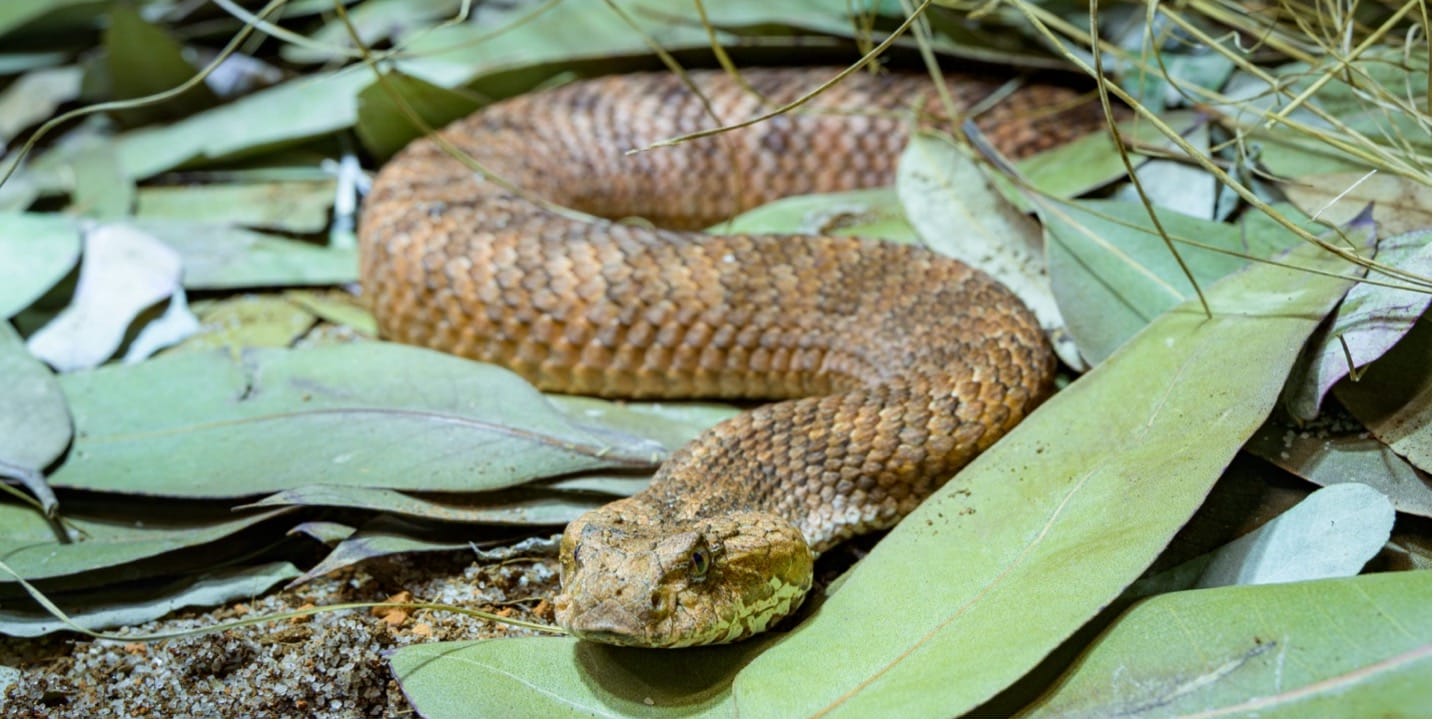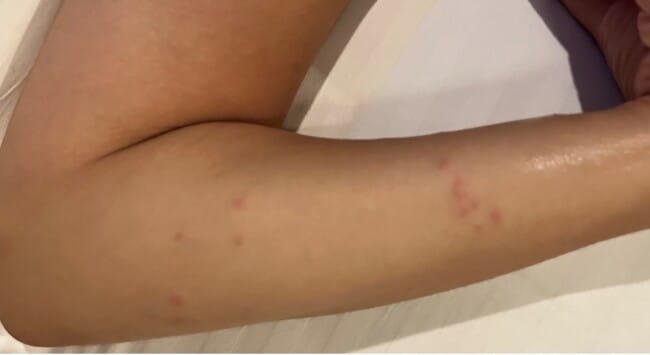
What organism causes seabather’s eruption?
- Jellyfish
- Nematodes
- Portuguese man-of-war
- Stonefish
[Author’s own image]

The American College of Medical Toxicology hosts this Toxicology Visual Pearls series. The post was peer-reviewed on behalf of ACMT by Drs. Bryan Judge, Louise Kao, and Josef Thundiyil.
References
- DermNet® – Sea bather’s eruption. DermNet®. Published October 26, 2023. Accessed July 27, 2024. https://dermnetnz.org/topics/sea-bathers-eruption.
- Kumar S, Hlady WG, Malecki JM. Risk factors for seabather’s eruption: a prospective cohort study. Public Health Reports. 1997;112(1):59. PMID 9018290.
- Freudenthal A, Joseph P. Seabather’s Eruption. New England Journal of Medicine. 1993;329(8):542-544. PMID 8336754.
- Prohaska J, Jamal Z, Tanner LS. Seabathers Eruption. StatPearls Publishing [Updated 2023 Aug 8]. Accessed October 17, 2024. https://wwwncbinlmnihgov/books/NBK482307/.
- Dinulos JE, Dinulos JG. Present and future: Infectious tropical travel rashes and the impact of climate change. Ann Allergy Asthma Immunol. Apr 2023;130(4):452-462. PMID 36574899.
- MacSween RM, Williams HC. Lesson of the Week: Seabather’s eruption—a case of Caribbean itch. BMJ. 1996;312(7036):957-958. PMID 8616313.
- Rossetto AL, Cruz CCB, Pereira ICC, et al. Diagnostic confusion between seabather’s eruption as well as dermatophytosis and parasitic infestations. Rev Soc Bras Med Trop. 2020;53:e20190462. PMID 32187342.
- Thornton NJ, Garcia B, Hoyer P. Aquatic Antagonists: Marine Rashes (Seabather’s Eruption and Diver’s Dermatitis). Cutis. May 2022;109(5):255-260. doi:10.12788/cutis.0522 PMID 35856759.
- Rossetto AL, Dellatorre, G, daSilveira FL, Haddad Jr, V. Seabather’s eruption: a clincial and epidemiological study of 38 cases in Santa Catarina State, Brazil. Inst. Med. trop. S. Paulo. May 2009;51(3): 169-175. PMID 19551292.
Lila Nanagas
Student
Villanova University
Villanova University
Latest posts by Lila Nanagas (see all)
- ACMT Visual Pearl: Seabather’s Eruption: The unexpected beach burn - February 12, 2025

Kris Nañagas, MD
Associate Professor of Clinical Emergency Medicine
Medical Toxicology Faculty
Indiana University School of Medicine
Medical Toxicology Faculty
Indiana University School of Medicine
Latest posts by Kris Nañagas, MD (see all)
- ACMT Visual Pearl: Seabather’s Eruption: The unexpected beach burn - February 12, 2025
- ACMT Toxicology Visual Pearl | Substance-Induced Crystalluria: All That Glitters Is Not Gold - May 6, 2022
- ACMT Toxicology Visual Pearls – In “Spore” Taste - April 7, 2021