snake

What is the predominant clinical effect of envenomation by this snake?

  1. Acute hepatic failure leading to coagulopathy
  2. Direct cardiotoxicity leading to arrhythmias
  3. Profound neuromuscular paralysis
  4. Rapid onset of shock and multisystem organ failure

[Image courtesy of iStock. ID: 1311554579]

3. Profound neuromuscular paralysis

Discussion

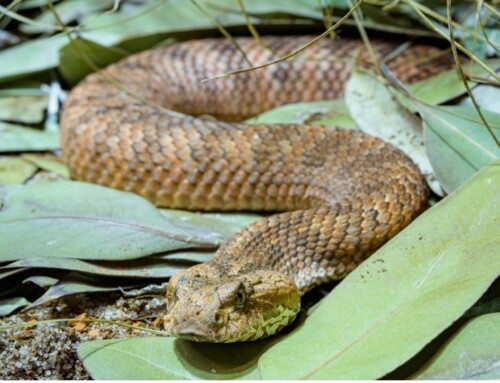
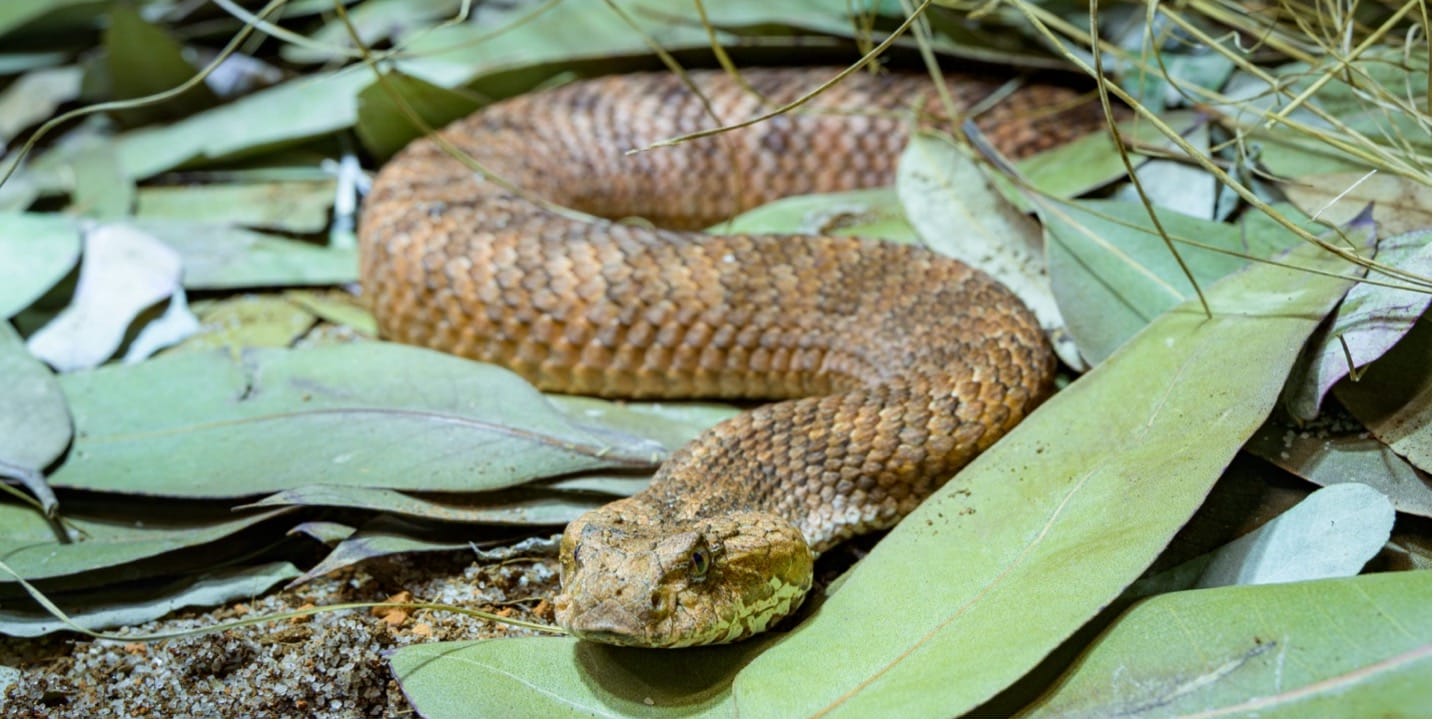
This photo depicts the Papuan taipan (Oxyuranus scutellatus canni), a highly venomous snake of the Elapidae family native to Papua New Guinea and nearby regions [1]. The venom of Elapidae snakes, encompassing species such as cobras, kraits, mambas, and coral snakes, is renowned for its potency and diversity of bioactive components. Elapid venom is neurotoxic, interfering with acetylcholine transmission at the neuromuscular junction and leading to rapidly progressive paralysis. Within minutes to hours, individuals may exhibit bulbar symptoms such as slurred speech, double vision, ptosis, and difficulty swallowing. Left untreated, the paralysis may advance to the diaphragm and intercostals, leading to respiratory failure. Elapid venom may also contain myotoxic, procoagulant, and hemolytic properties, which can contribute to venom’s overall toxicity and exacerbate the envenomation severity [2].

How should elapid snake envenomation be managed?

  • Monitor vital signs closely, particularly for signs of neurotoxicity and respiratory distress.
  • Administer specific antivenom promptly within 2-6 hours based on the snake species involved and regional considerations [2,3]. Once neurotoxic symptoms take hold, they may become irreversible due to the presynaptic nature of their pathology [3].
  • Depending on the species, neostigmine may be considered if antivenom is unavailable or significantly delayed [4].
  • Provide supportive care, including prompt intubation, fluid resuscitation, and pain control, while closely monitoring for systemic complications such as coagulopathy and organ dysfunction [5].
  • Wound care should be initiated as needed to prevent infection and promote healing.
  • Follow-up monitoring and laboratory tests are crucial to assess treatment response and ensure optimal patient outcomes [5].
  • Polyvalent antivenoms are typically produced against a range of regional elapid snakes; in Papua New Guinea, where Papuan taipans are native, the Snake Venom Research Unit (SVRU) at the University of Papua New Guinea produces a polyvalent antivenom effective against the venoms of taipans and other local snake species [6].

How can I obtain antivenom for non-native snakes in the US?

  • In the United States, obtaining specific elapid antivenom can be challenging due to the rarity of these snakes.
  • The Antivenom Index, a database created by the Association of Zoos and Aquariums (AZA) and the American Association of Poison Control Centers (AAPCC) over 25 years ago, centralizes information on nonnative snake antivenoms stored in U.S. zoos [7].
  • The Antivenom Index allows searches by common or scientific names, providing antivenom availability and quantities. Healthcare providers, in consultation with expert toxicologists or the nearest regional poison control center, can use this data to coordinate antivenom procurement for patient care.

Bedside Pearls

  • Elapid snake venom, like that of the Papuan taipan, causes rapid paralysis due to potent neurotoxins and other components.
  • Administering specific antivenom is essential for managing elapid snakebites along with supportive care.
  • Accessing specific elapid antivenom in the U.S. can be accomplished using the Antivenom Index.

References

  1. O’Shea M. A Guide to the Snakes of Papua New Guinea. Port Moresby, Papua New Guinea: Independent Publishing Group; 1996. pp162-3. ISBN 981-00-7836-6.
  2. Boesen KJ, Boesen K, Hurst NB, Mazda Shirazi F. Exotic Nonnative Snake Envenomations. In: Nelson LS, Howland M, Kewin NA, Smith SW, Goldfrank LR, Hoffman RS, eds. Goldfrank’s Toxicologic Emergencies, 11e. McGraw-Hill Education; 2019. Accessed May 25, 2024.
  3. Johnston CI, Ryan NM, O’Leary MA, Brown SGA, Isbister GK. Australian taipan (Oxyuranus) envenoming: Clinical effects and potential benefits of early antivenom therapy – Australian Snakebite Project (ASP-25). Clin Toxicol. 2017;55(2):115-122. https://doi.org/10.1080/15563650.2016.1250903. PMID 27903075.
  4. Banerjee RN, et al. Neostigmine in the treatment of Elapidae bites. J Assoc Physicians India. 1972;20:503-509. PMID 4676309.
  5. Warrell DA. Commissioned article: Management of exotic snakebites. Q J Med. 2009;102:593-601. https://doi.org/10.1093/qjmed/hcp084. PMID 19535618.
  6. Calvete JJ, et al. Venoms, venomics, antivenomics. FEBS Lett. 2009;583:1736-1743. https://doi.org/10.1016/j.febslet.2009.03.029. PMID: 19303875.
  7. Antivenom Index. AZA. https://www.aza.org/antivenom-index. Accessed May 25, 2024.

Sean Flannigan, MD

Sean Flannigan, MD

Emergency Medicine Resident
Atrian Health Carolinas Medical Center
Sean Flannigan, MD

Latest posts by Sean Flannigan, MD (see all)

Erik Fisher, MD

Erik Fisher, MD

Associate Program Director, Medical Toxicology Fellowship
Atrium Health Carolinas Medical Center and Levine Children's Hospital
Clinical Assistant Professor of Emergency Medicine
Wake Forest School of Medicine