Case of a Lethargic Child: Developing a Differential Diagnosis
 A 2-year-old previously healthy boy presents to the emergency department (ED) acting sleepier than usual. Yesterday, he was in his usual state of health, but this morning he didn’t wake up at his usual time of 6 am. When his father went to his room at 7 am, the child was lying in bed. He opened his eyes to look at his father, but did not get out of bed. The mother and father deny any trauma, fever, or seizure activity.
 Pediatric patients are not just little adults. Placing peripheral IVs in young patients can be challenging and comes with its own set of challenges. Presented are some basic and advanced tips to maximize success in establishing peripheral IV access in pediatric patients using ultrasonography.
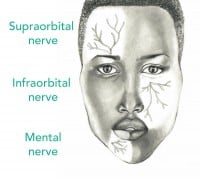 Regional nerve blocks of the face and ear can be a wonderful choice of analgesia in a child, particularly for wounds that need to be repaired. The benefits include fewer local injections, improved cosmesis due to less wound margin distortion, and improved analgesia within the nerve region.
 A 3 year-old boy presents with a deep laceration of the distal phalanx, through the nail bed, after slamming his fingers in a car door. He is crying, anxious, and uncooperative. How do you make this situation easier to evaluate and repair?
 While ear foreign bodies can happen at any age, the majority occur in children less than 7 years of age.