ACMT Toxicology Visual Pearls: The Kitchen Cabinet High

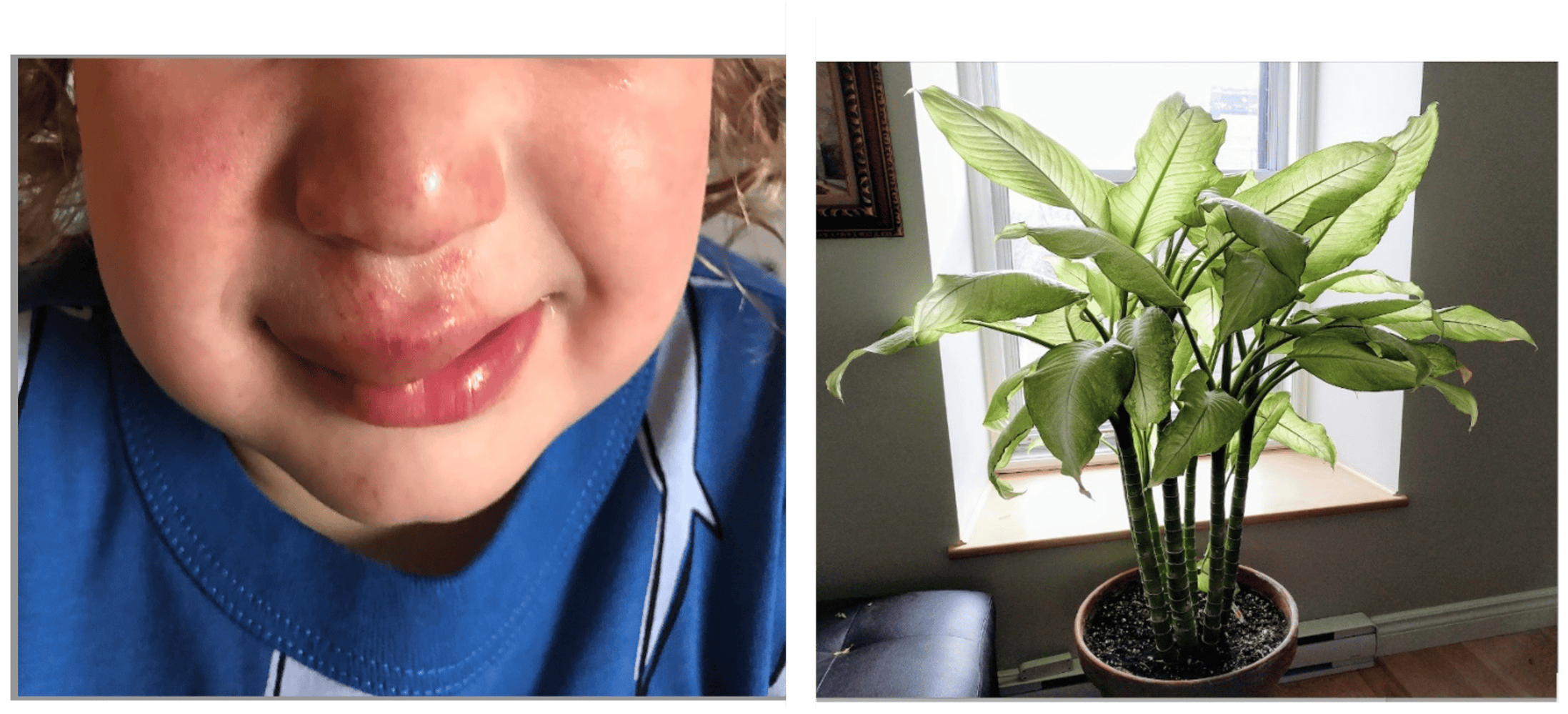
What is the primary toxin in the substance above?
- Solanine
- Myristicin
- Lysergic acid amide
- Phytolacca toxin

What is the primary toxin in the substance above?

There has been a well-documented growth in the use of FOAM in graduate medical education [1-4]. The decentralized nature of FOAM along with concerns with the lack of peer review make the assessment of the quality of information difficult. Several years ago, a group of physicians set out to solve these problems by modifying the traditional systematic review format, and created the Systematic Online Academic Resource (SOAR) review. The SOAR review aims to “systematically identify online resources by topic…[and] assess the quality of these resources with a validated tool, and collate links.” [5]
Our review, “Systematic online academic resource (SOAR) review: Pediatric respiratory infectious disease,” [6] is the fourth in the AEM Education and Training series – and the first focusing on pediatrics. We identified 36 high-quality blog posts on this topic.
Previous SOAR reviews included the following:
| rMETRIQ Score | Topic | Blog/Podcast Post | Date of Publication |
|---|---|---|---|
| 20 | Epiglottitis | Radiopaedia: Epiglottitis | 1/29/10 |
| 19 | Strep pharyngitis | emDOCs Podcast – Episode 27: An Understated Myth? Strep Throat & Rheumatic Fever | 4/27/21 |
| 19 | Hand-foot-and-mouth disease | Radiopaedia: Enterovirus 71 | 1/24/14 |
Looking for a blog post on bronchiolitis? Pneumonia? Croup? Look no further! You can view these high-quality blog posts in our SOAR publication (subscription required) [6]. To make it easier, you can also identify these resources by topic on PEMBlog with Dr. Brad Sobolewski (coauthor of the SOAR review):
Using 177 search terms, our initial search yielded 44,897 resources, 441 of which met criteria for quality assessment.
| Renal | Endocrine | Sickle Cell | Pediatric Resp ID | |
|---|---|---|---|---|
| # Reviewed | 341 | 756 | 53 | 441 |
| High Quality | 34 (10%) | 121 (16%) | 8 (15%) | 36 (8%) |
| Poor Quality* | NA | NA | 11 (21%) | 67 (15%) |
* Poor quality was not assessed in the first 2 SOAR reviews
Special thanks to SOAR coauthors Brad Sobolewski, Cindy Roskind, Andrew Grock, JooYeon Jung, Shirley Bae, and Lisa Zhao.

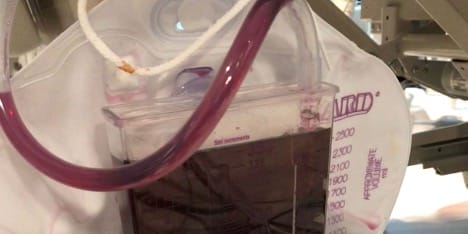
What could cause this finding three days after ingestion of a concentrated household substance?

Droperidol is back! Routine use of calcium for cardiac arrest is out? TPA is… well, we won’t go there. The landscape of medicine is continuously being reshaped. New research may question the effectiveness of an existing medication or promote the arrival of a novel treatment. Once beloved medications sit dust-laden in the back of a hospital pharmacy. But sometimes, just sometimes, an old medicine arises from that dust. Phenobarbital for alcohol withdrawal comes to mind.
Could cocaine hydrochloride be one of those medications to be resurrected?
Cocaine is effective in the treatment of epistaxis. Epistaxis is an exceedingly common complaint, accounting for approximately one in 200 emergency department (ED) visits in the United States [1, 2]. If you ask any seasoned emergency physician their ideal approach to epistaxis management, chances are high that it used to include cocaine. They will exclaim how superior it was to anything used today and claim, “Not only did it vasoconstrict, but it anesthetized, as well!” If this is the case, why is cocaine hydrochloride no longer used?
This post will chronicle cocaine’s fascinating yet troubled history in medicine and expose you to another tool for your arsenal in the ED management of epistaxis.
The coca plant, native to South America, Mexico, Indonesia, and the West Indies, derives its name from the Aymaran word Khoka meaning “the tree” [3]. Coca leaves contain approximately 0.25 to 0.9% cocaine. Their use medicinally dates as far back as 1000 BC by the indigenous people of South America. The leaves were chewed for energy supplementation and altitude sickness relief. During the Incan Empire of the 13th to 16th century, the leaves were revered as sacred and served as a panacea or cure-all. Coca was used to aid in digestion, pain relief, mitigation of hunger, wound healing, and even as a local anesthetic for invasive procedures, such as cranial trephination [3, 4].
It was not until the mid-1800s that cocaine’s journey began in Europe with the German chemist, Albert Nieman. Neiman isolated the alkaloid cocaine from the coca leaf and noted its numbing properties when placed on the tongue [5]. Its anesthetic and vasoconstricting properties were soon recognized by Austrian Professor C.D. Schroff and Peruvian physician, Dr. Thomas Mareno y Maiz [4]. Its popularity in medicine, however, had yet to catch on [4–6].
1884 marked a pivotal year for cocaine use in medicine. Austrian ophthalmologist, Dr. Carl Koller, introduced cocaine as a local anesthetic for cataract and other eye surgeries, which was a groundbreaking advancement. He additionally suggested its use for additional procedures of the nose, pharynx, and larynx [4, 5, 7]. Simultaneously, Sigmund Freud, the famed Austrian neurologist, became fascinated with cocaine’s various applications and wrote Uber Coca, the first of his 5 papers on the subject. He touted it as a “magical substance” without addictive properties. Ironically – and unfortunately – Freud later realized his misjudgment and spent years grappling with cocaine addiction [4, 5, 7].
Cocaine’s use as a local and regional anesthetic spread widely across Europe and to America from there. Influential American surgeons like Dr. William Halstead, a founder of Johns Hopkins School of Medicine, and his student, Dr. James Corning, further advanced its clinical applications by using cocaine as the first agent for regional nerve blocks and spinal anesthesia [8]. Like Freud, Dr. Halsted became addicted to cocaine and later morphine, which he used to wean his cocaine addiction.
In the early 1900s the medical use of cocaine declined due to increased reports of side effects, the development of safer alternatives such as procaine, and strict regulatory measures such as the 1914 Harrison Narcotics Tax Act [9].
Most of today’s medical use of cocaine is by the Ear, Nose and Throat (ENT) community. In fact, the American Academy of Otolaryngology-Head and Neck Surgery has had a position statement on cocaine since 1886 that reads [10]:
The American Academy of Otolaryngology-Head and Neck Surgery considers cocaine to be a valuable anesthetic and vasoconstricting agent when used as part of the treatment of a patient by a physician. No other single drug combines the anesthetic and vasoconstricting properties of cocaine.
Cocaine hydrochloride is FDA-approved for local anesthesia for adult nasal procedures. Though not FDA-approved, it is also commonly used by ENT physicians as a hemostatic agent to prevent post-procedure bleeding and as a decongestant to promote a clearer view of the nasal passageways during surgery [11–14]. In the ED, it has been used off-label to treat epistaxis [11, 13, 15, 16] and as an anesthetic and analgesic before fiberoptic nasotracheal intubation [8].
Cocaine is an alkaloid ester with weak basic properties. The addition of hydrochloride salt forms cocaine hydrochloride. In this form, cocaine is soluble in aqueous solution and can be used for ENT procedures. Its anesthetic properties occur via blockage of voltage-gated sodium channels. Vasoconstriction and hemostasis occur due to inhibition of catecholamine reuptake, including norepinephrine [9, 11].
Cocaine hydrochloride is a clear, green solution. It comes in a single-unit bottle with concentrations ranging from 4-10%. Only the 4% solution is currently recommended as it has similar efficacy to higher concentrations with fewer side effects [11, 22]. The 10% solution should be avoided as it has been associated with toxicity and adverse events [8, 17, 20, 23]. Typically the 4% solution is dispensed in 1 mL or 4 mL single-use bottles.
There is limited research available on the use of intranasal cocaine in the ED for epistaxis management, or any other condition. Studies from the ENT literature have shown that cocaine has similar efficacy to most vasoconstrictors including epinephrine and phenylephrine for preventing bleeding after intranasal procedures [26–30]. The literature is mixed on oxymetazoline (Afrin) in epistaxis with some studies showing it may have superior efficacy in preventing post-procedure epistaxis [31, 32]. However, oxymetazoline lacks any anesthetic properties.
Concerns about cocaine hydrochloride’s intranasal use primarily revolve around its potential for systemic cardiovascular toxicity. Historical case reports of varying quality have documented significant adverse events including myocardial infarction (MI) and cardiac arrhythmias following intranasal use during ENT procedures and epistaxis management [21, 33, 34]. A dive into these reports, however, shows that a concentration and dose over the accepted 4% concentration and 200 mg maximum dose was frequently used in these cases. Many confounders also existed, such as a history of cardiac disease and concomitant medication administration (including general anesthesia) [34, 35]. There have been many contemporary studies comparing cocaine to other vasoconstricting/anesthetic agents in the ENT literature. In these studies, cocaine has not been shown to cause serious adverse CNS or cardiac events including MI, dangerous arrhythmias, or death [28, 32, 36–41].
It is important to note that most of the randomized control studies excluded patients with cardiac disease. It is therefore recommended to avoid the use of cocaine in patients with a history of MI, CAD, congenital heart disease, or uncontrolled hypertension [18, 34]. Cocaine should also be avoided in patients on beta-blocker therapy, from limited studies demonstrating increased coronary vasoconstriction with concomitant administration [20, 42].
The most common side effects are mild blood pressure elevation, mild tachycardia, non-emergent headache, and anxiety [18, 43]. Although rare, signs to watch for that could indicate severe CNS or cardiovascular toxicity include: agitation, seizure activity, hyperthermia, significant hypertension, significant tachycardia or arrhythmias, chest pain, and MI [25, 34].
It is recommended that patients receiving intranasal cocaine should have continuous cardiac monitoring and frequent vital sign checks, assessing for hypertension and tachycardia [21].


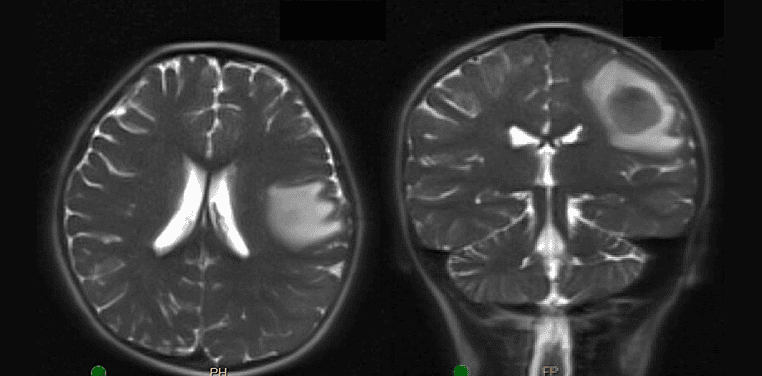
What is the primary cause of death following ingestion of the plant pictured?

Read this tutorial on the use of point of care ultrasonography (POCUS) for pediatric renal and bladder ultrasonography. Then test your skills on the ALiEMU course page to receive your PEM POCUS badge worth 2 hours of ALiEMU course credit.
Serena is a 9-year-old girl who comes into the emergency department complaining of one day of left flank and left lower quadrant pain (LLQ). The pain is intermittent, sharp, severe, and associated with 2 episodes of nonbloody, nonbilious emesis. Her mother denies any fevers, upper respiratory symptoms, sore throat, or diarrhea. She adds that her daughter has complained of 2-3 episodes of dysuria and gross hematuria over the last few days.
On arrival, her vital signs are:
| Vital Sign | Finding |
|---|---|
| Temperature | 99 F |
| Heart Rate | 115 bpm |
| Blood Pressure | 97/50 |
| Respiratory Rate | 19 |
| Oxygen Saturation (room air) | 100% |
You find her lying on the gurney, uncomfortable appearing, and intermittently crying. She has a normal HEENT, neck, cardiac, respiratory, and back examination. She has no flank tenderness, but she does cry out with palpation of the LLQ and suprapubic areas.
Given her pain with a history of intermittent hematuria and dysuria, you perform a renal and bladder point of care ultrasound (POCUS) examination.
Using the curvilinear probe, you perform a POCUS on the bladder and both kidneys (Video 12).
Labs showed a slight leukocytosis with a serum WBC of 13 x109/L but no left shift and a normal creatinine. Urinalysis was positive for blood, RBC’s, and crystals but negative for glucose, ketones, leukocyte esterase, nitrites, WBC’s, squamous cells, and bacteria. The pain and vomiting were well-controlled with ketorolac and ondansetron, respectively. Urology was consulted and recommended medical management. The patient was discharged on tamsulosin and given urine-straining instructions.
At her pediatrician clinic visit 2 weeks later, the patient had passed the stone and was asymptomatic.

Which medication can be derived from the bark of the pictured tree?