


 After getting many requests for more PV cards, we are excited to launch 13 new topics located in the Cardiovascular folder of the Emergency Medicine: PV Cards collection on
 When the PERC Rule Fails
 Kline et al developed a clinical decision tool based on parameters that could be obtained from a brief initial assessment to reasonably exclude the diagnosis of pulmonary embolism (PE) without the use of D-dimer in order to prevent unnecessary cost and the use of medical resources. 1 Many of us have used the Pulmonary Embolism Rule-out Criteria (PERC) rule by now, but we should be clear on what it includes. Are we using it appropriately?
BISAP, EHMRG, ORT: 3 New Medical Scores You’ve Never Heard Of
 Let’s face it. You’ve heard about the A-a gradient. And free water deficit. And even the APACHE-II score. But how useful are these in your daily practice? You don’t care that much if a patient has shunt physiology in the first case, nor exactly how much free water they’re lacking in the second. And in the third case, your clinical acumen is probably pretty good at predicting a sick patient’s mortality already. But what about the new medical scores of BISAP, EHMRG, and ORT?
Blood Pressure Management in Adults (JNC 8 and ACEP Policy)
 Hypertension is one of the most common conditions seen in primary care clinics and emergency departments (EDs). Frequently, patients are found to have asymptomatic hypertension and referred to EDs for management, despite the fact that rapidly lowering blood pressure is not necessary and may be harmful. Yet many clinics still refer these patients for emergent management. In December 2013, the Eighth Joint National Committee (JNC 8) published a new, open-access, evidence-based hypertension guideline in JAMA. They only cited randomized clinical control trials to answer three questions:
- Does initiating antihypertensive pharmacologic therapy at specific BP thresholds improve health outcomes?
- Does treatment with antihypertensive pharmacologic therapy to a specified BP goal lead to improvements in health outcomes?
- Do various antihypertensive drugs or drug classes differ in comparative benefits and harms on specific health outcomes? (more…)
Should We Admit All Patients with Sternal Fractures?
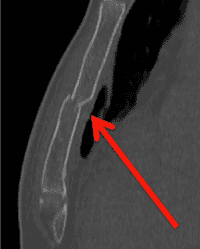 The detection rate of sternal fractures following motor vehicle collisions and blunt trauma to the chest and abdomen has increased over the past decade. The reason for this increase is most likely from the use of seat belts and better imaging modalities such as computed tomography (CT) in trauma patients. I can recall as a resident being told that any patient with a sternal fracture should be admitted to trauma because of the high likelihood of blunt cardiac injury and high mortality rate associated with this injury, but is this always true?
Approach to Difficult Vascular Access

 Intravenous (IV) access is a basic and invaluable skill for emergency physicians. For patients requiring rapid fluid resuscitation, airway management, or medication administration, the placement of one or more IV lines is absolutely essential. Most patients do well with a simple, landmark-based, blind placement of a superficial peripheral IV. However, we often encounter situations where this may be difficult or impossible to achieve, and so we all should have a repertoire of other sites and techniques to employ.
The HEART Score: A New ED Chest Pain Risk Stratification Score
 Chest pain is a common presentation complaint to the emergency department (ED) and has a wide range of etiologies including urgent diagnoses (i.e. acute coronary syndrome (ACS), pulmonary embolism, aortic dissection) and non-urgent diagnoses (i.e. musculoskeletal pain, gastroesophageal reflux disease (GERD), pericarditis). The challenge in the ED is to not only to identify high risk patients but also to identify patients who can be safely discharged home. Specifically, when dealing with ACS, dynamic ECG changes or positive cardiac biomarkers is pretty much a slam dunk admission in most cases, but a lack of these does not completely rule out ACS. Currently, most guidelines and risk stratification scores focus on the identification of high risk ACS patients that would benefit from early aggressive therapies, but what about all the other chest pain patients that don’t have ACS… are they accounted for?