


Paucis Verbis card: Ascites assessment with paracentesis

A paracentesis procedure is often performed in the Emergency Department to rule a patient out for spontaneous bacterial peritonitis (SBP).
- Do you check coagulation studies before performing the procedure?
- How comfortable do you feel that the patient has SBP with an ascites WBC > 500 cells/microliter or ascites PMN > 250 cells/microliter?
This installment of the Paucis Verbis (In a Few Words) e-card series provides an evidence-based review of the literature on topics related to the paracentesis procedure. Especially helpful is the pooled data of likelihood ratios. Like most everything in medicine, a lab test should be used in conjunction with your pretest probability in clinical decision making, and LR’s help with with this.
PV Card: Ascites and Paracentesis
Adapted from [1]
Go to ALiEM (PV) Cards for more resources.
Reference
- Wilkerson RG, Sinert R. The Use of Paracentesis in the Assessment of the Patient With Ascites. Annals of Emergency Medicine. 2009;54(3):465-468. doi: 10.1016/j.annemergmed.2008.09.005

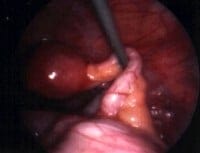 Appendicitis is a common presentation in the Emergency Department. Dilemmas arise when deciding whether to image patients with equivocal symptoms and WBC lab results. Given the risk of ionizing radiation with CT scans, we should ideally minimize the number of CT scans ordered in these patients without mistakenly sending patients home with an early appendicitis. A perforated appendix places the patient at risk for bowel obstruction, infertility (in women), and sepsis.
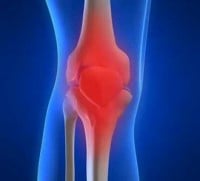 In the workup of monoarticular arthritis, the question that emergency physicians constantly struggle over is whether the patient has a nongonococcal septic arthritis. This joint infection alarmingly damages and erodes cartilage within only a few days.
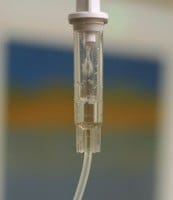 The treatment of shock should focus on correcting the underlying pathophysiology. With persistent hemodynamic instability, a vasopressor and/or inotrope should be selected. Reviewing receptor physiology can help you select the best-fit agent for the patient’s clinical condition. There is an especially useful table on medication selection in the reviewed 2008 EM Clinics of North America article.