


Paucis Verbis card: Workup for first-time seizure
 How do you workup adult patients who present with a new-onset seizure and now neurologically back to normal?
There unfortunately is very little recent literature about the best workup approach. In 1994, the American College of Emergency Physicians (ACEP) published a Clinical Policy based on expert consensus. The EM Clinics of North America series also just published a review on the topic. The bottom-line is that there are two types of workup approaches.
For the uncomplicated cases (age less than 40 years, afebrile, no comorbidities, no neurologic deficits), the workup is fairly minimal, which includes:
- Glucose and electrolytes
- Urine pregnancy test, if appropriate
- +/- Urine toxicology screen
- Head CT (noncontrast)
Otherwise, the more complex cases require a more extensive workup, which may include a lumbar puncture in the setting of a fever, severe headache, immunocompromised status, or persistent altered mental status.
Pearl
Be sure you obtain a head CT for patients who you think are presenting with a simple new-onset, alcohol-withdrawal seizure. One study showed that 6.2% of these patients actually have a significant lesion on CT (eg. bleed, mass).
PV Card: Workup for First Time Seizure
Adapted from [1, 2]
Go to ALiEM (PV) Cards for more resources.
References
- ACEP C, Clinical P. Clinical policy: Critical issues in the evaluation and management of adult patients presenting to the emergency department with seizures. Ann Emerg Med. 2004;43(5):605-625. [PubMed]
- Jagoda A, Gupta K. The emergency department evaluation of the adult patient who presents with a first-time seizure. Emerg Med Clin North Am. 2011;29(1):41-49. [PubMed]


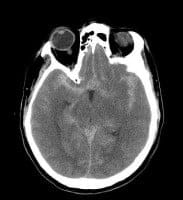 In Wednesday’s post about the Colorado Compendium, Graham mentioned a new 2010 BMJ article on the high-risk signs suggestive of subarachnoid hemorrhage by the gurus in clinical prediction rules in Canada.
 There is constant debate on whether to image the cervical spine of blunt trauma patients. Fortunately, there are two clinical decision tools available to help you with your evidence-based practice.
 Dyphagia is a disorder of swallowing. It actually occurs in up to 10% of adults older than 50 years old. How can you determine the most likely causes for dysphagia? The secret is to obtain a thorough history and using the algorithm below, which I find really helpful from a review article in American Family Physician.