


Paucis Verbis: Pulmonary Embolism Clinical Prediction Rules
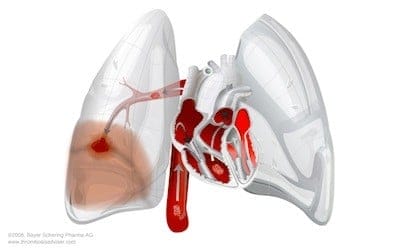 “Should I get a D-Dimer test or CT chest angiogram on my patient with atypical chest pain to rule-out a pulmonary embolism?” This is a common question asked by emergency physicians on a routine basis.
Here are 3 clinical prediction rules: PERC, Wells, and Simplified Geneva Score. Personally, I’ve never used the Geneva Score, but it’s worth looking at.
A WORD of CAUTION
These rules should be used with caution, because none of these scoring protocols are perfect. For instance, in a recent publication in the Journal of Thrombosis and Haemostasis, the authors found that the PERC rule does not actually safely exclude PEs.1 Big bummer for us clinicians.
PV Card: Pulmonary Embolism Clinical Prediction Rules
Go to ALiEM (PV) Cards for more resources.
Thanks to Dr. Kit Tainter (Mount Sinai PGY-4 EM resident) for coming up with the idea for this card!
Reference
- Hugli O, Righini M, Le G, et al. The pulmonary embolism rule-out criteria (PERC) rule does not safely exclude pulmonary embolism. J Thromb Haemost. 2011;9(2):300-304. [PubMed]

 I have yet to find a better arterial blood gas interpretation review article than the 1991 Western Journal of Medicine summary by Dr. Rick Haber.