Is it a Pneumothorax? An Unusual Post-Thoracentesis Radiograph


A 51-year-old female with a history of metastatic ovarian cancer on chemotherapy, malignant pleural effusions requiring repeat thoracentesis, and pulmonary embolism presented to the Emergency Department with worsening shortness of breath and dry cough. Upon arrival, she was hypoxic with an oxygen saturation level of 75% on room air. She was tachycardic, tachypneic, and her blood pressure was 125/56 mmHg. Labs revealed only a mild anemia (Hgb: 10.2). It was determined that her symptoms were secondary to recurrent right-sided malignant pleural effusions. Her presenting chest X-ray is pictured above (Image 1: Author’s own image).

(more…)

By |2020-09-08T16:16:43-07:00Sep 30, 2020|Pulmonary|

PEM Pearls: Chest Radiographs for Shortness of Breath

chest radiograph

Figure 1: Photo by Tim Bish on Unsplash

Paramedics bring in a 5-month-old boy in respiratory distress. He’s crying furiously and has normal tone and color. Thick, copious secretions are coming from his nose. He is tachypneic with diffuse wheezes, crackles, retractions, and nasal flaring. His respiratory rate is 70 and his oxygen saturation is 88% on room air. Would you order a chest radiograph (CXR) for this child?

CXRs are routinely obtained in adults with respiratory symptoms. Children, however, are more sensitive to radiation and can have multiple respiratory infections every year. CXRs can increase cost, length of stay, and may not always be necessary.

This post presents some guidelines on when (and when not) to get a CXR in pediatric patients.

(more…)

By |2026-06-16T16:15:49-07:00May 27, 2020|PEM Pearls, Pulmonary, Radiology|

ALiEM AIR | Respiratory 2019 Module

Welcome to the AIR Respiratory Module! After carefully reviewing all relevant posts from the top 50 sites of the Social Media Index, the ALiEM AIR Team is proud to present the highest quality online content related to respiratory emergencies. 8 blog posts within the past 12 months (as of November 2019) met our standard of online excellence and were curated and approved for residency training by the AIR Series Board. We identified 2 AIR and 6 Honorable Mentions. We recommend programs give 4 hours (about 30 minutes per article) of III credit for this module.

(more…)

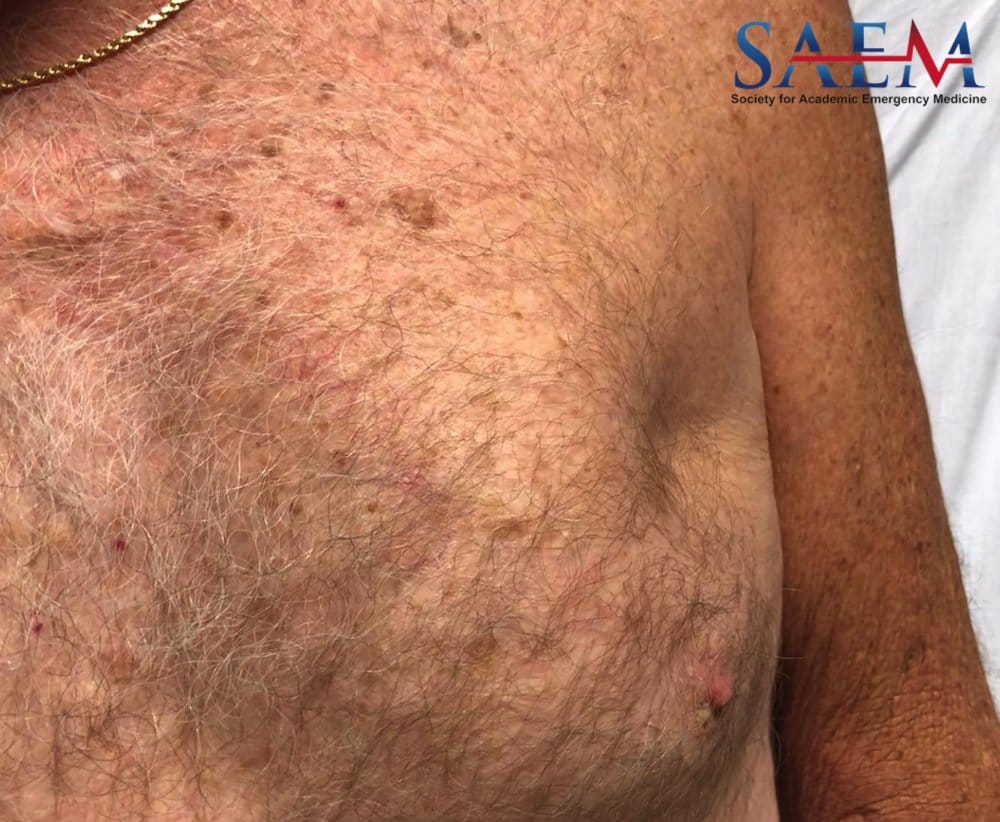
SAEM Clinical Image Series: Chest Wall Mass

Under skin lung herniation

A 71 year-old patient with a past medical history of hypertension, percutaneous transluminal coronary angioplasty 7 years ago, and robotic coronary artery bypass grafting of the left internal mammary artery to the left anterior descending artery 9 years ago presents with worsening dyspnea on exertion. He had a biopsy of the upper lobe of the left lung the week before. He was having a neoplastic mass evaluated. The patient presents with a soft left-sided anterior chest mass, inflating and deflating with respiration.

(more…)

By |2019-11-06T17:57:56-08:00Nov 7, 2019|Pulmonary, SAEM Clinical Images|

PEM Pearls: 5 Tips to Demystify Amoxicillin in Pediatric Infections

Amoxicillin is a penicillin derivative antibiotic against susceptible gram positive and gram negative bacteria. It has reasonable coverage for most upper respiratory infections and is used as prophylaxis for asplenia and bacterial endocarditis. This post aims to demystify amoxicillin treatment for common pediatric infections.

(more…)

End-Tidal CO2 in Cardiopulmonary Resuscitation

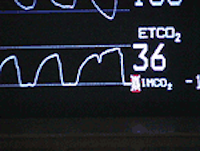
Capnography in CPR

End-tidal CO2 (EtCO2) monitoring is a measure of metabolism, perfusion, and ventilation. In the ED, we typically think of a EtCO2 as a marker of perfusion and ventilation. However, EtCO2 is an extremely powerful surrogate for endotracheal tube (ETT) Position, CPR Quality, Return of spontaneous circulation (ROSC), Strategies for treatment, and Termination (of CPR). Do these letters look familiar? They should! In this post we take a deep dive into each of these potential uses of EtCO2 in the ED.

(more…)
By |2026-06-16T16:14:11-07:00Feb 6, 2019|Critical Care/ Resus, Pulmonary|

ECMO for ARDS: Key Pearls for Emergency Physicians from the EOLIA Trial

The role of extracorporeal membrane oxygenation (ECMO) in the management of acute respiratory distress syndrome (ARDS) has been a source of debate within the critical care community.1 The use of ECMO has steadily increased over the past decade;2 however, evidence to support the widespread adoption of this expensive and invasive technology is limited. As advances in ECMO technology have rapidly outpaced evidence, clinicians have been left to speculate as to ECMO’s true value. Is ECMO a promising tool to advance the care of patients with respiratory failure3 or an expensive distraction that has inappropriately supplanted evidence-based strategies?4

All who care for patients with ARDS have been eagerly awaiting the results of the Extracorporeal Membrane Oxygenation for Severe Acute Respiratory Distress Syndrome (EOLIA) trial which were recently published in May 2018’s New England Journal of Medicine.5

(more…)

By |2018-05-31T07:46:14-07:00May 31, 2018|Critical Care/ Resus, Pulmonary|
Go to Top