EM Match Advice: Program Directors Reflect on the 2016 Match

The new emergency medicine (EM) residency application season is upon us! Senior medical students are arranging away EM electives, asking for letters of recommendations, and thinking about what residency programs to apply to. But before we look forward, what lessons can we learn from the 2016 EM Residency Match? In this EM Match Advice series installment, an esteemed panel of program directors reflect on the trends, surprises, and lessons learned from the 2015-16 year.

Dr. Michael Gisondi (Northwestern) hosts the discussion with the panelists Dr. Diane Rimple (University of New Mexico), Dr. Michael Bond (University of Maryland), and Dr. Christopher Doty (University of Kentucky).

Podcast


(Podcast sound engineer: David Yang)
Listen to all the episodes of the EM Match Advice Series

By |2021-07-01T10:35:00-07:00Jul 10, 2016|EM Match Advice, Podcasts|

Trick of the Trade: Securing the intraosseous needle

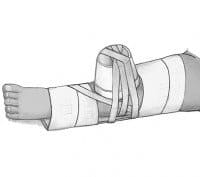
So much attention is appropriately focused on the anatomy and technique for intraosseous needle placement. In contrast, very little attention is paid to securing the needle. Often this involves a make-shift setup which involves gauze, wraps, and/or tape. This becomes especially important in the prehospital setting where these can be easily dislodged. The following trick stems from a Twitter discussion in 2015 amongst prehospital providers, lamenting this fact.
(more…)

By |2019-01-28T21:40:34-08:00May 3, 2016|Critical Care/ Resus, Tricks of the Trade|

PEM Pearls: Hydrocortisone stress-dosing in adrenal insufficiency for children

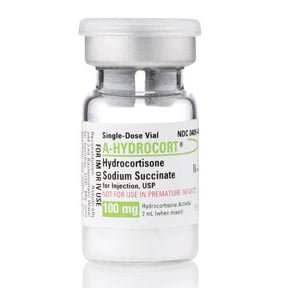
Hydrocortisone stress-dosing in adrenal insufficiencyDuring your shifts in the pediatric ED, you may encounter a few patients with adrenal insufficiency or adrenal crisis. Some of the most common causes include those patients with Addison disease, pituitary hypothalamic pathology, and those patients on chronic steroids. When these patients get sick or sustain trauma, it is important to consider giving them a stress dose of hydrocortisone. Patients in adrenal insufficiency or crisis can present with dehydration, weakness, nausea, vomiting, confusion, lethargy, and severe hypotension refractory to vasopressors. 1–3

(more…)

By |2017-10-26T14:34:06-07:00May 2, 2016|Endocrine-Metabolic, Pediatrics, PEM Pearls|

EM Match Advice: The EM Rotation, ERAS, and Am I Competitive?

Today launches a series for senior Emergency Medicine (EM) medical students, created and expertly facilitated by Dr. Michael Gisondi (@MikeGisondi) from Northwestern. In this series, he recruited an amazing panel of program directors from around the country, who have kindly volunteered their time to share their insights and expertise. In these podcasts, you get a sense of each panelist’s personalities while they outdo each other with behind-the-scenes advice and stories, which would normally be shared only at the institutional level. Our podcasts are a unique must-listen for medical students interested in and applying into EM.


The EM Rotation

Dr. Gisondi facilitates a great discussion about the EM clerkship rotation featuring esteemed residency program directors Dr. Lainie Yarris (Oregon Health Sciences University), Dr. Maria Moreira (Denver Health), and Dr. Jan Schoenberger (LAC-USC), with the occasional outburst/question by Dr. Michelle Lin (UCSF-SFGH).

References

  1. Mahadevan S, Garmel GM. The outstanding medical student in emergency medicine. Acad Emerg Med. 2001 Apr;8(4):402-3. PMID: 11282680.
  2. AAEM Rules of the Road for Medical Students (2003), a free PDF.
  3. Davenport C, Honigman B, Druck J. The 3-minute emergency medicine medical student presentation: a variation on a theme. Acad Emerg Med. 2008 Jul;15(7):683-7. PMID: 18691216.

Electronic Residency Application Service (ERAS)

Dr. Gisondi (Northwestern) facilitates a great discussion featuring star residency program directors Dr. Gene Hern (Highland-Alameda), Dr. Laura Hopson (Univ of Michigan), and Dr. Josh Broder (Duke), with an occasional question by Dr. Michelle Lin (UCSF-SFGH).

References

  1. Hayden SR, Hayden M, Gamst A. What characteristics of applicants to emergency medicine residency programs predict future success as an emergency medicine resident? Acad Emerg Med. 2005 Mar;12(3):206-10. PMID: 15741582.
  2. Breyer MJ, Sadosty A, Biros M. Factors Affecting Candidate Placement on an Emergency Medicine Residency Program’s Rank Order List. West J Emerg Med. 2012 Dec;13(6):458-62. PMID: 23359215. Free PDF.
  3. Green M, Jones P, Thomas JX Jr. Selection criteria for residency: results of a national program directors survey. Acad Med. 2009 Mar;84(3):362-7. PMID: 19240447.
  4. Katz ED, Shockley L, Kass L, Howes D, Tupesis JP, Weaver C, Sayan OR, Hogan V, Begue J, Vrocher D, Frazer J, Evans T, Hern G, Riviello R, Rivera A, Kinoshita K, Ferguson E. Identifying inaccuracies on emergency medicine residency applications. BMC Med Educ. 2005 Aug 16;5:30. PM?ID: 16105178. Free article link.

Mirror Mirror on the Wall: Am I Competitive


Dr. Gisondi (Northwestern) kicks off a great conversation and debate about knowing how competitive you are, as an applicant. This panel features star residency program directors Dr. Andrew Perron (Maine Medical Center), Dr. Madonna Fernandez (Harbor-UCLA), and Dr. Kevin Biese (UNC Chapel Hill), with comments by Dr. Michelle Lin (UCSF-SFGH).

References

  1. NRMP Match Results and Data 2014 (PDF)
  2. Crane JT, Ferraro CM. Selection criteria for emergency medicine residency applicants. Acad Emerg Med. 2000 Jan;7(1):54-60. PubMed PMID: 10894243.
  3. Girzadas DV Jr, Harwood RC, Delis SN, Stevison K, Keng G, Cipparrone N, Carlson A, Tsonis GD. Emergency medicine standardized letter of recommendation: predictors of guaranteed match. Acad Emerg Med. 2001 Jun;8(6):648-53. PMID: 11388941.
  4. Lotfipour S, Luu R, Hayden SR, Vaca F, Hoonpongsimanont W, Langdorf M. Becoming an emergency medicine resident: a practical guide for medical students. J Emerg Med. 2008 Oct;35(3):339-44. PMID: 18547776.

Listen to all the episodes of the EM Match Advice Series

By |2021-07-01T10:54:25-07:00Aug 20, 2014|EM Match Advice, Podcasts|

Trick of the Trade: V-to-Y flap laceration repair for tension wounds

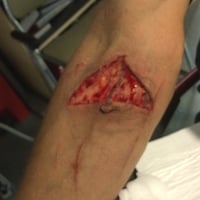
Laceration repairYou see a patient with a large V-shaped laceration under tension requiring suture repair. Resist the temptation to simply pull the edges together and close the laceration with simple interrupted or running sutures. Excessive tension on a flap edge during the healing process can compromise its blood supply. This causes ischemia to the healing tissue, which in turn makes that flap edge more likely to dehisce, necrose, and become infected.

(more…)

By |2016-11-11T19:22:28-08:00Aug 16, 2014|Trauma, Tricks of the Trade|
Go to Top