SAEM Clinical Images Series: Unusual Scalp Lesions
scalp

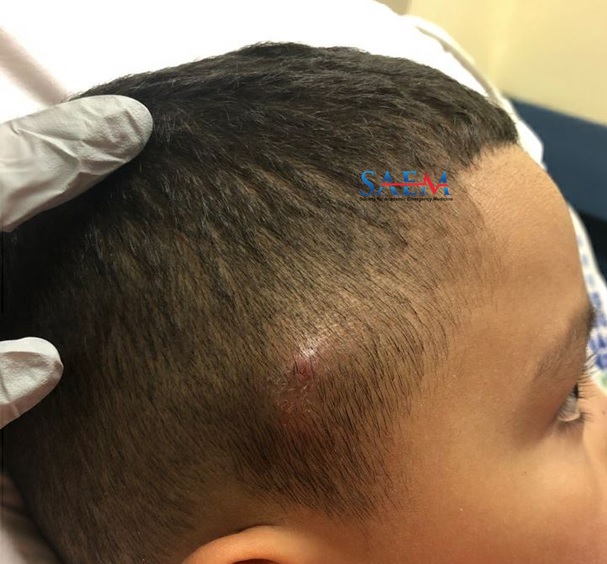
A 6-year-old male presented to the pediatric emergency department (PED) for scalp lesions. He was seen by his pediatrician 2 weeks prior and prescribed antibiotics and a delousing shampoo for suspected cellulitis versus lice infestation. Symptoms did not improve despite completion of treatment. An outpatient ultrasound was performed showing “multiple scalp echogenic nodular lesions measuring from 0.5 cm to 1.2 cm in the long axis diameter.” The following differential diagnosis was entertained: lymphadenitis, benign avascular mass, epidermal inclusion cyst, or pilomatricoma, and the patient was started on clindamycin. Due to concern for an oncologic process, a surgery consultation was placed to arrange for a biopsy. Four days after the ultrasound and before the biopsy could be performed, the patient and his mother presented to the PED due to worsening symptoms. Multiple new lesions developed across the patient’s scalp which bled when pressure was applied. The patient denied fever and reported intermittent pruritus and pain over the lesion sites. The mother reported a history of travel to Ecuador one month prior to symptom onset.

Vitals: BP 98/61; Pulse 73; Temp 36.3°C (97.3°F) temporal; Resp 18; SpO2 99%, RA

Skin: Large, 3 x 3cm indurated, erythematous lesion located over the patient’s right temporal scalp (Image 1). Five additional lesions noted across the entirety of the scalp. No lesions identified below the neck. Lesions are mildly tender to palpation; no fluid able to be expressed. A small centrally located pore is noted on each lesion with appearance of pulsatile fluid level. No associated lymphadenopathy. A point-of-care ultrasound (POCUS) using a high-frequency, linear transducer was performed during the PED visit (Image 2).

Non-contributory

In short axis, there is an echogenic lesion with surrounding fluid (halo sign) suggesting a foreign body that also exhibits posterior acoustic shadowing. With the transducer held still, independent movement is visualized within the center of the lesion (Image 3).

Cutaneous furuncular myiasis due to Dermatobia hominis (botfly infestation).

Take-Home Points

  • Native to Central and South America, botfly infestation is facilitated through an infected female mosquito which deposits its eggs on the skin of a mammal on which it feeds.
  • Cutaneous furuncular myiasis is important to consider for unexplained head, neck, and extremity lesions when there is suspected travel to endemic areas and is unlikely to be recognized in the continental United States due to low prevalence.
  • Consider pertinent physical exam findings and utility of POCUS in confirming the diagnosis.
  • Harris AT, Bhatti I, Bajaj Y, Smelt GJ. An unusual cause of pre-auricular swelling. J Laryngol Otol. 2010 Mar;124(3):339-40. doi: 10.1017/S002221510999082X. Epub 2009 Aug 11. PMID: 19664319.
  • Minakova E, Doniger SJ. Botfly larva masquerading as periorbital cellulitis: identification by point-of-care ultrasonography. Pediatr Emerg Care. 2014 Jun;30(6):437-9. doi: 10.1097/PEC.0000000000000156. PMID: 24892687.
SAEM Clinical Images Series: A Rare Pediatric Scalp Rash

rash

The patient is a 3-month-old, full-term male who presents with a rash on his head. The rash started one day prior to presentation on his forehead and spread to the rest of his head. Today, it developed a central clearing with surrounding redness. He has a history of sensitive skin since birth with patches of eczema and cradle cap. He treats these with Aquaphor and Honest Co. Cream; he has never been prescribed topical steroids for his rashes. Denies fever, cough, rhinorrhea, congestion, decreased appetite, diarrhea, and decreased urination. He had an uncomplicated birth history.

General: Well appearing, no distress.

Skin: Large, serpiginous rash on the left forehead and scalp with central clearing and peripheral erythema as well as areas of erythematous plaques. He has some erythema of the left medial epicanthus. He also has a large erythematous patch at the base of his skull. The remainder of his skin is clear.

CV: Normal rate and rhythm, no murmur.

White blood cell (WBC) count: 8.4

Hemoglobin: 12.4

Hematocrit: 37.1

Platelet Count: 468

Complete metabolic panel (CMP): ALT 30, AST 60, Alk phos 266, Tbili 0.7, Total Protein 6.4

The image is of the cutaneous manifestation of neonatal lupus erythematosus. Neonatal lupus erythematosus is an autoimmune disease caused by transplacental passage of maternal autoantibodies to Sjögren’s syndrome A or B autoantigens (SS-A/SS-B). It can present with reversible changes including cutaneous lesions (most common, in up to 40% of patients), hepatobiliary disease, and cytopenias, which resolve once maternal autoantibodies have been cleared.

All infants that present with concern for neonatal lupus erythematosus should have screening labs performed to evaluate for hematologic, cardiac, and hepatobiliary involvement including a CBC with differential, liver enzymes, and antibody testing. In addition, an EKG is essential given that neonates can present with irreversible total atrioventricular heart block, which can present in utero or after birth.

The rash typically presents in the first few weeks of life but can present as late as 2-3 months of life (usually within 1-2 days of first sun exposure). Eighty percent of cases are not clear at birth and present in the first month of life. The rash appears as a coalescing rash with raised margins, with annular and discoid erythema involving the head in 95% of cases. It is often misdiagnosed as skin infections or eczema if the mom is asymptomatic. Fifty percent resolve by four months of life and 100% by one year.

Any neonate with a slow fetal heart rate or the postnatal diagnosis of atrioventricular heart block warrants immediate maternal testing for these autoantibodies. Most cardiac changes from neonatal lupus are diagnosed before 26 weeks gestation, with <20% later in pregnancy and 2% detected postnatally.

Take-Home Points

  • While cutaneous findings of neonatal lupus most commonly present in the first month of life, they can present as late as 2-3 months.
  • The cutaneous findings associated with neonatal lupus most of the time resolve in 4-6 months (when maternal antibodies are cleared from the infant’s circulation).
  • Any baby with findings concerning for neonatal lupus should have an EKG performed. Around 2% of infants present with heart block postnatally within the first month.

  • Diaz-Frias J, Badri T. Neonatal Lupus Erythematosus. [Updated 2021 Jun 30]. In: StatPearls [Internet]. Treasure Island (FL): StatPearls Publishing; 2021 Jan-. Available from: https://www.ncbi.nlm.nih.gov/books/NBK526061/
  • Lee LA. Neonatal lupus erythematosus: clinical findings and pathogenesis. J Investig Dermatol Symp Proc. 2004 Jan;9(1):52-6. doi: 10.1111/j.1087-0024.2004.00827.x. PMID: 14870986.

By |2023-04-05T14:00:29-07:00Apr 10, 2023|Dermatology, Pediatrics, SAEM Clinical Images|

SAEM Clinical Images Series: An Adult with a Lower Extremity Rash

vasculitis

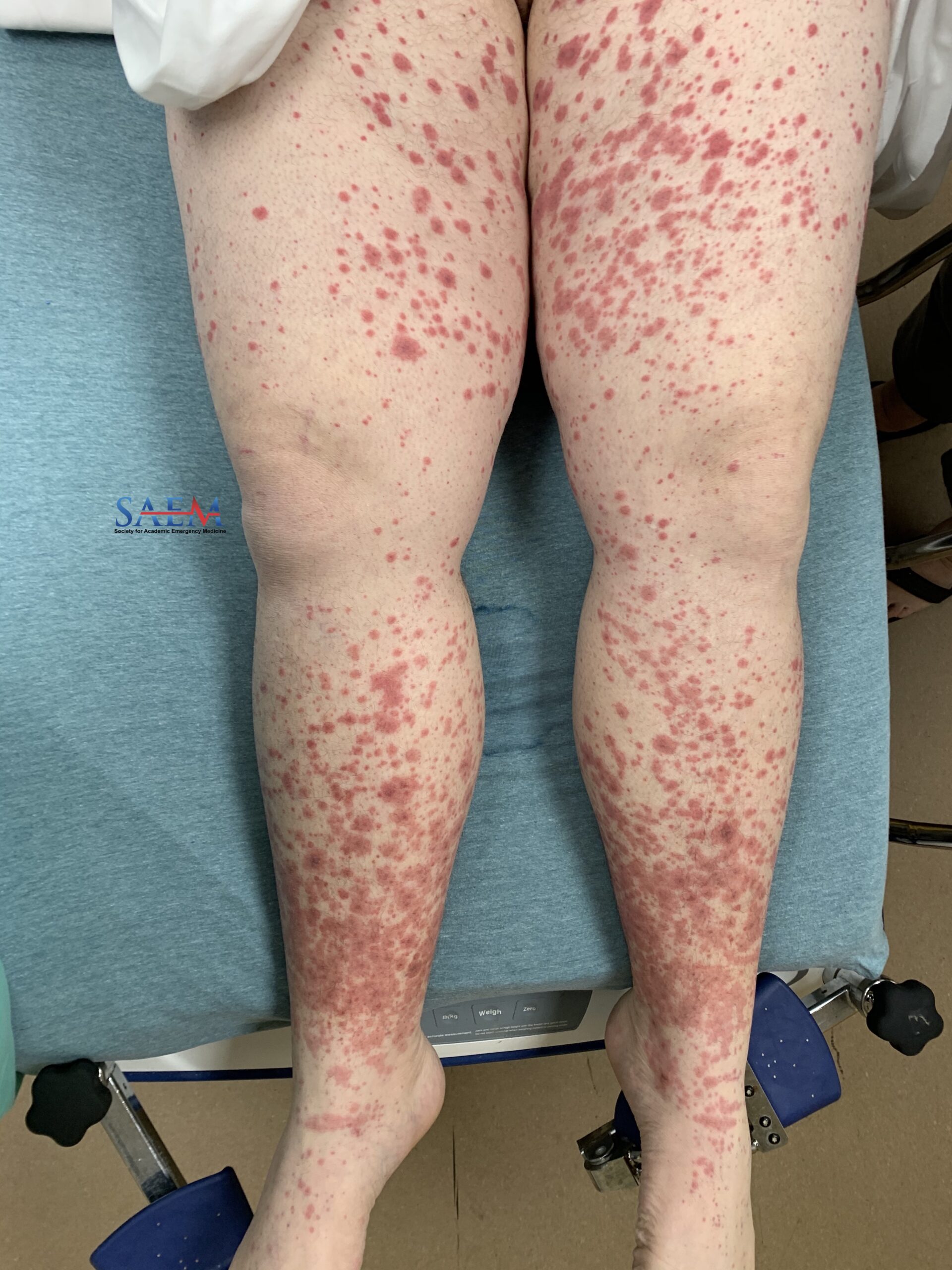
A 37-year-old male with a past medical history of type 2 diabetes presents to the Emergency Department (ED) with a rash. Initial symptoms began one week prior with small spots on the right leg with associated itching and burning. He initially presented to an outside facility where he was diagnosed with an allergic reaction versus scabies and was given a short course of oral steroids and topical permethrin that provided some relief. The rash progressed to bilateral lower extremities prompting re-presentation to the ED. He also reports associated dark urine and nausea.

GI: Abdomen soft, non-tender, non-distended.

MSK: No joint swelling, tenderness, erythema or warmth.

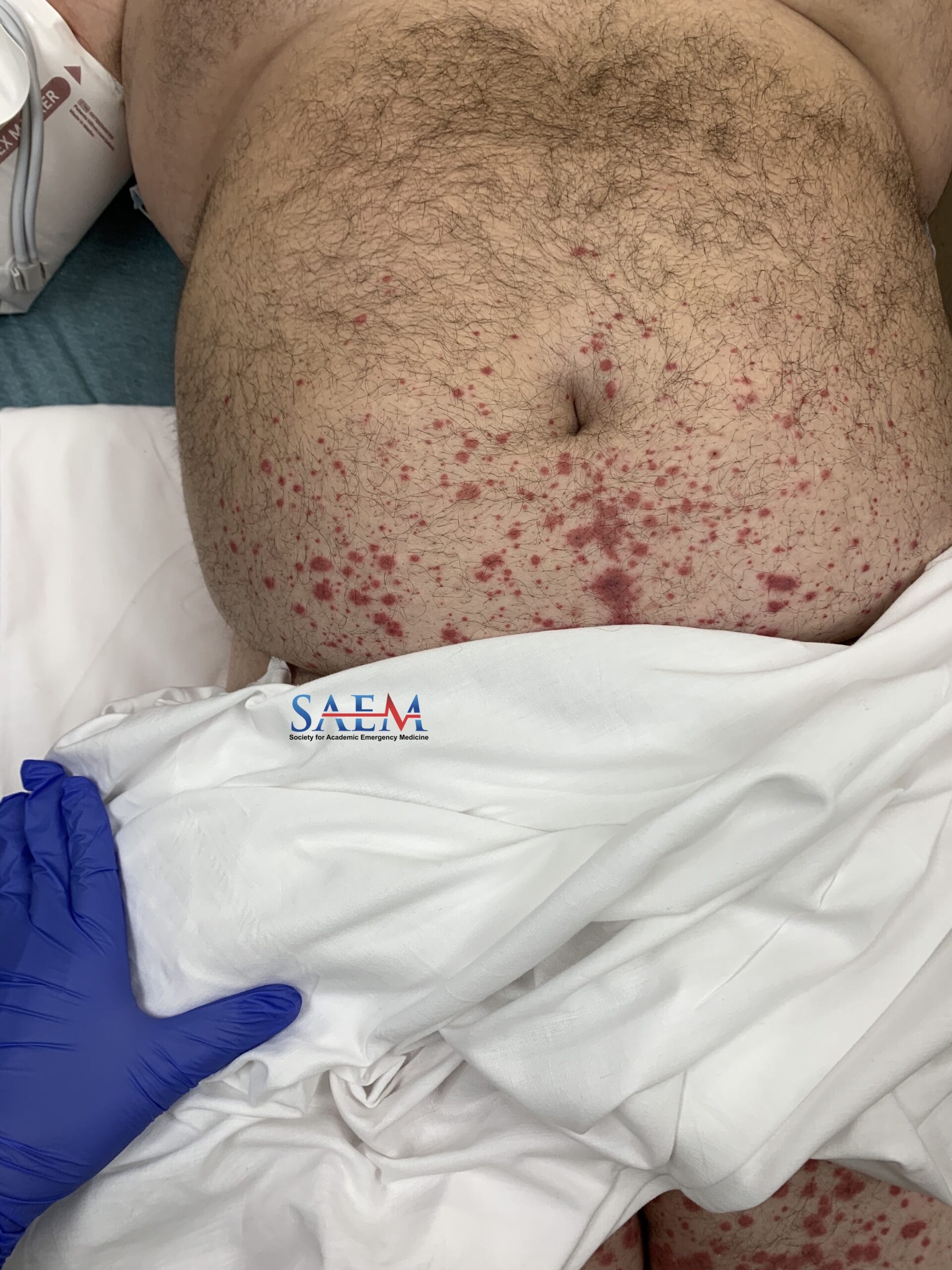
Skin: Numerous scattered bright red palpable purpuric papules and plaques, most concentrated on bilateral lower extremities extending to lower abdomen at the level of the umbilicus.

White blood cell (WBC) count: 14.5 k

Creatinine: 1.1 mg/dL on day of presentation, peaked at 2.2 mg/dL approximately 10 days later.

C-reactive protein (CRP): 32.7 mg/L

Erythrocyte sedimentation rate (ESR): 34 mm/hr

Urinalysis: 3+ protein, 2+ blood, 11-20 RBC, 26-50 WBC, rare bacteria

This is a case of IgA vasculitis, formerly called Henoch-Schonlein purpura or HSP. This diagnosis is suspected when a patient has purpuric skin lesions predominantly on the lower limbs as well as at least one of the following: abdominal pain, joint involvement, renal involvement (proteinuria/hematuria), and biopsy demonstrating IgA deposition. This vasculitis is more commonly seen in children and has a male predominance.

Similar to children with IgA vasculitis, adults presenting with this palpable purpuric rash can have associated joint involvement and GI involvement, though intussusception is less common in the adult population. Renal manifestations are more common in adults with this diagnosis and range from proteinuria and hematuria to renal failure. Our patient initially presented with hematuria/proteinuria and less than two weeks later had a doubled his creatinine. A renal biopsy later confirmed IgA nephropathy.

Take-Home Points

  • Consider IgA vasculitis in patients with lower extremity purpuric skin lesions with associated abdominal pain/GI bleed, arthralgia, renal involvement, and/or biopsy confirming IgA deposition.
  • In adults with IgA vasculitis, renal involvement is more common and often more severe.

  • Ozen S, Pistorio A, Iusan SM, Bakkaloglu A, Herlin T, Brik R, Buoncompagni A, Lazar C, Bilge I, Uziel Y, Rigante D, Cantarini L, Hilario MO, Silva CA, Alegria M, Norambuena X, Belot A, Berkun Y, Estrella AI, Olivieri AN, Alpigiani MG, Rumba I, Sztajnbok F, Tambic-Bukovac L, Breda L, Al-Mayouf S, Mihaylova D, Chasnyk V, Sengler C, Klein-Gitelman M, Djeddi D, Nuno L, Pruunsild C, Brunner J, Kondi A, Pagava K, Pederzoli S, Martini A, Ruperto N; Paediatric Rheumatology International Trials Organisation (PRINTO). EULAR/PRINTO/PRES criteria for Henoch-Schönlein purpura, childhood polyarteritis nodosa, childhood Wegener granulomatosis and childhood Takayasu arteritis: Ankara 2008. Part II: Final classification criteria. Ann Rheum Dis. 2010 May;69(5):798-806. doi: 10.1136/ard.2009.116657. PMID: 20413568.
  • Yaseen K, Herlitz LC, Villa-Forte A. IgA Vasculitis in Adults: a Rare yet Challenging Disease. Curr Rheumatol Rep. 2021 Jul 1;23(7):50. doi: 10.1007/s11926-021-01013-x. PMID: 34196893.

By |2023-01-20T15:48:31-08:00Jan 30, 2023|Dermatology, Renal, SAEM Clinical Images|

ALiEM AIR Series | Cutaneous 2022 Module


Welcome to the AIR Cutaneous Module! After carefully reviewing all relevant posts from the top 50 sites of the Social Media Index, the ALiEM AIR Team is proud to present the highest quality online content related to related to cutaneous emergencies in the Emergency Department. 6 blog posts met our standard of online excellence and were curated and approved for residency training by the AIR Series Board. We identified 0 AIR and 6 Honorable Mentions. We recommend programs give 3 hours (about 30 minutes per article) of III credit for this module.

AIR Stamp of Approval and Honorable Mentions

In an effort to truly emphasize the highest quality posts, we have 2 subsets of recommended resources. The AIR stamp of approval is awarded only to posts scoring above a strict scoring cut-off of ≥30 points (out of 35 total), based on our scoring instrument. The other subset is for “Honorable Mention” posts. These posts have been flagged by and agreed upon by AIR Board members as worthwhile, accurate, unbiased, and appropriately referenced despite an average score.

Take the AIR Cutaneous Quiz at ALiEMU

Interested in taking the AIR quiz for fun or asynchronous (Individualized Interactive Instruction) credit? Please go to the above link. You will need to create a free, 1-time login account.

Highlighted Quality Posts: Cutaneous Emergencies

SiteArticleAuthorDateLabel
EMDocsTattoo related complications in the EDNathan LaDeaux, MD and Benjamin Schnapp, MD5/9/22HM
EMDocsEM@3AM: Herpes ZosterElizabeth Adams, MD and Samuel Parnell, MD3/26/22HM
RCEM LearningBurnsJonathan Matthews, Rajan Atwal11/02/21HM
RCEM LearningCommon Childhood ExanthemsMaya Naravi7/6/21HM
EMCritAnaphylaxis Josh Farkas, MD8/5/21HM
Peds EM MorselsPediatric Ramsay Hunt SyndromeSean Fox, MD6/17/22HM

(AIR = Approved Instructional Resource; HM = Honorable Mention)


If you have any questions or comments on the AIR series, or this AIR module, please contact us! More in-depth information regarding the Social Media Index.


Thank you to the Society of Academic Emergency Medicine (SAEM) and the Council of EM Residency Directors (CORD) for jointly sponsoring the AIR Series! We are thrilled to partner with both on shaping the future of medical education.

SAEM Clinical Images Series: Dermatology Deserving a Deeper Dive

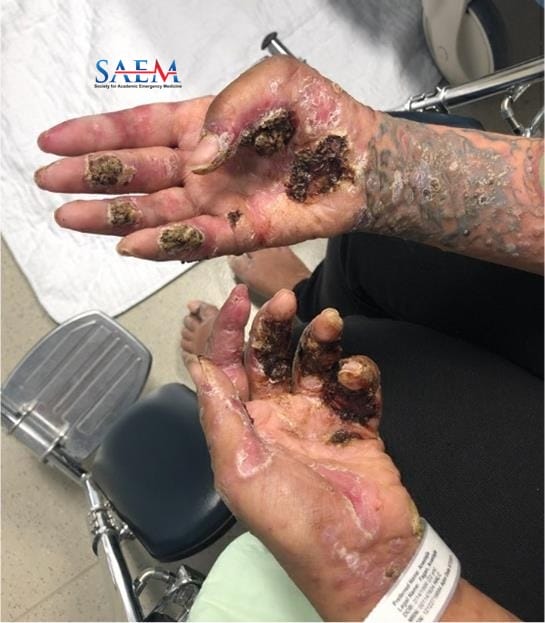
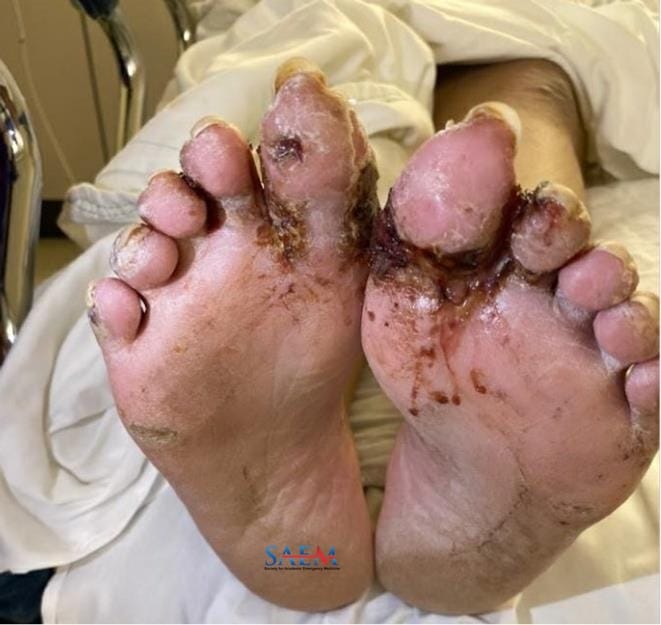
A 22-year-old female without significant past medical history presented to the Emergency Department (ED) for a progressive rash for the past six months. She had initially complained of dry and peeling skin on bilateral hands and feet and had multiple ED and dermatology encounters where topical steroids, acyclovir, and methotrexate were prescribed with no improvement. The rash continued to progress with worsening pain and inability to flex fingers secondary to lesions and scabbing at the joints. The patient also developed painful sores in her mouth primarily involving the tongue. More concerningly, she had lost 60 pounds since the onset of the rash and mouth lesions which she attributed to the inability to eat due to significant pain. Otherwise, she denied systemic symptoms, exposures, new medications, or previous illnesses.

Vitals: Within normal limits

HEENT: Swelling, erythema, and mild desquamation of the tongue mucosa with adherent white discharge present. Lesions are limited to the surface of the tongue with no buccal involvement.

Cardiovascular/Respiratory: Heart sounds within normal limits. Bilateral breath sounds without wheezes, rales, or rhonchi.

Abdomen: Soft, non-tender and non-distended.

Skin: The patient was noted to have desquamated, scabbing and oozing lesions on bilateral palms and fingers, soles of the feet, and web spaces between toes. The patient had no observable vesicles/bullae, or target lesions. Negative Nikolsky sign.

Complete Blood Count (CBC): Mild anemia, stable from baseline.

Basic Metabolic Panel (BMP): Within normal limits.

CT Abdomen/Pelvis with contrast (relevant findings only): Large solid right retroperitoneal mass lobulated in contour with heavy coarse calcifications measuring 21.2 x 8.5 x 10.4 cm, traversing the right hemidiaphragm and extending to the right lower mediastinum. The diaphragm itself is asymmetrically thickened as compared with the contralateral left side with a small volume of adjacent retroperitoneal fluid and there is extension into the right neural foramina.

The diagnosis of paraneoplastic pemphigus (PNP) was made after skin biopsy along with the constellation of findings including desquamating cutaneous lesions, painful mucosal erosions, and large retroperitoneal mass concerning for malignancy. Skin biopsy findings in this case include a distinct suprabasilar cleft, apoptotic keratinocytes, eosinophilic spongiosis, and superficial perivascular lymphocytic infiltrate with scattered eosinophils. Focally, there was full-thickness necrosis of the epidermis and dermis.

Patients with concern for PNP without known malignancy require a full neoplastic workup. In this case, a biopsy of the retroperitoneal mass and subsequently full resection was notable for Castleman’s disease, a rare lymphoproliferative disorder. PNP is an often fatal paraneoplastic mucocutaneous blistering disease that is most commonly caused by various lymphoproliferative disorders including non-Hodgkin’s lymphoma, chronic lymphocytic leukemia (CLL), and Castleman’s disease. It is an extremely rare condition with an unknown incidence rate. The mucosal erosions present are a requirement for the diagnosis. It typically presents as an erosive stomatitis involving the tongue and is characteristically chronic, progressive, and painful. These lesions are the initial disease manifestation in almost one-half of patients with PNP and often lead to malnutrition secondary to pain with attempts at oral intake. The cutaneous lesions in the disease are widely variable in morphology and can present with tense or flaccid bullae, as well as inflammatory papules or plaques.

Take-Home Points

  • In patients with a progressive rash involving the oral mucosa that have failed multiple outpatient regimens and have findings concerning for possible systemic involvement, dermatology consultation, tissue biopsy, and body imaging are often needed to confirm a diagnosis of complicated disease processes such as paraneoplastic pemphigus (PNP).
  • Significant unintentional weight loss may be due to a variety of reasons stemming from one unifying etiology. In this case, our patient had both mouth pain limiting oral intake as well as a lymphoproliferative disorder.
  • Anhalt GJ, Kim SC, Stanley JR, Korman NJ, Jabs DA, Kory M, Izumi H, Ratrie H 3rd, Mutasim D, Ariss-Abdo L, et al. Paraneoplastic pemphigus. An autoimmune mucocutaneous disease associated with neoplasia. N Engl J Med. 1990 Dec 20;323(25):1729-35. doi: 10.1056/NEJM199012203232503. PMID: 2247105.
  • Kaplan I, Hodak E, Ackerman L, Mimouni D, Anhalt GJ, Calderon S. Neoplasms associated with paraneoplastic pemphigus: a review with emphasis on non-hematologic malignancy and oral mucosal manifestations. Oral Oncol. 2004 Jul;40(6):553-62. doi: 10.1016/j.oraloncology.2003.09.020. PMID: 15063382.

By |2023-01-02T04:44:30-08:00Jan 2, 2023|Dermatology, Heme-Oncology, SAEM Clinical Images|
Go to Top