


Infographic: Pocket PEM
Pediatric Emergency Medicine can be intimidating for even some of the most seasoned providers, but Drs. Liz Fierro and Natasha Li (both PEM Fellows at Loma Linda University Health) have you covered! Their interactive infographic, Pocket PEM, reminds readers of some core PEM content, including pediatric fever, bronchiolitis, and the crashing neonate.
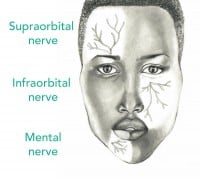 Regional nerve blocks of the face and ear can be a wonderful choice of analgesia in a child, particularly for wounds that need to be repaired. The benefits include fewer local injections, improved cosmesis due to less wound margin distortion, and improved analgesia within the nerve region.
 The standard for diagnosing pneumonia is a combination of the clinical history, physical examination, and chest x-ray (CXR) findings. However, lung ultrasound (US) has been shown to be a reasonable alternative to CXR in children, and may be an appropriate alternative diagnostic imaging modality in the Emergency Department (ED).
 A 3 year-old boy presents with a deep laceration of the distal phalanx, through the nail bed, after slamming his fingers in a car door. He is crying, anxious, and uncooperative. How do you make this situation easier to evaluate and repair?
 Insulin does MANY things in the body, but the role we care about in the Emergency Department is glucose regulation. Insulin allows cells to take up glucose from the blood stream, inhibits liver glucose production, increases glycogen storage, and increases lipid production. When insulin is not present, such as in patients with Type 1 diabetes mellitus (DM), all of the opposite effects occur.
 The Pediatric Emergency Care Applied Research Network (