


ALiEM-Annals of EM Journal Club: Targeted Temperature Management
 We are very excited this month to bring you our third Global Journal Club. We hope you will participate in an online discussion based on the clinical vignette and questions below from now until March 27th. Respond by commenting below or tweeting (#ALiEMJC).
On Tuesday, March 25, 2014 at 1630 EST, we will be hosting a 30-minute live Google Hangout with Dr. Niklas Nielsen, the lead author of the Targeted Temperature Management (TTM) study, that is informed by the discussion. Later this year a summary of this journal club will be published in Annals of Emergency Medicine.

 Emergency physicians (EPs) have been successfully training in and practicing critical care in the ICU for decades, though until recently board certification remained closed to EPs. In the last few years, however, we have seen monumental changes in training opportunities for EPs, including national standardization of training programs, and most importantly, the establishment of three distinct pathways to board certification. Though the details of some of these pathways are still being worked out, much more concrete arrangements have been reached in the last 6 months. If you are an EM resident interested in applying to critical care fellowships, this is what you need to know.

 The short answer to this question is NO. Since the landmark post-arrest, therapeutic hypothermia studies published in 2002,
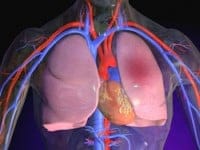 Multi-detector computed tomographic pulmonary angiography (CTPA) allows for better visualization of peripheral pulmonary arteries allowing for diagnosis of small peripheral emboli limited to the subsegmental pulmonary arteries. Interestingly as these SSPE’s get diagnosed more and more, two questions come to mind: