


Troubleshooting the Crashing Patient with a Tracheostomy
 Patients presenting to the ED with respiratory distress and a tracheostomy can unnerve almost any provider, and management is often fraught with preventable errors.1,2 This recognition has led to the development of treatment algorithms from groups including the U.K. National Tracheostomy Safety Project to improve the safety and quality of care for patients with tracheostomies.3 Use the ABC-Ts mnemonic to help you perform a focused tracheostomy evaluation and troubleshoot in a stepwise, systematic manner while waiting for your ENT consultant to arrive.


 After a STEMI activation from the field on Monday morning, the cardiac catheterization team scoops the patient away shortly after the paramedics arrive in the Emergency Department (ED). “Well that was a smooth and seamless resuscitation. The patient was barely in the ED for more than 15 minutes,” you think to yourself. You diligently complete your critical care documentation, noting 20 minutes of critical care time, before seeing your next patient. A few weeks later the chart is bounced back and noted as an erroneous documentation of critical care time. The coding department notifies you that the case will be billed as a Level 3 visit (E/M code #99283). Why is that the case?
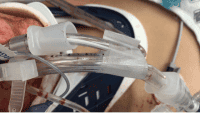 We have all been in the situation: an intubated patient needs an orogastric (OG) tube and no one has been able to place it successfully. Unfortunately, we typically find out about this situation after several failed attempts, when the patient is bleeding and/or the anatomy is distorted. It may coil in the mouth or esophagus. Here I present a novel technique to rapidly place an OG tube within seconds.

 Welcome to the Procedures Module! After carefully reviewing all relevant posts from the top 50 sites of the