Paucis Verbis: Does this adult patient need blood cultures?

Do you order blood cultures for all your ED patients with a fever? Obviously no. What’s your decision making process on ordering this test? There are really no findings or tests with high specificity (rules-IN bacteremia), except interestingly “shaking chills”. Notice almost all the criteria listed below approach a likelihood ratio (LR) of 1.0. Two prediction rules do exist, however, to help you virtually rule-OUT bacteremia:
- SIRS
- Shapiro prediction rule
The list of LRs also will be helpful to show learners in the ED that an isolated serum WBC number is useless risk-stratifier.
Patient Case
A 55 y/o man with a PMH of hypertension presents with a community-acquired pneumonia on CXR, no fevers, no chills, no vomiting.
- Temperature 37.8 C, BP 160/90, HR 100, RR 16, Sat 100% RA
- Serum WBC 20K (no bands)
- Platelets 300K
- Creatinine 1.1 mg/dL
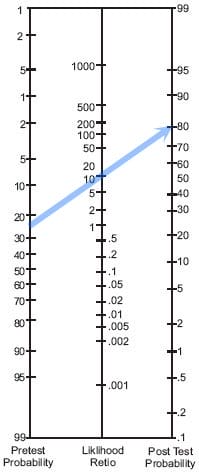
What is the patient’s pre-test and post-test probability for having bacteremia? Use these helpful stats from the Rational Clinical Examination series from JAMA.
PV Card: Blood Cultures for Suspected Bacteremia
Adapted from [1]
Go to ALiEM (PV) Cards for more resources.
Answer to patient case
- Start with 7% pretest probability for bacteremia with a community acquired pneumonia.
- Using the clinical prediction rules, the WBC 20K and HR 100 bpm are criteria for SIRS but do not fulfill the Shapiro prediction criteria. LR = 1.8 * 0.08 = 0.144. Post-test probability for bacteremia = 0.06%.
- If the patient had instead a normal HR of 80 bpm, both the SIRS and Shapiro criteria would have been negative. LR = 0.09 * 0.08 = 0.0072. Post-test probability for bacteremia = << 0.1%.
This discussion doesn’t address WHETHER we should get blood cultures despite a risk for bacteremia in the setting of uncomplicated pneumonia receiving IV antibiotics or pyelonephritis with a pending urine culture.
References
- Coburn B, Morris A, Tomlinson G, Detsky A. Does this adult patient with suspected bacteremia require blood cultures? JAMA. 2012;308(5):502-511. [PubMed]
- Shapiro N, Wolfe R, Wright S, Moore R, Bates D. Who needs a blood culture? A prospectively derived and validated prediction rule. J Emerg Med. 2008;35(3):255-264. [PubMed]

A 65 y/o man with a history of prostate cancer presents to your ED from home appearing fairly well and a mild cough for 3 days. His vital signs are:
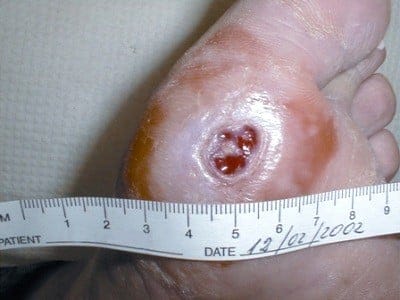
One of the most challenging diagnoses to make is that of a spinal epidural abscess (SEA), especially if you work in an Emergency Department which cares for many IV drug users and HIV patients. There’s never before been a published diagnostic guideline or algorithm which helps you with risk-stratification.
I just finished taking the 2011 LLSA exam to remain eligible for recertification. The only good thing about this test is that it gives me interesting topics for my Paucis Verbis cards.