SAEM Clinical Images Series: A Painful Swollen Digit

finger

A 50-year-old male with a history of polysubstance use disorder and poorly-controlled type 2 diabetes mellitus presents with left hand pain. One week ago, the patient sustained a macerating injury of the left distal middle digit. Since that time he has experienced worsening pain throughout the digit, now associated with diffuse swelling and discoloration. The patient also reports reduction in range of motion.

Vitals: Temp 97.6°F (36.4°C); BP 134/89; HR 87; Resp 16

General: Uncomfortable appearing male.

Musculoskeletal: Left hand third digit with fusiform edema, diffuse erythema, and warmth. Held in passive flexion at rest. Skin breakdown noted at distal fingertip with scant serous drainage. Tender to palpation, most markedly over the volar surface of the PIP joint. Patient reports severe pain with passive extension at the MCP, PIP, and DIP joints.

Glucose: 296

White Blood Cell (WBC) Count: 8,000/μl

ESR: 54 mm/hr

Infectious flexor tenosynovitis is an infection of the flexor tendon and synovial sheath with a significant risk of complications (e.g., tendon rupture, loss of function, amputation) if not promptly treated. Patients classically present 2-4 days after penetrating trauma to the hand (e.g., bite/scratch, puncture wound, laceration, injection).

This diagnosis is suggested clinically by four cardinal findings, the Kanavel signs:

1) diffuse “fusiform” swelling of the digit (most common)

2) digit held in passive flexion

3) tenderness to percussion over the flexor sheath

4) pain with passive extension

Although fundamentally a clinical diagnosis, the initial evaluation for infectious flexor tenosynovitis should include laboratory studies including complete blood count (CBC) and inflammatory markers (ESR/CRP). Radiographs may be performed to evaluate for occult traumatic injury or foreign body. Treatment includes emergent consultation of orthopedics or hand surgery, initiation of intravenous (IV) antibiotics, and hospital admission. Antibiotics should target gram-positive organisms (Staphylococcus, including MRSA, and Streptococcus). In immunocompromised patients, additional coverage against gram-negative organisms and anaerobes may be needed. Risk factors for poor outcomes include immunocompromise (HIV, diabetes, immunosuppression), intravenous drug use, peripheral vascular disease, and polymicrobial infection.

Take-Home Points

  • Infectious flexor tenosynovitis is a surgical emergency that is diagnosed clinically by the presence of one or more of the four Kanavel signs on physical exam.
  • History of trauma or penetrating injury and immunocompromised status should raise suspicion for infectious flexor tenosynovitis; common pathogens include Staphylococcus and Streptococcus species.
  • Treatment includes emergent consultation with orthopedics or hand surgery as well as early initiation of IV antibiotics.

  • Ritter K, Fitch R. Tenosynovitis. In: Knoop KJ, Stack LB, Storrow AB, Thurman R. eds. The Atlas of Emergency Medicine, 5e. McGraw Hill; 2021. Accessed November 30, 2022. https://accessmedicine-mhmedical-com.ezproxy.bu.edu/content.aspx?bookid=2969&sectionid=250459435.
  • Hyatt MT, Bagg MR. Flexor Tenosynovitis. OrthopClin N Am 2017;48:217-27.
  • Pang HN, Teoh LC, Yam AKT, Lee JYL, Puhaindran ME, Tan ABH. Factors affecting the prognosis of pyogenic flexor tenosynovitis. Journal of Bone and Joint Surgery. 2007;89(8):1742-1748.

SAEM Clinical Images Series: The Color Purple

purple urine

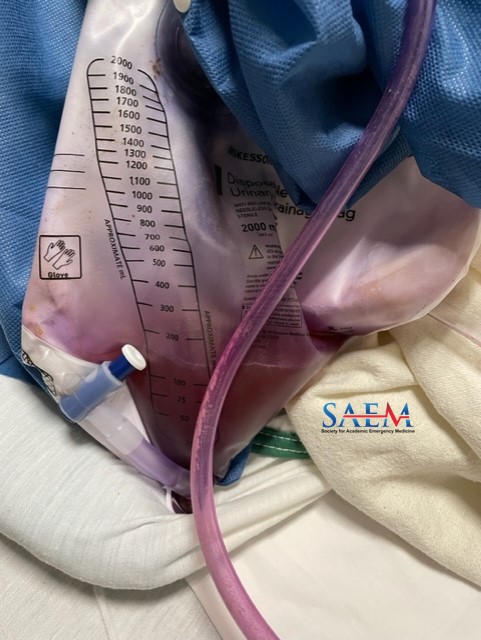
A 64-year-old female with a history of quadriplegia and bladder rupture secondary to a motor vehicle accident two years ago, complicated by chronic indwelling suprapubic foley, presents from her skilled nursing facility with fever, oliguria, tachycardia, low blood pressure, and a change in the color of her urine.

Vitals: T 100.4°F; HR 126; BP 105/74; RR 24

General: Pleasant but mildly confused morbidly obese female smelling strongly of urine

Genitourinary: Poorly maintained indwelling suprapubic catheter with purulence noted around the ostomy and purple urine in her foley tubing and bag

Urinalysis (UA): 168 WBC, >182 RBC, Large leukocyte esterase, Positive nitrite

This is a case of Purple Urine Bag syndrome (PUBS), an uncommon subset of CAUTI that generally occurs in female patients with constipation and an indwelling foley. Although not fully understood, it is thought that the long stool transit time of constipation allows GI flora to break tryptophan down into indoles which travel to the liver via the portal system where they become indoxyl sulfate, which is excreted into the urine. Bacterial enzymes there catalyze this to indoxyl which oxidizes in alkaline urine to both indigo (blue) and indirubin (red), the combination of which, plus interaction with the plastic catheter tubing, causes the vivid purple discoloration. Risk factors include women, chronically catheterized, elderly, recurrent UTI, institutionalization, and chronic constipation.

Causative organisms are primarily gram-negative and include Proteus mirabilis, Escherichia coli, Klebsiella pneumonia, Pseudomonas aeruginosa, Morganella morganii, and Enterococcus species.

Take-Home Points

  • PUBS is a rare subset of CAUTI primarily caused by gram-negative bacteria.
  • It is predominantly found in women, chronically catheterized, institutionalized, and constipated patients.
  • Treatment is appropriate antibiotics and improved foley hygiene, foley exchange as well as improved bowel regimen to increase stool transit time.
  • Meekins Pauline, Ramsay Amy, Ramsay Michael. Purple Urine Bag Syndrome. West J Emerg Med. 2012 Dec;13(6):499-500. 2. Scleszka Laura, Swan Tricia. October 9, 2020. Can Urine Color Guide Management? [online] EMRA. Available at: https://www.emra.org/emresident/article/purple-urine-bag-syndrome/ [Accessed 19 Dec. 2022]

By |2023-08-14T09:14:36-07:00Aug 14, 2023|Infectious Disease, SAEM Clinical Images|

ALiEM AIR Series | Infectious Disease 2023 Module

ALiEMU AIR Series infectious disease 2023

Welcome to the AIR Infectious Disease Module! After carefully reviewing all relevant posts in the past 12 months from the top 50 sites of the Digital Impact Factor [1], the ALiEM AIR Team is proud to present the highest quality online content related to related to infectious diseases in the Emergency Department. 6 blog posts met our standard of online excellence and were approved for residency training by the AIR Series Board. More specifically, we identified 1 AIR and 5 Honorable Mentions. We recommend programs give 3 hours of III credit for this module.

AIR Stamp of Approval and Honorable Mentions

In an effort to truly emphasize the highest quality posts, we have 2 subsets of recommended resources. The AIR stamp of approval is awarded only to posts scoring above a strict scoring cut-off of ≥30 points (out of 35 total), based on our scoring instrument. The other subset is for “Honorable Mention” posts. These posts have been flagged by and agreed upon by AIR Board members as worthwhile, accurate, unbiased, and appropriately referenced despite an average score.

Take the AIR Infectious Disease Module at ALiEMU

Interested in taking the AIR quiz for fun or asynchronous (Individualized Interactive Instruction) credit? Please go to the above link. You will need to create a free, 1-time login account.

Highlighted Quality Posts: Infectious Disease

SiteArticleAuthorDateLabel
SGEMLumbar punctures in febrile infants with positive urinalysis – it’s just overkillDennis Ren, MDDecember 31, 2022AIR
EMDocsBacterial MeningitisMounir Contreras Cejin, MD January 28, 2023HM
ALiEMThe Febrile InfantCorey Ziemba, MD, Justin Hacnik, MD and J.D. Cambron, DOMarch 29, 2023HM
EMCritApproach to CNS infectionJosh Farkas, MDAugust 15, 2022HM
Core EMUpdates in STI CareDaniel Imas, MDMarch 17, 2022HM
REBEL EMShort course antibiotics for Peds CAPMarco Propersi, DODec 5, 2022HM

(AIR = Approved Instructional Resource; HM = Honorable Mention)


If you have any questions or comments on the AIR series, or this AIR module, please contact us!

Thank you to the Society of Academic Emergency Medicine (SAEM) and the Council of EM Residency Directors (CORD) for jointly sponsoring the AIR Series! We are thrilled to partner with both on shaping the future of medical education.


Reference

  1. Lin M, Phipps M, Chan TM, et al. Digital Impact Factor: A Quality Index for Educational Blogs and Podcasts in Emergency Medicine and Critical Care. Ann Emerg Med. 2023;82(1):55-65. doi:10.1016/j.annemergmed.2023.02.011, PMID 36967275

The Febrile Infant: Incorporating the 2021 American Academy of Pediatrics guidelines

Can you trust a febrile infant?

“No” has been, and continues to be, the resounding answer over the last 40 years as researchers and clinicians work to determine the optimal evaluation and management of the well-appearing young febrile infant [1].

The goal remains to identify infants with bacterial infections in this at-risk cohort of patients while also considering the balance of cost-effectiveness on a population scale and the potential for iatrogenic harm with evaluation such as unnecessary lumbar punctures, unnecessary antibiotics, and unnecessary hospitalization. Fortunately, bacteremia and bacterial meningitis in this age group are uncommon [2]. Unfortunately, delayed or missed diagnosis can be devastating [1-3].

In the most recent 2021 Clinical Practice Guideline, the American Academy of Pediatrics (AAP) aims to provide guidance with 3 separate age-based algorithms for the evaluation and management of the well-appearing febrile infant [4]. These guidelines were made possible by the recent PECARN, Step by Step, and other studies and the invaluable information they have provided [5-7].

Who’s included?

  • Well-appearing febrile infants
    • The AAP acknowledges that clinician experience is likely the best determinate of what is “well-appearing”, further admitting that there is no measure or definition of either “experience” or “well-appearing”
  •  Febrile
    • Rectal temperatures of  38.0C or 100.4F at home in the past 24 hours or determined in a clinical setting
    • Subjective fevers at home are excluded
  •  Gestation
    • Between 37-42 weeks
    • Premature infants excluded
  • Age
    • Days 8 to 60 and have been discharged home following birth

Who is not included?

  • Preterm or infants with congenital/chromosomal abnormalities
  • Infants with focal bacterial infections
  • Cellulitis, omphalitis, septic arthritis, osteomyelitis
  •  Bronchiolitis
    • With or without a positive RSV test
  •  Immunocompromised
    • Either suspected or known deficiency
  • Immunizations in the previous 48 hours

It should also be noted that the AAP has named the following as high-risk inflammatory markers that will be referenced in the soon-to-be-discussed guidelines [4,5].

  • Temperature >101.3F (38.5C)
  • C-reactive protein (CRP) > 20 mg/L
  • Procalcitonin >0.5 ng/mL
  • Absolute neutrophil count (ANC) >4000 mm3  (or 5200 mm3 if your facility does not have procalcitonin available)

The Groups

While the AAP makes the distinction of an age 0-7 days group from the age 8-21 days, they provide no specific recommendations about emergency department (ED) management in the youngest group [4]. Despite this, these infant groups are likely best evaluated and managed similarly in the ED:

  • Urinalysis (UA) +/- urine culture if indicated by UA
  • Blood culture
  • Lumbar puncture (LP)
    • Cell count, Gram stain, glucose, protein, bacterial culture, and enterovirus PCR (if available)
  • Admission

Inflammatory markers are not required to determine ED management in this age group but may guide inpatient clinicians.

Treatment

  • Ampicillin IV or IM
  • Ceftazidime IV or IM or gentamicin IV or IM

The addition of acyclovir to IV antibiotics depends on the following risk factors which increase the likelihood of HSV:

  • Maternal genital HSV lesions or fever 48 hours before or after delivery
  • Infants with vesicles, seizures, hypothermia, mucous membrane ulcers
  • CSF pleocytosis with a negative Gram stain result
  • Leukopenia, thrombocytopenia, or elevated AST/ALT levels

Although many febrile infants in this group will still require a full evaluation for sepsis, there are some new alternatives in patients meeting certain criteria. At the minimum, all 22-28 day old infants will need:

  • UA +/- culture
  • Blood culture
  • Inflammatory markers (ANC, CRP, procalcitonin)

Further management of a well-appearing infant in this group can be based on the following pathways:

    1. If UA positive with negative inflammatory markers
      • LP may be performed but is not required
      • IV antibiotics and admission are required regardless
    2. If UA negative with negative inflammatory markers, then there are 2 options
      • Perform LP
        • If LP negative, then the patient can be given a dose of parenteral antibiotics and discharged home with close follow-up in 24 hours.
        • If LP is traumatic or pleocytosis is present, administer antibiotics and admit.
      • Defer LP
        • Antibiotics may be administered, but the patient should be admitted.
    3. If UA negative and ANY positive inflammatory marker (procalcitonin > 0.5 mg/mL, CRP >20 mg/L, ANC >4000, or temperature >101.3F), LP is required
      1. If LP positive
        • Admit with IV antibiotics
      2. If LP negative
        • Admit +/- antibiotics, OR
        • Discharge home after one dose of parenteral antibiotic with 24-hour follow-up

Treatment

  • Same antibiotic options as the day 0-21 infants

The nuances of this group’s decision tree revolve around the inflammatory markers.

Each infant in this group should have the following completed:

  • Urinalysis
  • Blood Cultures
  • Inflammatory markers (CRP, ANC, and procalcitonin)

If everything is negative (UA & inflammatory markers):

  • Infants may be discharged home without antibiotics and with close follow-up within 36 hours.

If inflammatory markers are negative:

  • Infants with a positive urinalysis and negative inflammatory markers may be treated with oral antibiotics.
    • They may be either admitted to the hospital for observation or discharged with 24-hour follow-up.
    • No LP needed.

If inflammatory markers are positive:

  • A LP may be performed if the clinician feels it necessary but is not required.
    • If performed and CSF is negative the infant may be discharged with close follow-up.
    • Given high risk of bacteremia with elevated inflammatory markers in this age group, a dose of parenteral antibiotics prior to discharge is appropriate.
  • If LP deferred:
    • Administer parenteral antibiotics, and likely admit to hospital.
    • The caveat to this is if they have viral testing completed that is positive and are well appearing.
      • Example: A 48-day-old infant presents with a fever of 100.6F, CRP of 22 mg/L, and otherwise normal procalcitonin, ANC, and UA. The mother reports that an older brother has had a runny nose. Viral PCR testing is positive for rhinovirus. Seeing as the UA is negative, the infant appears well with a positive viral test, they may go home with shared decision-making and close outpatient follow-up, despite a positive inflammatory marker (CRP 22 mg/L) [3].

Treatment

Urinary Tract Infection:

  • Ceftriaxone (IV/IM) or cephalexin/cefixime as oral options.

Concern for Bacteremia/Meningitis:

  • Ceftriaxone + vancomycin
  • May add acyclovir for the above-mentioned antiviral treatment indications.

What should be done if the viral panel is positive?

  • Children 29 days or older with fever from a documented viral source can be managed according to their clinical presentation and can go outside the algorithm.
  • This requires a documented positive viral swab and not just a presentation consistent with a viral syndrome.
  • UTI is common in this age group, and a UA should be obtained [8].

Conclusion

Over the course of nearly the last half century there has been a lack of clear evidence-based guidelines in evaluating the young febrile infant [1]. Although serious bacterial infections in these young, febrile infants are uncommon, studies show that in the first month of life, bacteremia can be present in nearly 3% of febrile infants, with bacterial meningitis occurring in about 1% [2]. The absence of consensus regarding management has led to significant costs due to hospitalizations and their associated iatrogenic complications [9]. In the movement to create new recommendations, shifting epidemiology pushed changes in previous guidelines with a new focus on the use of the now widely available inflammatory markers [10].  With the advent of multiple large-scale studies and the recent improvements in lab testing, the newly updated AAP guidelines provide recommendations on how to manage this challenging population [4-7].

Take Home Points

  • These management strategies can only be used in WELL-APPEARING infants – if they’re ill-appearing, do a complete workup.
  • Evaluation of febrile infants 0-21 days remains the same – do everything (blood culture, UA +/- culture, LP with CSF studies), give antibiotics, and admit.
  • For those infants 22-28 days, get the UA, blood culture, and inflammatory markers to guide management.
    • Not all febrile infants in the 22-28 day subset need an LP, though it should still be obtained in certain clinical circumstances, and discussed between  provider and parents in other situations
  • In infants ≤28 days, a complete workup is still needed even if a viral source is present.
  • Febrile infants 29-60 days old may be sent home after a negative workup with close follow-up.

References:

    1. Roberts KB. Young, febrile infants: a 30-year odyssey ends where it started. JAMA. 2004 Mar 10;291(10):1261-2. PMID: 15010450.
    2. Biondi EA, Lee B, Ralston SL, et al. Prevalence of Bacteremia and Bacterial Meningitis in Febrile Neonates and Infants in the Second Month of Life: A Systematic Review and Meta-analysis.JAMA Network Open. 2019 Mar; 2(3). PMID: 30901044.
    3. Baker MD, Avner JR, Bell LM. Failure of infant observation scales in detecting serious illness in febrile, 4- to 8-week old infants. Pediatrics. 1990;85(6):1040–1043. PMID: 2339027
    4. Pantell RH, Roberts KB, Adams WG, et al. Clinical Practice Guideline: Evaluation and Management of Well Appearing Febrile Infants 8 to 60 Days Old. Pediatrics. 2021;148(2):e2021052228. PMID: 34281996
    5. Kuppermann N, Dayan PS, Levine DA, et al. A Clinical Prediction Rule to Identify Febrile Infants 60 Days and Younger at Low Risk for Serious Bacterial Infections. JAMA Pediatr. 2019;173(4):342-351. PMID: 30776077
    6. Gomez B, Mintegi S, Bressan S, et al. Validation of the “Step-by-Step” approach in the management of young febrile infants. The Journal of Pediatrics. 2016 Aug; 138(2):e20154381. PMID: 27382134
    7. Nguyen THP, Young BR, Poggel LE, et al. Roseville Protocol for the Management of Febrile Infants 7-60 Days. Hosp Pediatr. 2020 Dec 17:hpeds.2020-0187. PMID: 33334815
    8. Shaikh N, Morone NE, Bost JE, Farrell MH. Prevalence of urinary tract infection in childhood: a meta-analysis. Pediatr Infect Dis J. 2008;27(4):302-308. PMID: 18316994
    9. Coyle C, Brock G, Wallihan R, Leonard JC. Cost Analysis of Emergency Department Criteria for Evaluation of Febrile Infants Ages 29 to 90 Days. J Pediatr. 2021 Apr;231:94-101.e2. doi: 10.1016/j.jpeds.2020.10.033. Epub 2020 Oct 31. PMID:33130155.

    Milcent K, Faesch S, Gras-Le Guen C, et al. Use of Procalcitonin Assays to Predict Serious Bacterial Infection in Young Febrile Infants [published correction appears in JAMA Pediatr. 2016 Jun 1;170(6):624].JAMA Pediatr. 2016;170(1):62-69. doi:10.1001/jamapediatrics.2015.3210 PMID: 26595253

SAEM Clinical Images Series: A Rare Cause of Post-traumatic Neck Pain

neck pain

A 15-year-old male presents to the pediatric Emergency Department (ED) for evaluation of neck pain for three weeks. The patient is vague as to the development of his symptoms, but his mother reveals patient was assaulted by peers three weeks ago and has had progressively worsening neck pain and stiffness. The patient states symptoms have gotten to the point where he is unable to turn his head but denies fevers, chills, nausea, vomiting, focal weakness, or sensory changes.

Vitals: Temp: 99.4°F; HR 80; RR 18; SpO2 98% on room air

Constitutional: No distress, sitting rigidly in bed.

Neck: Cervical midline tenderness noted with rigid neck and severe tenderness with manipulation, no swelling, erythema, or masses noted.

HEENT: No pharyngeal injection, no visible masses in the oropharynx, no trismus.

CV: Regular rate and rhythm, no murmurs, rubs, or gallops. Good peripheral perfusion.

Abdomen: Soft, non-distended and non-tender.

Neuro: 5/5 motor function to the bilateral upper and lower extremities, normal sensory examination, cranial nerves intact. Negative Kernig’s sign.

White blood cell (WBC) count: 9.5

Platelets: 639

Glucose: 105

CRP: 128

ESR: 100

CSF: Color- Clear; Nucleated Cells- 1; Protein- 25; Glucose- 6

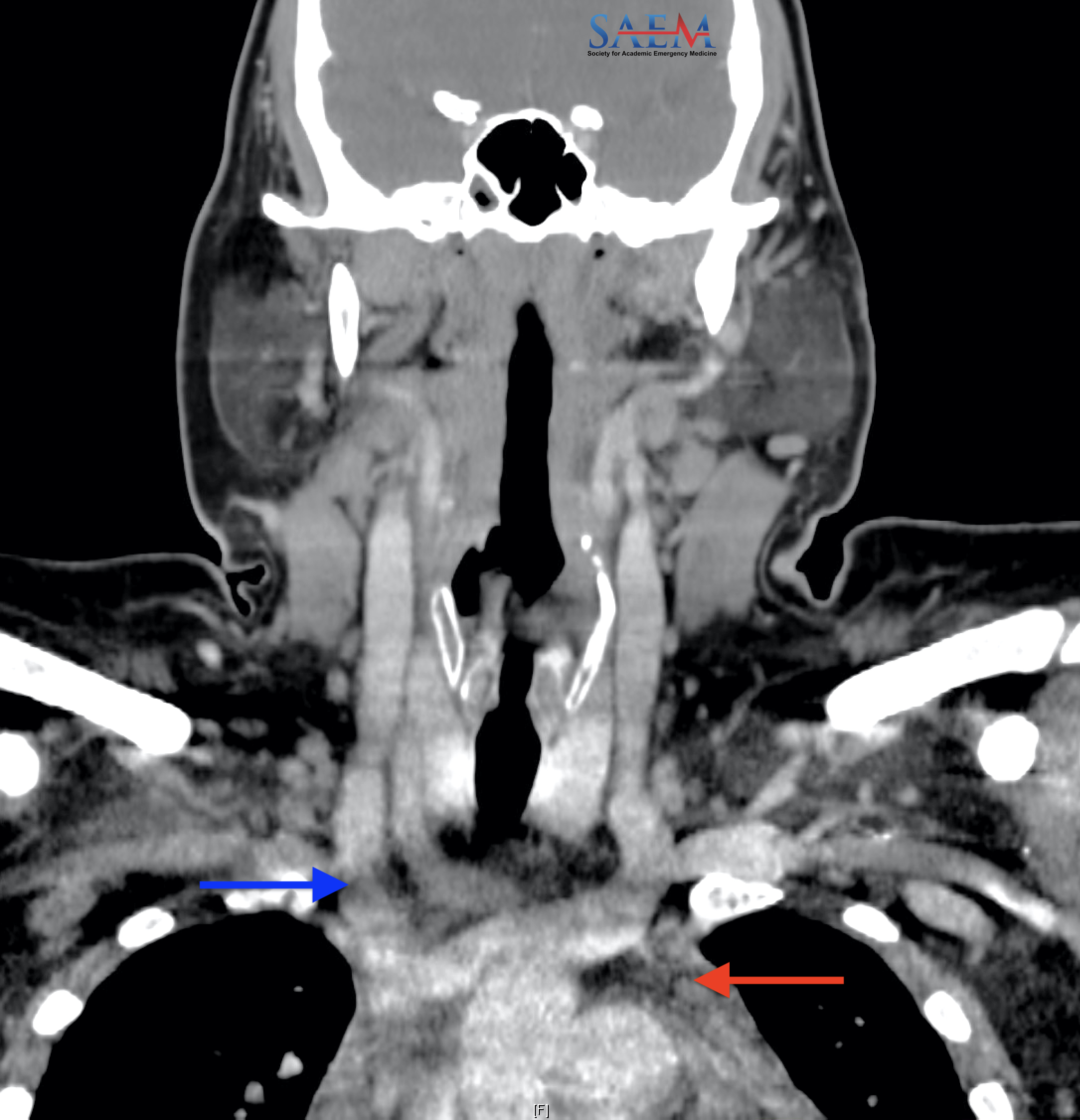
This patient was found to have septic arthritis of the atlantooccipital (AO) joint, noted on the CT shown above, with joint space narrowing and erosion (red arrow) of the right AO joint with associated soft tissue swelling and effusion. Seen on the MRI is further confirmation of the findings suggested on CT of septic arthritis, with additional noting of attenuation of the prevertebral space of C2/C3 suggestive of phlegmon, bilateral AO joint arthritis, and involvement of the atlantoaxial joint, all of which can be seen on the above sagittal cut of the MRI, with the most notable being the pre-vertebral phlegmon (red arrow).

Septic arthritis of the facet joints is a rarity, particularly in pediatrics and in the cervical spine; case reports largely describe a lumbar location in elderly adults with predisposing comorbidities (intravenous drug use, diabetes, immunosuppression) for spontaneous infection. There are no published case reports of traumatic, pediatric AO joint septic arthritis. This patient developed septic arthritis following trauma. As with peripheral septic arthritis, the most common cause is hematogenous spread, and even non-penetrating trauma can predispose a joint to infection as likely occurred in this case. Septic arthritis of the facet joints presents similarly to spondylodiscitis, generally with fever, neck or back pain, and elevated inflammatory markers such as CRP/ESR. If left untreated, it can be a dangerous and refractory cause of sepsis that leads to deadly complications such as concomitant epidural access formation. Oftentimes patients are initially misdiagnosed and re-present multiple times as the preferred image modality for diagnosis is MRI which is not always readily available or ordered. In general, treatment generally includes weeks-long courses of intravenous (IV) antibiotics, though this patient was discharged on oral antibiotics after significant symptomatic improvement on IV therapy after four days.

Take-Home Points

  • Septic arthritis of the cervical facet joints, namely the AO joint, is a rare cause of neck pain in patients with fever and elevated inflammatory markers, and can present after trauma. Generally, it is hematogenously spread and associated with comorbidities such as diabetes, intravenous drug use, and immunosuppression, it should be considered in patients with refractory symptoms or in which there is strong suspicion as it can have dangerous complications.
  • The preferred imaging modality for diagnosis is MRI, though CT can be useful in making the diagnosis radiographically. Treatment generally consists of weeks of IV antibiotics.

  • Sethi S, Vithayathil MK. Cervical facet joint septic arthritis: a real pain in the neck. BMJ Case Rep. 2017 Aug 3;2017:bcr2016218510. doi: 10.1136/bcr-2016-218510. PMID: 28775081; PMCID: PMC5612571.
  • Narváez J, Nolla JM, Narváez JA, Martinez-Carnicero L, De Lama E, Gómez-Vaquero C, Murillo O, Valverde J, Ariza J. Spontaneous pyogenic facet joint infection. Semin Arthritis Rheum. 2006 Apr;35(5):272-83. doi: 10.1016/j.semarthrit.2005.09.003. PMID: 16616150.

SAEM Clinical Images Series: A Rash You Don’t Want to Miss

rash

A 54-year-old female with a past medical history of diabetes presented to the Emergency Department (ED) for evaluation of unresponsiveness. The patient was found unresponsive by her spouse, who notes she had missed several doses of insulin over the past few days. EMS notes the glucometer read ‘HIGH’ on fingerstick. The patient remains unresponsive on presentation and is unable to contribute further history.

Vital Signs: BP 148/105; HR 120; RR 24; Pulse Oximetry 98% on room air; Temperature 97.7°F

Constitutional: Patient is morbidly obese, unresponsive, and toxic-appearing.

Cardiovascular: Regular rhythm with tachycardia. No murmur.

Pulmonary: Pulmonary effort is normal. Lungs clear to auscultation bilaterally.

Abdomen: Abdomen is soft and non-distended. Unable to assess for tenderness given unresponsiveness.

Skin: Cool, pale, mottled. Large gangrenous, draining, foul-smelling wound on proximal left thigh. There is necrotic, malodorous, black skin noted over the left lower abdomen and left upper thigh.

Neurological: Unresponsive. GCS 3.

White blood cell (WBC) count: 20.5

Comprehensive metabolic panel (CMP): K 5.8; Cr 2.06; BUN 86; Glucose >600

Venous blood gas (VBG): pH<7; lactate 3.4; bicarbonate 7

These photographs show advanced Fournier’s Gangrene, a form of necrotizing fasciitis located in the genitals, perineum, or perianal region. Rapid involvement of our surgical colleagues is crucial, as these patients will not recover without the debridement of affected tissues. Aggressive fluid resuscitation and broad-spectrum antibiotics can be initiated after a surgical consult is made.

This patient presented with impressive visual evidence of advanced disease including severe ecchymosis, but our clinical suspicion must be high as Fournier’s is rapidly progressing and carries a high mortality rate (may be upwards of 30%). Earlier symptoms are genital or perineal pain which may be associated with itching, lethargy, or fever. The biggest exam finding to keep in mind is ‘pain out of proportion to the exam’ as up to 40% of these patients may present without localized symptoms. Advanced disease, as seen in this patient, can present with crepitus and severe ecchymosis of tissue involved. This patient was also found to be in DKA, as evidenced by her laboratory findings. This case should serve as a reminder that it is vital to perform a proper skin examination in patients presenting with hyperglycemia. Ultimately in this case, the patient was intubated for airway protection and started on vasopressors for cardiovascular support in the setting of septic shock. She went into VTach arrest and was successfully defibrillated before further decompensating and becoming asystolic.

Take-Home Points

  • The first task after suspected diagnosis of Fournier’s Gangrene is a page to your surgery service for evaluation and emergent debridement in the OR (depending on your institution this may be general surgery, urology, or both). After your patient is on the path to definitive management, you can begin aggressive fluid administration and broad-spectrum antibiotics (gram-positive, gram-negative, and anaerobic coverage needed).
  • Fournier’s Gangrene is a clinical diagnosis. Imaging may assist in atypical or borderline cases, but should never result in delay of surgical evaluation and treatment. Crepitus and ecchymotic tissue are very late findings; have high clinical suspicion inpatients with signs of swelling, erythema, and pain.

  • Shyam DC, Rapsang AG. Fournier’s gangrene. Surgeon. 2013 Aug;11(4):222-32. doi: 10.1016/j.surge.2013.02.001. Epub 2013 Apr 8. PMID: 23578806.
  • Ustin JS, Malangoni MA. Necrotizing soft-tissue infections. Crit Care Med. 2011 Sep;39(9):2156-62. doi: 10.1097/CCM.0b013e31821cb246. Erratum in: Crit Care Med. 2011 Nov;39(11):2592. Dosage error in article text. PMID: 21532474.
  • Harbrecht BG, Nash NA. Necrotizing Soft Tissue Infections: A Review. Surg Infect (Larchmt). 2016 Oct;17(5):503-9. doi: 10.1089/sur.2016.049. Epub 2016 Aug 2. PMID: 27483003.
  • Singh A, Ahmed K, Aydin A, Khan MS, Dasgupta P. Fournier’s gangrene. A clinical review. Arch Ital Urol Androl. 2016 Oct 5;88(3):157-164. doi: 10.4081/aiua.2016.3.157. PMID: 27711086.
  • Sarani B, Strong M, Pascual J, Schwab CW. Necrotizing fasciitis: current concepts and review of the literature. J Am Coll Surg. 2009 Feb;208(2):279-88. doi: 10.1016/j.jamcollsurg.2008.10.032. Epub 2008 Dec 12. PMID: 19228540.
  • Tintinalli JE, Ma O, Yealy DM, Meckler GD, Stapczynski J, Cline DM, Thomas SH. eds. Tintinalli’s Emergency Medicine: A Comprehensive Study Guide, 9e. McGraw Hill; 2020. p.592- 593.

SAEM Clinical Image Series: Eye Pain

necrotizing

A 59-year-old gentleman experiencing homelessness with a history of hepatocellular carcinoma, hepatitis C, alcohol use disorder, and tobacco dependence presented to the emergency department (ED) with severe, worsening right eye pain, blurry vision, swelling, redness, and purulent discharge after scraping his upper face on concrete during a mechanical fall two weeks prior. Of note, his partner presented to the ED at the same time with a necrotic infection of the breast as well as multiple skin lesions reportedly due to insect bites.

Vitals: T 102.4°F; HR 108; BP 121/94

Head: Lice nits visible in his hair

Eye: Unable to open right eye without assistance; eyelids crusted and necrotic with underlying orbicularis oculi muscle visible; EOM full but painful in all fields of gaze; visual acuity 20/60 in each eye; pupils 2 mm, equal and minimally reactive.

White blood cell (WBC) count: 27,600/μl

Comprehensive metabolic panel (CMP): Na 121; K 2.8; Cl 83; AST 113; ALT 45

Wound culture: Positive for MRSA, Streptococcus pyogenes, Enterobacter cloacae, and Staphyloccocus epidermis

This patient’s presentation is consistent with periorbital necrotizing fasciitis complicated by severe sepsis.

This patient had type 1 necrotizing fasciitis given the polymicrobial source of infection with both aerobic and anaerobic organisms growing from his wound culture. Type 2 necrotizing fasciitis is attributable to streptococcal and/or staphylococcal infection alone. Group A strep is the most common organism responsible for necrotizing fasciitis, found in about 50% of cases.

Independent risk factors for necrotizing fasciitis include advanced age, diabetes mellitus, heart disease, liver cirrhosis, alcohol use disorder, and trauma. Furthermore, persons who experience homelessness are at risk of skin lesions due to insect bites, burns, and physical trauma which predispose them to secondary bacterial infections because of inadequate hygiene resources.

A systematic review of periorbital necrotizing fasciitis showed that 35% of cases were triggered by trauma, while 14% were caused by other infections such as acute dacryocystitis, sinus infections, and infections of the parotid glands.  Thus, it is likely that the patient’s contact with his partner who had a necrotic soft tissue infection secondary to insect bites, as well as his recent trauma to the eye, predisposed his development of this condition.

Initiation of broad-spectrum intravenous (IV) antibiotics with vancomycin, piperacillin/tazobactam, and clindamycin, as well as IV fluids.

In this case, the patient received the above antibiotics, underwent operative debridement, frequent wound care including dilute hypochlorous acid, local vancomycin administered via intra-orbital catheter, as well as lid reconstruction with glabellar flap. He was ultimately discharged on a two-week course of oral moxifloxacin and linezolid, healing well at his one-month follow-up appointment.


Take-Home Points

  • Skin problems are a common reason that persons experiencing homelessness seek medical care, given their risk factors for both primary insults and subsequent superinfection.
  • Common sources of infection for periorbital necrotizing fasciitis include trauma, surgery, and other infections of the upper face.
  • The standard of care for periorbital necrotizing fasciitis consists of IV and local antibiotics, and operative debridement.

  • Amrith S, Hosdurga Pai V, Ling WW. Periorbital necrotizing fasciitis — a review. Acta Ophthalmol. 2013 Nov;91(7):596-603. doi: 10.1111/j.1755-3768.2012.02420.x. Epub 2012 Apr 20. PMID: 22520175.


Go to Top