


BISAP, EHMRG, ORT: 3 New Medical Scores You’ve Never Heard Of
 Let’s face it. You’ve heard about the A-a gradient. And free water deficit. And even the APACHE-II score. But how useful are these in your daily practice? You don’t care that much if a patient has shunt physiology in the first case, nor exactly how much free water they’re lacking in the second. And in the third case, your clinical acumen is probably pretty good at predicting a sick patient’s mortality already. But what about the new medical scores of BISAP, EHMRG, and ORT?

 What’s the first thing that pops into your head when you see an older woman presenting to the ED from a nursing facility with atraumatic altered mental status? If you’re like me, ‘UTI’ comes quickly to mind. I then banish the thought of a UTI and force myself to go through a worst-first differential diagnosis to exclude, either through the history and clinical assessment or through testing, more dangerous causes. This is a case of a 67-year-old woman with an unusual cause of altered mental status… and a UTI.

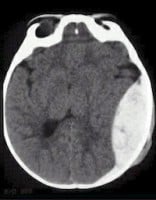
 Intracranial injury is the leading cause of death and disability in children. It can arise after severe, moderate, or minor head injury. Children with minor head injury present the greatest diagnostic dilemma for emergency physicians, as they appear well but a small number will develop intracranial injuries. The question that often arises in the ED is: