


Bicarbonate: Completely Useless?
 Intravenous sodium bicarbonate seems like a wonderful drug. It fixes acidosis, pushes potassium into cells, alkalinizes urine, and even helps with smelly feet. However, this literature review of four conditions casts some doubt into the seemingly cure-all that is bicarbonate.
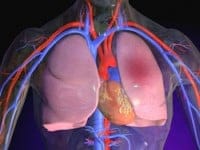 Multi-detector computed tomographic pulmonary angiography (CTPA) allows for better visualization of peripheral pulmonary arteries allowing for diagnosis of small peripheral emboli limited to the subsegmental pulmonary arteries. Interestingly as these SSPE’s get diagnosed more and more, two questions come to mind:

 We sometimes hear information stated as fact that may not be entirely accurate. One such example is, “I’m going to use lorazepam because it isn’t metabolized by the liver.”
 To provide a resource for evidence-based Emergency Medical education, this list of must-read landmark articles was created to supplement the Emergency Medicine (EM) internship year of training. There are 52 articles so that one article can be read at leisure each week of the year. I searched national databases and polled faculty at the University of Washington to identify articles that faculty would expect any EM resident to be familiar with or that they felt were practice-changing in EM. Articles were selected for the final list based on the quality of study design, sample size, and relevance for EM residents.