


AIR Series: Infectious Disease, Hematology, Oncology 2014
 Welcome to the first ALiEM Approved Instructional Resources (AIR) Module! In an effort to reward our readers for the reading and learning they are already doing online, we have created an Individual Interactive Instruction (III) opportunity utilizing FOAM resources for US Emergency Medicine residents. For each module, the board curates and scores a list of blogs and podcasts. A quiz is available to complete after each module to obtain residency conference credit. Once completed, your name and institution will be logged into our private Google Drive database, which participating residency program directors can access to provide access.
 Clinical Toxicology has published guidelines for out-of-hospital management of 16 distinct overdoses and their dose thresholds, above which, pediatric patients should be referred to the Emergency Department for evaluation. Clinical Toxicology is the official journal of the American Academy of Clinical Toxicology (AACT,
  Intravenous (IV) rapid sequence intubation (RSI) is by most considered the gold standard practice for securing an airway in the critically ill. There are, however, scenarios where it may not be possible to get rapid IV access in a timely manner (i.e. severe cutaneous burns, hemorrhagic shock, IV drug users, and/or the morbidly obese). It has been reported that

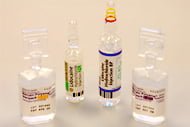 Local anesthetics (LAs) are widely employed to achieve tissue infiltration, peripheral and regional anesthesia, and neuraxial blockades. Despite their well-established toxic dose limits, these agents continue to pose a substantial risk of morbidity and mortality due to local anesthetic toxicity and overdose.