Ultrasound For The Win! – 63M with an Erythematous Abdomen #US4TW

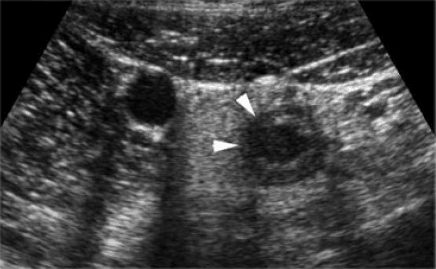
Welcome to another ultrasound-based case, part of the “Ultrasound For The Win!” (#US4TW) Case Series. In this case series, we focus on a real clinical case where bedside ultrasound changed the management or aided in the diagnosis. In this case, a 63-year-old man presents with a painful, warm, and erythematous area of his abdomen.
(more…)

PEM Pearls: The nonvisualized appendix quandary on ultrasound

appendicitis image

A 10-year old girl presents with progressively worsening right lower quadrant pain for the last 2 days. She reports having chills and feeling warm. Her review of systems is negative for nausea, vomiting, diarrhea, or urinary symptoms. Her abdominal exam is unremarkable except for some diffuse, mild tenderness with deep palpation in bilateral lower quadrants. Labs: WBC 9 x 10^9/L. Because of radiation exposure concerns, you order an abdominal ultrasound as the initial imaging modality to evaluate for appendicitis. The radiologist’s reading was: “Unable to visualize the appendix.” Now, what do you do?

Appendicitis background

Appendicitis is one of the most common surgical emergencies and accounts for 5-10% of all abdominal pain among pediatric patients. Diagnosis can be deceptively difficult given that the complaints can be vague and nonspecific among children. Furthermore, this disease can mimic and be mimicked by many other pathologies making the clinical exam challenging. Laboratory tests, as well as clinical decision-making tools can help guide a clinician, but are limited, especially since early in disease progression, there may not be any demonstrated abnormalities.1

Imaging modalities for appendicitis

The use of some type of imaging modality is now more frequently incorporated to help assess for appendicitis. The sensitivity and specificity for computer tomography (CT) has been quoted as 94 and 95%, respectively, while for ultrasound (US), it is around 88% and 94%, respectively.1 In one particular 2012 study by Trout et al., the sensitivity for US for the diagnosis of acute appendicitis was as low as 66.4%, although the specificity was 95.9%, with a false negative rate of 33.5%.2

While CT/MRI improves diagnostic accuracy, many institutions use US as the initial imaging modality in order to minimize radiation exposure, and need for IV access and sedation.1,3 However, US results can vary for many reasons:2

  • Operator ability: Dedicated pediatric sonographers were able to identify the appendix at a significantly higher rate than non-pediatric sonographers
  • Patient characteristics (e.g. obesity) and cooperation
  • Location of the appendix: A retrocecal appendix or an appendix in the deep pelvis, can be difficult to visualize.

The ultrasound reading is neither positive or negative. Now what?

Often clinicians are left in a quandary when the interpretation for the appendix is “equivocal,” “non-visualized,” “limited,” or “inconclusive.” This occurs 25-73% of the time.4,5 So now what? Many times, we progress to CT/MRI imaging as if the US study was never performed. Some clinicians incorporate other strategies including serial abdominal exams or repeated US studies. These alternative strategies, however, require a much longer ED stay.

Is there any value to a single “non-visualized appendix” US study result?

New data suggests that an adequately performed US examination has some negative predictive value (NPV) for appendicitis despite the appendix not being seen (“non-visualized”), assuming that there are no other abnormalities present.5,6

A recent Journal of Pediatric Surgery 2015 study reports that an indeterminate abdominal US has some negative predictive power in risk stratifying the patient for appendicitis. From 2004-2013 at a single tertiary academic center, Cohen et al. did a retrospective chart review study of 1,260 patients who underwent abdominal US where appendicitis was suspected. 63% of the initial US findings were deemed non-diagnostic, with 56% of these due to non-visualization of the appendix. The authors then calculated NPV for non-diagnostic and non-visualized US results, as a function US alone, a serum WBC cutoff of 7.5 x 10^9/L, and a serum WBC cutoff of 11.0 x 10^9/L. The results are summarized in the table.6

US Study ResultNumberNPV for Appendicitis
US AloneUS + Serum WBC* <7.5US + Serum WBC* <11
Non-diagnostic**87684.5%91.7%95.6%
Non-diagnostic because of non-visualized appendix77786.4%98.9%97.0%
* WBC units are in 109/L

** Cases were categorized as non-diagnostic if they were not clearly or mostly conclusive in being a positive or negative ultrasound study for acute appendicitis

This study, examined the relationship between a non-diagnostic US and a primary outcome measure of appendicitis. With a non-diagnostic US and a serum WBC count of <7.5 x 10^9/L, one might be able to have a shared decision discussion with the family about observing the patient at home or as an inpatient without further immediate imaging. The NPV is 97.1% (or 98.9% if the appendix was not visualized). A limitation of this study is that it is a single-site retrospective study.6

But is it that simple?

For many clinicians, when we get a “non-visualized appendix” US reading, we still feel pressed to get further imaging, even if our suspicion is low. For those low-risk patients, regardless of the next imaging modality, they will already have a high NPV (86.4% in one study).7

Radiologists will also look for secondary findings suggestive of appendicitis, including the presence of an appendicolith, free fluid or fluid collection, echogenic inflammatory changes or hyperemia. A study by Ross et al. found that those with at least one of these secondary signs had an odds ratio of 6.52 of having appendicitis.4

A major part of the problem is how US findings are reported, because they can wildly vary by institution and by US technician. Providing a standardized and comprehensive report can help minimize confusion and clarify what descriptives mean. Fallon et al, created an “Appy-Score” which helped categorize various findings, though their “equivocal” definition was a catch-all for those that did not fit into the other groups (e.g. periappendiceal inflammatory changes or borderline enlargement with an otherwise normal appendix). They demonstrated that by using their US scoring system, they were able to reduce overall CT use by 38%.8


Appy-Score Strata
1Completely visualized normal-appearing appendix with no ancillary findings to suggest appendicitis
2Partially visualized normal-appearing appendix with no findings to suggest appendicitis
3Non-visualized appendix with no ancillary findings to suggest appendicitis
4Equivocal
5aNon-perforated acute appendicitis
5bPerforated appendicitis
Adapted from Larson et al5 Table 1

Larson et al. used 5 specific interpretative categories to provide more description about their US findings. In patients with a non-visualized appendix but with positive secondary findings, the appendicitis rate was 39.3%, while those without any secondary findings, had a rate of 3.8%.5

How can we also use clinical decision tools to help risk stratify the need for additional imaging?

Given a 50/50 chance of having an equivocal US exam, having a pre-test risk probability based on clinical exam and/or scores (e.g. Alvarado score) may help risk stratify your patients when combined with imaging.


Clinical CriterionNo. of Points
Migration of pain to the right iliac fossa1
Anorexia or ketones in the urine1
Nausea or vomiting1
Right lower quadrant tenderness2
Rebound tenderness1
Fever of 37.3°C or more1
Leukocytosis of > 10,000/µL2
Neutrophilia > 75%1
Total possible points10
Components of the Alvarado Score

In a study by Blitman et al., they found a NPV of 99.6% for those patients who had an inconclusive US test, but a low Alvarado score (<5) and 89.7% for those with a score of 5-8.9

Bottom Line

Many institutions have created a staged approach where they will use ultrasound first, followed by a CT or MRI, if they are unable to visualize the appendix. Given new evidence, we now might consider avoiding additional imaging in certain low-risk populations. These low risk patients have ALL of the following:

  1. Low Alvarado Score (<5)
  2. Non-elevated serum WBC value
  3. Nonvisualized appendix with no secondary findings on US

In the hands of a proficient US operator, a nonvisualized appendix without secondary findings on US no longer means an automatic CT or MRI scan.

References

  1. Estey A, Poonai N, Lim R. Appendix not seen: the predictive value of secondary inflammatory sonographic signs. Pediatr Emerg Care. 2013;29(4):435-439. [PubMed]
  2. Trout A, Sanchez R, Ladino-Torres M, Pai D, Strouse P. A critical evaluation of US for the diagnosis of pediatric acute appendicitis in a real-life setting: how can we improve the diagnostic value of sonography? Pediatr Radiol. 2012;42(7):813-823. [PubMed]
  3. Dillman J, Gadepalli S, Sroufe N, et al. Equivocal Pediatric Appendicitis: Unenhanced MR Imaging Protocol for Nonsedated Children-A Clinical Effectiveness Study. Radiology. 2016;279(1):216-225. [PubMed]
  4. Ross M, Liu H, Netherton S, et al. Outcomes of children with suspected appendicitis and incompletely visualized appendix on ultrasound. Acad Emerg Med. 2014;21(5):538-542. [PubMed]
  5. Larson D, Trout A, Fierke S, Towbin A. Improvement in diagnostic accuracy of ultrasound of the pediatric appendix through the use of equivocal interpretive categories. AJR Am J Roentgenol. 2015;204(4):849-856. [PubMed]
  6. Cohen B, Bowling J, Midulla P, et al. The non-diagnostic ultrasound in appendicitis: is a non-visualized appendix the same as a negative study? J Pediatr Surg. 2015;50(6):923-927. [PubMed]
  7. Ly D, Khalili K, Gray S, Atri M, Hanbidge A, Thipphavong S. When the Appendix Is Not Seen on Ultrasound for Right Lower Quadrant Pain: Does the Interpretation of Emergency Department Physicians Correlate With Diagnostic Performance? Ultrasound Q. 2016;32(3):290-295. [PubMed]
  8. Fallon S, Orth R, Guillerman R, et al. Development and validation of an ultrasound scoring system for children with suspected acute appendicitis. Pediatr Radiol. 2015;45(13):1945-1952. [PubMed]
  9. Blitman N, Anwar M, Brady K, Taragin B, Freeman K. Value of Focused Appendicitis Ultrasound and Alvarado Score in Predicting Appendicitis in Children: Can We Reduce the Use of CT? AJR Am J Roentgenol. 2015;204(6):W707-12. [PubMed]

Ultrasound For the Win! Case – 43-year-old Man with Syncope #US4TW

Welcome to another ultrasound-based case, part of the “Ultrasound For The Win!” (#US4TW) Case Series. In this peer-reviewed case series, we focus on real clinical cases where bedside ultrasound changed management or aided in diagnoses. In this case, a 43-year-old man presents to the Emergency Department after a syncopal episode.

(more…)

Trick of the Trade: Patient positioning for ultrasound-guided ulnar nerve block

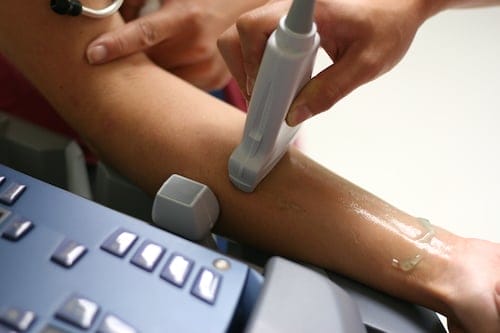
Ultrasound ForearmPatients with 5th metacarpal fractures (commonly termed “boxer’s fracture”) are frequently treated in the emergency department (ED) with closed reduction and splinting. Obtaining analgesia and a successful closed reduction can often be challenging without procedural sedation. Severe swelling can make a hematoma block difficult, often resulting in inadequate analgesia. An ultrasound-guided ulnar nerve block provides a simple method to facilitate pain relief and allow for improved fracture site manipulation.

(more…)

By |2018-10-28T21:25:09-07:00Jan 20, 2016|Tricks of the Trade, Ultrasound|

Ultrasound For the Win! Case – 55-year-old man with chest pain #US4TW

Welcome to another ultrasound-based case, part of the “Ultrasound For The Win!” (#US4TW) Case Series. In this peer-reviewed case series, we focus on real clinical cases where bedside ultrasound changed management or aided in diagnoses. In this case, a 55-year-old man presents with acute-onset chest pain.

(more…)

PV Card: Normal Values for Ultrasound Measurements

Ultrasound-PV-Card-sm

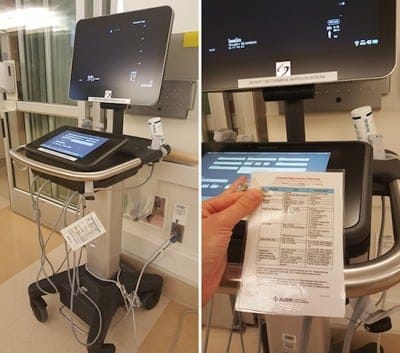
As emergency medicine providers become more proficient in using bedside ultrasonography as a diagnostic tool, it can be difficult to remember all of the normal cutoff values. Is it 3 or 5 mm as the cutoff? Thanks to the team at UCSF (Dr. Maria Beylin, Dr. Scott Fischette, and Dr. Nate Teismann) for creating a succinct PV card listing the key numbers to remember. You can download this PV card into your mobile device as a reference guide, or you can even print and attach to each of your ultrasound machines!


PV Card: Normal Values for Ultrasound Measurements


Adapted from [1–4]

References

  1. Horrow M. Ultrasound of the extrahepatic bile duct: issues of size. Ultrasound Q. 2010;26(2):67-74. [PubMed]
  2. Beigel R, Cercek B, Luo H, Siegel R. Noninvasive evaluation of right atrial pressure. J Am Soc Echocardiogr. 2013;26(9):1033-1042. [PubMed]
  3. Doubilet P, Benson C, Bourne T, et al. Diagnostic criteria for nonviable pregnancy early in the first trimester. N Engl J Med. 2013;369(15):1443-1451. [PubMed]
  4. Adhikari S, Zeger W, Thom C, Fields J. Isolated Deep Venous Thrombosis: Implications for 2-Point Compression Ultrasonography of the Lower Extremity. Ann Emerg Med. 2015;66(3):262-266. [PubMed]
By |2021-10-04T09:56:16-07:00Oct 15, 2015|ALiEM Cards, Ultrasound|

Ultrasound For The Win! Case – 76M with Right-Sided Vision Loss #US4TW

Welcome to another ultrasound-based case, part of the “Ultrasound For The Win!” (#US4TW) Case Series. In this case series, we focus on a real clinical case where bedside ultrasound changed the management or aided in the diagnosis. In this case, a 76-year-old man presents with sudden-onset right-sided vision loss.

(more…)

Go to Top