ACMT Toxicology Visual Pearls: Blue Urine
 A bedside urine test for a pesticide is positive as shown in the photo. What pesticide is being detected?
- Chlorpyrifos
- Diquat
- Glyphosate
- Paraquat



A bedside urine test for a pesticide is positive as shown in the photo. What pesticide is being detected?
 A 2-year-old previously healthy boy presents to the emergency department (ED) acting sleepier than usual. Yesterday, he was in his usual state of health, but this morning he didn’t wake up at his usual time of 6 am. When his father went to his room at 7 am, the child was lying in bed. He opened his eyes to look at his father, but did not get out of bed. The mother and father deny any trauma, fever, or seizure activity.
 We are proud to present Capsules Module 11: Acute Agitation, now published on ALiEMU. We present a summary of the module with key points from a stellar module by PharmDs Jenny Koehl, Kyle DeWitt, Gabrielle Procopio, and Zlatan Coralic. When you’re finished, head over to the Capsules page for even more practical pharmacology for the EM provider.
(more…)
 Care of acute ischemic stroke patients is a complex and time-sensitive team effort. There is a potentially dangerous trend in the medical literature over the past few years that seems to be increasing as of late: reversing anticoagulation in order to administer systemic thrombolytic therapy. The purpose of this post is to highlight the available literature on this topic, specifically related to the direct acting oral anticoagulants (DOACs), and discuss why we should not support this practice (at least as of today).
 The American College of Emergency Physicians (ACEP) features 3 quality improvement targets within their Emergency Quality Network (E-QUAL) initiative: sepsis, imaging, and chest pain. Most recently, they added a fourth new focus on the opioid epidemic. This opioid initiative covers best-practice approaches and strategies for managing opioid-related complications. In collaboration with ACEP E-QUAL, we have remixed and distilled 5 of their webinars into 4 podcasts.
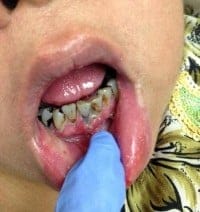 A middle-aged Asian female presents to the emergency department complaining of 2-3 days of mouth pain. She has chewed betel nut for a number of years. Which of the following is true regarding her presentation and management?
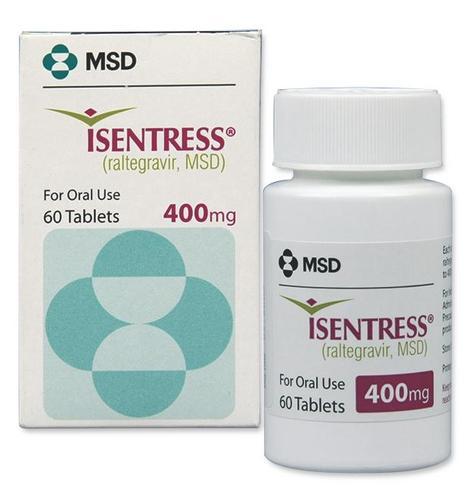 Post-exposure prophylaxis (PEP) of patients who may have been exposed to HIV includes a combination HIV nucleoside analog reverse transcriptase inhibitor emtricitabine/tenofovir (Truvada) plus an integrase inhibitor. The CDC initially recommended the integrase inhibitor dolutegravir (Tivicay). However on May 18, 2018, the CDC placed an alert about the neural tube defect risk with dolutegravir.1 How does this change our ED practice?
Based on an interim analysis in an ongoing safety of dolutegraivir, the U.S. Health and Human Services announced:
The concern stems from a preliminary unscheduled analysis of an ongoing NIH-funded birth surveillance study in Botswana, which has reported an increased risk of neural tube defects among infants of women who became pregnant while taking DTG [dolutegravir]-based regimens. The study reported 4 cases of neural tube defects out of 426 infants born to women who became pregnant while taking DTG-based regimens. This rate of approximately 0.9% compares to a 0.1% risk of neural tube defects among infants born to women taking non-DTG-based regimens at the time of conception.
For men and women who are not able or likely to get pregnant, it is safe to administer dolutegravir for PEP. However for women of child-bearing age (which includes many of ED patients who are evaluated for sexual assault), these patient should instead receive raltegravir (Isentress).
Utilizing a 3-drug regimen for HIV PEP is recommended by multiple guideline committees including the CDC and WHO despite low quality evidence suggesting benefit over 2-drug regimens because of the availability of well tolerated medications. Integrase inhibitors offer a few beneficial characteristics over alternative HIV medication classes that may be included in addition to a standard nucleotide and non-nucleotide reverse transcriptase inhibitor combination (e.g. Truvada).
Because the preventative effectiveness of these medications decline over time, it is critically important to administer the first dose of each in the Emergency Department in a timely fashion. Evidence extrapolated from animal data suggests that efficacy of HIV post exposure medications decreases greatly 72 hours after exposure and should not be provided.5–7