20 Tips for Career Success and Longevity in Emergency Medicine

career success and longevity in emergency medicine EM
Photo by Snapwire on Pexels.com

The practice of emergency medicine (EM) is consistently challenging. At any given moment during a shift, emergency physicians are responsible for making numerous decisions about multiple patients. Many of these decisions are time-sensitive, some a matter of life or death. Physical, intellectual, and spiritual fatigue can set in during or after a shift. Our consultants, clinic physicians, or hospital administrators rarely understand the roller coaster we ride. Out of necessity, those of us practicing EM look for ways to navigate the peaks and valleys that make up the natural rhythm of the emergency department.

I was recently celebrated for more than 30 years practicing EM in the same ED. Following this virtual luncheon, one of my talented new colleagues (David Cisewski, MD) asked me to share my secrets for longevity and career success. I figured others might be interested as well, so I crystalized 20 tips for emergency physicians (and perhaps all physicians) looking to achieve more joy, professional satisfaction, and wellness throughout their careers. I’ve separated them into 3 categories: Attention to Self, Mastery of Skills, and Finding Joy and Purpose.

Attention to Self

  1. Change your attitude from “woe is me” to “WOW is me” (Pearls from the Practice of Life). Dr. Peter Rosen used to say “Nobody woke up this morning and decided to ruin your day. Don’t get angry at your patients… Happiness is your choice.”
  2. Be positive whenever possible. Bring a positive attitude to the ED every shift. Start each day (or at least each shift) by asking yourself “Will I make war or peace with this day?”
  3. Nurture your health. Focus on and improve your diet, exercise, sleep, and spiritual wellness. Avoid drugs, tobacco, alcohol, energy supplements, and soporifics. Protect your time off, and schedule time for activities such as reading or exercise. Make time to connect with family and friends, as social isolation and loneliness put your health at risk. Some people now refer to these as the “new smoking” (Together: The Healing Power of Human Connection in a Sometimes Lonely World, also Relationships #8).
  4. Practice mindfulness. Some form of daily meditation, yoga, relaxation, or self-reflection such as journaling (which does not mean posting on social media) is beneficial. The proper use of and participation in the right social media groups and networks can provide support for some physicians. The positive effects from these activities can be present throughout your shifts, and often contribute to wellness and better sleep.
  5. Know when you need help. When you need help, get it without feeling shame or guilt. Seeking help is a sign of strength, not weakness. This must be a cultural shift in EM (and the medical profession in general). The more normalized that seeking help becomes, the better for us, our patients, our colleagues, our friends, and our families. Despite being trained to act heroically, we are nevertheless human and need (and deserve) support.

Mastery of Skills

  1. Work to improve your technical, communication, leadership, efficiency, delegation, charting, and relationship skills. Embrace beginner’s mind – there is always something new to learn. Commit to developing emotional intelligence (EQ), which is as critical to your success, longevity, and mental well-being as are the technical skills you learned in residency.
  2. Learn continuously. Every patient, consultant, EM colleague, advanced practice provider, nurse, and staff member has something to offer. Learn from reading textbooks and the medical literature. Discover what leaders in our field or at your medical center think or believe. Attend lectures and conferences related to EM or other areas of interest (including non-medical topics) to develop your intellect. Grow your knowledge base. As a bonus, you will have more interesting things to discuss with others.
  3. Relationships matter. Nurturing and cherishing them will help you feel satisfied during your career and throughout life. Foster and maintain healthy professional relationships. Get to know your co-workers in the ED. In addition, network with people outside of the ED (physicians and non-physicians). Always make sure to strengthen and prioritize relationships with your family and friends. Disengage from and avoid toxic relationships.
  4. Show interest in others. Be curious about what’s important to them, their lives, their families, and their interests. This gives your mind and heart a needed break from all things EM. Plus, it is the right thing to do and the best way to live.
  5. Develop good listening skills and show empathy. Understanding empathy (and being good at using it) will not only help you in your practice, but also with your relationships.
  6. Connect with patients and their stories. See your patients as people with lives outside of the ED. Patients are not just the “abdominal or chest pain in room 10.” (A Piece of My Mind. Gomer, JAMA 2004 and The Name of the Dog, NEJM, 2018).

Finding Joy and Purpose

  1. Celebrate your successes (even small ones) and your good fortune. Consider changing how you “define” success if your current definition doesn’t make you happy.
  2. Take one day at a time and, when possible, one moment at a time. Look forward to the future but immerse yourself in the present.
  3. Take pride in your work, your training, and your skills. Don’t lose confidence when you make an error. Instead, assume responsibility for your errors and don’t blame others. There are no failures, only growth opportunities. Commit to learning from your mistakes and from the mistakes of others.
  4. Work hard with intentionality and purpose.
  5. Remind yourself of the privilege and honor to care for patients who neither choose you nor have a prior relationship with you. Patients and their families are often afraid or have problems that they simply can’t handle without help. Be humbled by their courage to seek help, and that they’ve placed their trust in and hopes with you.
  6. Mentorship. Seek mentoring early from experienced, trusted faculty who will commit to your success with passion, integrity, and confidentiality. Mentors do not all need to be from your discipline, of the same gender, or of similar training, cultural, or socioeconomic backgrounds. It is reasonable to have more than one mentor supporting your growth. Throughout your career, keep in touch with mentors, and add new ones as necessary. When you are ready, take on the responsibility of serving as a mentor to “give back” to a colleague. (Mentoring in Emergency Medicine, Ch. 4, in Practical Teaching in Emergency Medicine, 2nd ed).
  7. Look forward to each patient and each shift as an opportunity to “cure sometimes, treat often, and comfort always” (Hippocrates).
  8. Express gratitude and offer sincere thanks. Think about thanking at least one person each hour. This doesn’t have to only be for major things; it can be for simple things and can be directed to anyone – patients, families, nurses, consultants, staff, colleagues, EMS personnel, and environmental services who clean up after us. Be sincere and specific with your gratitude. Even better, use people’s names as a show of respect.
  9. Keep a happy folder on your computer and establish a happy “area” in your office or home that has patient cards, gifts, perhaps your diploma, any recognition or important mementos, family items, and inspiring photos, quotes, or books. These items will likely make you smile, so refer to them regularly or as often as needed. Honor the impact you’ve had on others.

I hope these pearls help readers enjoy long and productive careers. I recommend reviewing the modern version of the Hippocratic Oath from time to time to remind yourself of medicine’s greater purpose. I also suggest Viktor Frankl’s book Man’s Search for Meaning. Although somber at times, Frankl beautifully relays the significance of finding meaning during life’s most challenging experiences. Our work in EM and healthcare in general is demanding, difficult beyond description, yet remarkable. As such, it has the potential to transform us in meaningful and lasting ways. I wouldn’t trade my last 30+ years in EM for any other profession despite the exceptional focus and effort it requires. Only by challenging ourselves do we learn the depth and breadth of what’s in our hearts. I hope that everyone reading this is fortunate to feel similarly about their career choices and clinical practices.

Good luck with your careers!

(special thanks to Laura)

By |2021-10-05T13:08:15-07:00Oct 13, 2021|Academic, Life, Wellness|

Stanford’s INFODEMIC Conference on COVID-19 Misinformation: Open-access podcasts

In July 2021, Dr. Vivek Murthy became the first U.S. Surgeon General to declare health misinformation a public health crisis. Specifically, COVID-19 vaccine misinformation and disinformation on social media greatly affects vaccination rates in certain populations. Rapid increases in reliable health information about COVID-19 can be overshadowed by the spread of even greater amounts of misinformation, leading to an ‘infodemic.’

The World Health Organization defines an infodemic as:

“… too much information including false or misleading information in digital and physical environments during a disease outbreak. It causes confusion and risk-taking behaviours that can harm health. It also leads to mistrust in health authorities and undermines the public health response. An infodemic can intensify or lengthen outbreaks when people are unsure about what they need to do to protect their health and the health of people around them.”

INFODEMIC Conference on Social Media and COVID-19 Misinformation

On August 26, 2021, Stanford University’s Department of Emergency Medicine and Ethics, Society, and Technology Hub co-sponsored a unique conference to address this issue, “INFODEMIC: A Stanford Conference on Social Media and COVID-19 Misinformation.” Speakers presented virtually from around the world including experts in social media, health policy, ethics, and medicine. The conference focused on the causes of COVID-19 misinformation and mitigation strategies. Vaccine Confidence, Vaccine Hesitancy, and Vaccine Equity were among the main topics of the meeting. INFODEMIC also featured representatives from Facebook, Google, and Twitter, as well as physician influencers, to discuss the role of social media companies to address misinformation online.

Below are recordings of each of the INFODEMIC conference presentations, presented as podcasts. Video recordings of these presentations are also available to view online. The conference agenda and featured speakers are listed on the Stanford INFODEMIC website.

Podcasts

By |2021-10-06T19:40:30-07:00Oct 8, 2021|Academic, COVID19|

ED Management of Cannabinoid Hyperemesis Syndrome: Breaking the Cycle

cannabis cannabinoid hyperemesis syndrome

What is cannabinoid hyperemesis syndrome?

Cannabinoid hyperemesis syndrome (CHS) is a condition in which patients who have been using cannabis or synthetic cannabinoids for a prolonged period of time develop a pattern of episodic, severe vomiting (usually accompanied by abdominal pain) interspersed with prolonged asymptomatic periods.

When should you consider cannabinoid hyperemesis syndrome as a diagnosis?

The diagnostic criteria for CHS require evidence of relief of symptoms with sustained cessation from cannabis, which makes them of limited utility in the Emergency Department (ED) [1]. However, a number of ED-based diagnostic criteria have been proposed with overlapping features [1,2]. There are 3 key components to assess for when making a presumed diagnosis:

  1. An episodic pattern of vomiting
    • Episodes of vomiting should last < 7 consecutive days
    • Asymptomatic periods often last > 1 month between episodes
  2. Prolonged cannabis use
    • Criteria vary: normally >1 time per week (often daily) for at least 1 year
    • Importantly, this is not an intoxication effect from a single large ingestion
  3. Exclusion of alternative diagnoses
    • Look for atypical features on history & exam including abnormal vital signs, diarrhea, focal abdominal pain, peritonitis, and jaundice
    • It is important to exclude pregnancy in all female patients
    • If a patient has never had an esophagogastroduodenoscopy (EGD), it is reasonable to refer newly diagnosed patients to gastroenterology for a non-emergent EGD to assess for a structural cause of the patient’s symptoms

What causes cannabinoid hyperemesis syndrome?

There is no singular theory that fully explains CHS. Importantly, the pattern of illness does not correlate well with the amount of cannabis consumed acutely, suggesting it is not related to a direct effect of the delta-9-tetrahydrocannabinol (THC) or a withdrawal effect. There are two prevailing theories related to changes in neuro-signaling and receptor expression with chronic THC exposure:

Theory #1: Downregulation of the cannabinoid receptor type 1 (CB-1) receptor which occurs with chronic THC use causing dysregulation of the hypothalamic-pituitary-adrenal stress axis. This theory supports why medications that have sedative or anxiolytic properties, such as haloperidol and benzodiazepines, have reported efficacy.

Theory #2: Changes in central nervous system dopamine signaling pathways with chronic THC exposure leading to a hypersensitive emesis response to dopamine. This theory is less well supported but has been used to explain the beneficial effects of dopamine antagonists such as haloperidol, droperidol, and olanzapine.

How should we treat cannabinoid hyperemesis syndrome in the ED?

Ondansetron, Metoclopramide, and Antihistamines

Traditional antiemetics have had low rates of success in treating CHS based on reported cases (ondansetron = 1.75%, metoclopramide = 4.35%) [3]. Antihistamines such as dimenhydrinate, diphenhydramine, and meclizine have no studies supporting their use, and the limited case reports available suggest they are ineffective [3]. While cases of treatment failure are more likely to be published which contributes to a reporting bias, clinical experience supports that CHS often does not respond well to these antiemetics. These medications may still have a role as an adjunct for patients who are refractory to other treatments, but given the evidence available supporting other agents, they can no longer be recommended as first-line therapy. Drawbacks to using a “traditional antiemetics first” strategies include a delay to effective treatment, prolonged ED length of stay, and prolongation of the QT interval.

Haloperidol

The HaVOC trial showed haloperidol was twice as effective as ondansetron at reducing nausea (change from baseline = -5.0 vs. -2.4) and abdominal pain (change from baseline = -4.3 vs. -2.1). Haloperidol also decreased rescue medication use (31% vs. 76%) and time from medication administration to ED discharge (3.1 hours vs. 5.6 hours) [4].

Lower doses of haloperidol were recommended (0.05 mg/kg) due to higher rates of adverse reactions with larger doses. Weight-band based dosing may be a more practical approach:

  • Haloperidol 2.5 mg IV for adults < 80 kg
  • Haloperidol 5 mg IV for adults > 80 kg

Olanzapine

There is very limited evidence supporting olanzapine specifically in CHS (6 reported cases) [3]. However, olanzapine has strong evidence supporting its antiemetic properties in oncology literature [5,6]. Unlike haloperidol, olanzapine does not prolong the QT interval and it has much lower rates of extrapyramidal side effects. Therefore, olanzapine may be a reasonable substitution for haloperidol in the following cases: documented allergy to haloperidol, prolonged QT interval, or previous extrapyramidal effects with haloperidol.

Capsaicin

While capsaicin is often discussed as a treatment [ALiEM trick of the trade], the evidence supporting its use is limited to a small case series and a small RCT with some significant limitations. The small RCT published in support of capsaicin had large baseline differences between the capsaicin and placebo groups. The placebo group was “more sick”, having higher baseline nausea which was not corrected for in the analysis [7].

The trial reported a significant reduction in nausea scores with capsaicin (60-minute nausea score: Placebo = 6.4 vs. Capsaicin = 3.2, p = 0.007) which looks impressive, but the change in nausea from baseline was much less substantial (change in nausea: Placebo = -2.1 vs. Capsaicin = -2.8). Overall, the evidence supporting capsaicin is limited, so its use should be a shared decision.

Benzodiazepines

Lorazepam has no studies assessing its utility in CHS, but a summary of case reports suggests an efficacy of 58.3% in 19 patients [3]. Despite the lack of evidence, clinical experience has led to lorazepam being recommended as an adjunct in recent cyclic vomiting syndrome guidelines for patients who have an anxiety component to their presentation [8]. Since 40-50% of traditional cyclic vomiting syndrome patients were chronic cannabis users, it is reasonable to extrapolate these guidelines to CHS until more specific literature is published.

Overall Approach to Treatment

Based on the currently available research outlined above and clinical experience, the following is a reasonable approach to acute symptomatic management of CHS in the ED:

What should we be considering at the time of discharge?

Like other chronic episodic illnesses (eg. migraines) the long-term management of CHS can be conceptualized to have three components: avoidance of triggers, management of acute episodes, and episode prevention (prophylaxis).

Avoidance of Triggers

  • The only cure for CHS is the prolonged cessation of cannabis. It is important to emphasize that it may take 6 months of cannabis cessation before symptoms improve, and to recognize that the challenges in stopping cannabis use are often underestimated. Professional addictions support is encouraged.

Management of Acute Episodes

  • Medications at home to abort acute episodes are a logical management strategy and may be a safe option to reduce recurrent ED visits in some patients. This will depend on which medications work for the patient, their comorbidities, and the patient’s access to reliable follow-up.
  • There is no current evidence to guide outpatient treatment. Traditionally, many gastroenterologists have used a combination of sublingual lorazepam and ondansetron which may be reasonable if a patient has responded to these medications in the ED.
  • The use of oral haloperidol at home is currently being studied, but there are no good protocols published to guide practice.

Episode Prevention

  • There have been no studies on using medications to reduce the frequency of CHS episodes. However, amitriptyline is recommended as a first-line prophylactic treatment for adults with cyclic vomiting syndrome as it reduces subjective symptoms scores, episode frequency, and ED utilization [9,10].
  • Using amitriptyline for CHS would be considered experimental and amitriptyline has several well-recognized side effects, requires slow up-titrated, and necessitates close follow-up. It may be reasonable for a patient to discuss with their primary care provider.


References

  1. Venkatesan T, Levinthal DJ, Li BUK, et al. Role of chronic cannabis use: cyclic vomiting syndrome vs cannabinoid hyperemesis syndrome. Neurogastroenterology & Motility. 2019 Jun;31(Suppl 2):e13606.
  2. Sorensen CJ, DeSanto K, Borgelt L, Phillips KT. Cannabinoid hyperemesis syndrome: diagnosis, pathophysiology, and treatment – a systematic review. Journal of Medical Toxicology. 2017;13:71-87.
  3. Richards JR, Gordon BK, Danielson AR, Moulin AK. Pharmacologic treatment of cannabinoid hyperemesis syndrome: a systematic review. Pharmacotherapy. 2017;37(6):725-34.
  4. Ruberto AJ, Sivilotti ML, Forrester S, et al. Intravenous haloperidol versus ondansetron for cannabis hyperemesis syndrome (HaVOC): a randomized, controlled trial. Annals of Emergency Medicine. 202 Nov;S0196-0644(20)30666-1.
  5. Hashimoto H, Abe M, Tokuyama O, Mizutani H, Uchitomi Y, Yamaguchi T, Hoshina Y, Sakata Y, Takahashi TY, Nakashima K, Nakao M, et al. Olanzapine 5 mg plus standard antiemetic therapy for the prevention of chemotherapy-induced nausea and vomiting (J-FORCE): a multicentre, randomised, double-blind, placebo-controlled, phase 3 trial. Lancet Oncology. 2020;21:242-49.
  6. Naravi RM, Qin R, Ruddy KJ, et al. Olanzapine for the prevention of chemotherapy-induced nausea and vomiting. New England Journal of Medicine. 2016 Jul;375(2):134-42.
  7. Dean DJ, Sabagha N, Rose K, et al. A pilot trial of topical capsaicin cream for treatment of cannabinoid hyperemesis syndrome. Academic Emergency Medicine. 2020;27:1166-72.
  8. Venkatesan T, Levinthal DJ, Tarbell SE, et al. Guidelines on management of cyclic vomiting syndrome in adults by the American neurogastroenterology and motility society and the cyclic vomiting syndrome association. Neurogastroenterology & Motility. 2019;31(Supp 2):e13604.
  9. Hejazi RA, Reddymasu SC, Namin F, et al. Efficacy of tricyclic antidepressant therapy in adults with cyclic vomiting syndrome: a two year follow up study. Journal of Clinical Gastroenterology. 2010;44:18-21.
  10. Namin F, Patel J, Lin Z, et al. Clinical, psychiatric and manometric profile of cyclic vomiting syndrome in adults and response to tricyclic therapy. Neurogastroenterology & Motility. 2007;19:196-202.

Unleashing Creativity

Creativity is at the core of process improvement necessary for the advancement of the medical profession. We need to unleash our creativity to meet the rapidly changing needs of graduate medical education.  Think of that one person in your department who always seems to be coming up with the newest trick for doing a procedure or a creative method of delivering medical education. What if there was a way for you to become that creative person? The good news is that creative thinking can be learned, and with practice, can become a habit to where it comes naturally.


Collect Good Ideas

There are no new ideas. Creative thinking is making new connections between old ideas or recognizing relationships between concepts. It is taking what is present and combining it in ways that have not been done before. Steve Jobs echoed this thinking when he stated “Creativity is just connecting things. When you ask creative people how they did something, they feel a little guilty because they didn’t really do it, they just saw something.”

Start by learning how to “Steal Like an Artist” [1]. This is the main theme of Austin Kleon’s book on creativity. The concept is that you are a mashup of all your influences. So, collect good ideas. The more ideas you collect, the more you can choose to be influenced by. Look outside of the field of medicine for inspiration in books, comics, artists, musicians, social media, children, and nature. Consider creating a list on Twitter of the people who inspire you, including accounts not in the field of medicine. Reference this list when you are needing inspiration or incorporate it into your daily twitter scroll. Another option is to keep a desktop folder of pictures or articles that inspire you to review when you need inspiration.

Example of a Twitter list for inspiration including medical and non-medical accounts.


Just Get Started

There is no limit to an individual’s creativity. The more creative thinking is practiced, the easier it becomes. Simply starting a project and not waiting for “the perfect idea” is a way to gain momentum towards even better ideas. This concept is supported by many well-known authors. Madeleine L’Engle, the author of the award-winning book A Wrinkle in Time, stated that “Inspiration comes during work, not before it.” Start with an outline of your ideas. Then write in details. Then write in more details. Eventually, you will start having full sentences and then full paragraphs. More support for this concept comes from Jodi Picoult, a best-selling fiction author, who states “You can always edit a bad page. You can’t edit a blank page.” Even if what you initially create isn’t what you intend, it can lead to something unexpected that is even better than what you initially planned.


Give Yourself Permission to Fail

If you are afraid of making mistakes or creating an idea that others won’t like, you won’t be free to think creatively. Giving ourselves permission to create less than perfect ideas and solutions can make for steppingstones to the end result. Start by thinking of a truly bad idea. A “bad idea” may spark inspiration leading to a practical idea. Or maybe with a little tweaking, that bad idea could be a great idea. “Bad ideas” are the radical thinking that is needed to find the solution to a problem. If you ever doubt yourself, just envision the brave soul at a meeting who pitched the idea for a movie involving a tornado full of sharks.


Use Paper

Starting a project on a computer can be difficult. The computer forces us to have our ideas fully formulated before we can write them down. The restricted formatting forces us to shift our ideas into paragraphs. Paper, however, gives freedom to break away from the enter and tab button and allows us to underline, strikeout, circle, highlight, and draw arrows. Another reason to start on paper is to avoid the enemy of creativity: the delete button. The delete button is tempting to use and can lead to editing before our ideas are fully formed and written down. This can cause ideas to be deleted that may have been helpful later when revisiting the project.  Once ideas are fully formed on paper, the project can then be edited and transferred to a digital format for saving and sharing.

Example of an escape room created on paper and then transferred to digital format.


References

  1. Kleon, A. Steal Like an Artist. Workman Publishing Company, Inc; 2012.
By |2021-08-05T05:59:19-07:00Aug 13, 2021|Academic, Creative|

How I Work Smarter: Katie Holmes, DO FACEP

One word that best describes how you work?

Hustle

Current mobile device

iPhone 12 Pro

Computer

Macbook Air

What is something you are working on now?

Updated Curriculum for our EM Clerkship, VSAS, Conference Material, Intern Orientation planning, and more

How did you come up with this Idea/Project?

We are always trying to improve our curriculums to make them better based off of feedback from previous years!

What’s your office workspace setup like?

My kitchen counter or my office at the hospital.

What’s your best time-saving tip in the office or home?

Keep a To Do list and divide into “right now” and “ideas for later”.

What’s your best time-saving tip regarding email management?

Start with the longest sitting email and work your way up, but always respond quickly to urgent emails, even if it’s to recognize you saw it.xt

What apps do you use to keep yourself organized?

iPhone To Do lists, Notepad shared with my team, Google Docs/Sheets

How do you stay up to date with resources?

Twitter, podcasts, subscribed emails

What’s your best time-saving tip in the ED?

Epic’s Work space, Updating ED Course frequently, Epic messaging, multitasking constantly

ED charting: Macros or no macros?

Minimalist Macros unless I have a complex patient, then it’s story time with M-Modal

Advice

  • What’s the best advice you’ve ever received about work, life, or being efficient?

    Always make time for the things you love. Travel hard. What you do matters. Don’t engage difficult people. Don’t take yourself too seriously… you just have to laugh it off sometimes. Take care of patients passionately. Encourage others around you always. Work can and should be enjoyable, if it’s not… you’re doing something wrong.

  • What advice would you give other doctors who want to get started, or who are just starting out?

We have the best job in the world, but you must truly love what you do to sustain a long and happy career in medicine.

  • Is there anything else you’d like to add that might be interesting to readers?

Surrounding yourself with motivated, helpful and kind people who are passionate about what they do is the best thing you can do in this demanding job! I don’t know what I would do without my people.

Who would you love for us to track down to answer these same questions?

  • Dr. Anant Patel, DO  @anantpatels

Read other How I Work Smarter posts, sharing efficiency tips and life advice.

By |2021-07-28T04:41:51-07:00Jul 28, 2021|How I Work Smarter, Medical Education|

EM Match Advice: Program Directors Reflect on the 2021 Residency Match

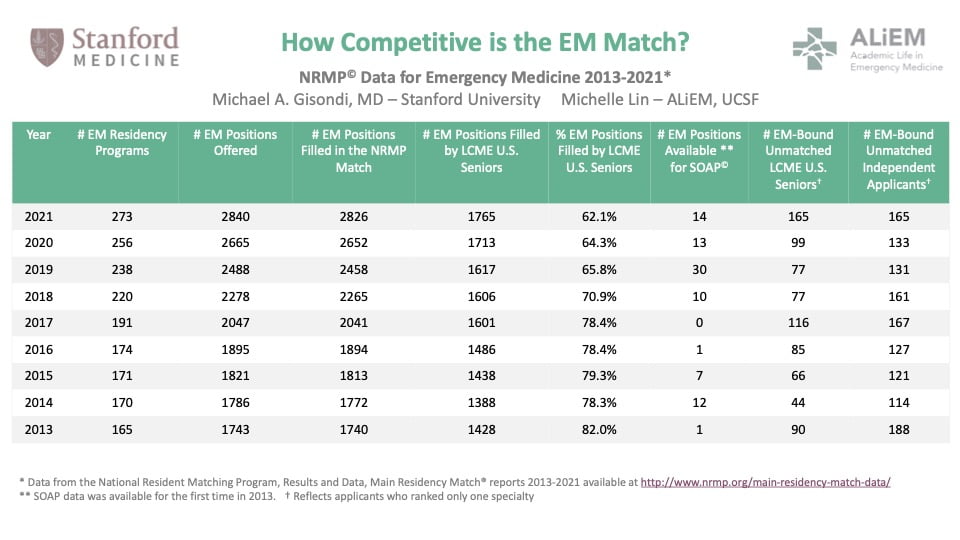
How competitive is EM emergency medicine match EM Match Advice

Dr. Mike Gisondi and Dr. Michelle Lin return for their annual review of the most recent Match in emergency medicine (EM) in latest episode of EM Match Advice. They were joined by a panel of 3 outstanding program directors, Dr. Jacob Ufberg (Temple), Dr. Amita Sudhir (University of Virgina), and Dr. William Caputo (Staten Island Medical Center). Was the EM Match more competitive this year? That’s a complicated question and you need to listen to the podcast discussion for the nuanced answer.

The Slide: The Nitty Gritty Annual Numbers of the EM Match

“The Slide” above is a summary of EM Match statistics taken from the annual National Residency Matching Program (NRMP) Data and Results publication over the last 10 years. Trends suggest that EM is becoming less competitive year over year; however, 2021 saw the greatest number of unmatched medical students who were EM bound. What are the most competitive specialties and how does EM compare? Generally, we use the % fill rate with LCME students to determine the competitiveness of a specialty. That is the % of entry-level positions filled by allopathic senior medical students from the US, Puerto Rico, and Canada. Who’s on top this year? Four combined programs that each have very few PGY-1 positions in the match all filled with 100% LCME students: EM-anesthesiology, medicine-anesthesiology, pediatrics-anesthesiology, and pediatrics-PMR. Here’s how a few of the other specialties fared:

  • Thoracic surgery 93.5%
  • Plastic surgery 89.3%
  • Vascular surgery 82.3%
  • Orthopedic surgery 80.5%
  • Obstetrics-gynecology 66.7%
  • Surgery 65.6%
  • Emergency medicine 62.1%
  • Pediatrics 60.3%
  • Radiology 58.2%
  • Internal medicine 39%

Podcast: Program Directors Reflecting on the 2021 EM Residency Match

Read and Listen to the other EM Match Advice Episodes

Blog posts: https://www.aliem.com/em-match-advice-series/

By |2021-07-19T19:27:46-07:00Jul 21, 2021|EM Match Advice, Podcasts|

Education Theory Made Practical: Listen to the New Podcast Series

education theory made practical books into podcast

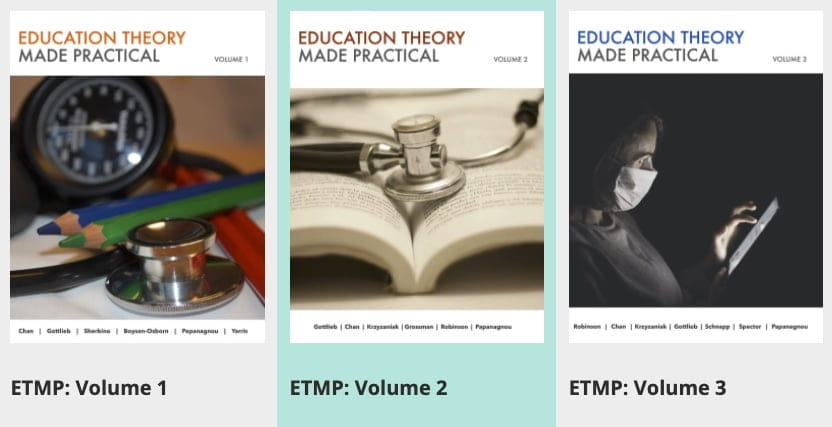
The Education Theory Made Practical (ETMP) set of 3 e-books were published starting 2017, reviewing key education theory principles and practically framing the abstract into practical scenarios. This series was produced by the ALiEM Faculty Incubator in collaboration with the  International Clinician Educator (ICE) blog. These e-books can be downloaded for free in the ALiEM Library.

We were surprised, humbled, and honored that Dr. Daniel Harper wanted to convert the popular e-books into a podcast series, with each chapter turned into short 10-20 minute podcast. As a pilot test, he converted Volume 1 into a set of 10 podcasts. Take a listen, put on your educator-scholar caps, and let us know what you think.

Podcast Series: Education Theory Made Practical (Volume 1)


Podcast Team

Daniel Harper

Host: Daniel Harper, MD

Senior Resident
Dual Interventional Radiology and Diagnostic Radiology
Ochsner LSU Health Shreveport

Host: Surbhi Raichandani, MD

Senior Resident
Department of Radiology
University of Arkansas Medical Sciences

Guest Voice:

  • Loren James Perley (electrical engineer)

Reference

Chan TC, Gottlieb M, Sherbino J, Boysen-Osborn M, Papanagnou D, Yarris L. Education Theory Made Practical, Volume 1. San Francisco, CA: ALiEM Publishing, 2017. [ISBN 978-0-9992825-0-2, PDF]

By |2021-07-20T06:21:16-07:00Jul 16, 2021|Academic, Medical Education, Podcasts|
Go to Top