Caring for the Fasting Patient in the ED

Ramadan

Millions of Muslims around the world observe the holy month of Ramadan. Some may have mild or chronic medical conditions that can become exacerbated, requiring emergent medical attention. Emergency Physicians ought to have a working knowledge about the religious rules of Ramadan and their medical implications. In this article, we will provide an overview of the significance of Ramadan to Muslims, its practices, and discuss the important considerations for emergency physicians when providing care to Muslim patients in the Emergency Department (ED). Lastly, we will explore ways to mitigate the ethical dilemma when a fasting patient refuses a life-saving treatment or intervention.

The significance of the holy month

Ramadan is the holiest month of the year for 1.9 billion Muslims around the world [1]. Muslims believe that the month of Ramadan is the month during which the prophet Muhammad received the initial revelations of the Quran, the holy book for Muslims [2].

Ramadan is a time of spiritual reflection, self-improvement, heightened devotion, and worship. Muslims are expected to put more effort into following the teachings of Islam. Fasting is one of the five fundamental principles of Islam; known as the Five Pillars of Islam. The pillars include shahada (a declaration of faith: “There is no deity but God, and Muhammad is the messenger of God”); prayer (Muslims pray five times a day); zakat (charitable giving); fasting and pilgrimage (Muslims are supposed to make a trip, or “hajj,” to the city of Mecca, Saudi Arabia, at least once in a lifetime if they are physically and financially able).

The fast begins at dawn and ends at sunset [3]. The act of fasting is said to redirect the heart away from worldly activities. It serves the purpose of cleansing the soul by freeing it from harmful impurities. Muslims believe that Ramadan teaches them to practice self-discipline, self-control, sacrifice, and empathy for those who are less fortunate, thus encouraging actions of generosity and communal charity.

Many mosques (Islamic places of worship) host daily community dinners where Muslims can break their fast together. Since Ramadan is a time for Muslims to be especially charitable and fasting helps Muslims feel compassion for the hungry and less fortunate, many mosques hold food drives or fundraisers for charity during Ramadan. It is also common for mosques to host open houses for their friends and neighbors of other faiths to join them for their fast-breaking feast or iftar at the end of the fasting day.

A 2017 study estimated that 3.45 million Muslims were living in the United States, about 1.1 percent of the total U.S. population [4]. Emergency physicians should be aware of the health considerations for their Muslim patients during the month of Ramadan.

How long do Muslims fast? Are there exemptions to fasting?

Ramadan is the ninth month of the 12-month Islamic calendar, a lunar calendar that’s based on the phases of the moon. The lunar calendar falls short of the solar calendar by 11 days. As a result, Ramadan doesn’t start on the same date each year and instead, over time, passes through all the seasons. In 2021, Ramadan began on April 13th and ended on May 13th. Depending on its timing of the year and the location in the world, some patients may be fasting for up to 20 hours. This extended period without food, water, and medications may pose a serious health risk to patients with certain medical conditions.

Exemptions to fasting include anyone who is traveling, women who are pregnant, breastfeeding, or menstruating, or those with acute or chronic illnesses [5].

However, many Muslims with medical conditions insist on fasting to satisfy their spiritual needs. Although Islam does not recommend it, as medical professionals, we must respect our patients’ choices. Those excused can make up the fast later or feed one poor person for each day missed. “And anyone who is ill or on a journey should make up for the lost days by fasting on other days later. God wants ease for you, not hardship.” (Quran 2:185)

I have a fasting patient in the ED. What should I do?

As previously stated, Muslims with acute or chronic conditions such as diabetes are exempt from fasting. However, they may still choose to fast. They may discontinue their medications or alter treatment regimens with or without involving their primary care physician. As a result, serious complications may develop. Patients can present to the ED with dehydration, syncope, hypo- or hyperglycemia, diabetic ketoacidosis, or congestive heart failure. ED clinicians need to approach the care of these patients with empathy and support, along with shared decision-making regarding their treatment plans and expectations.

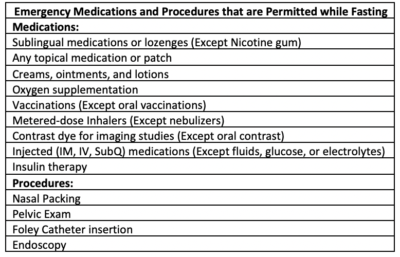
Another important aspect of caring for these patients is the knowledge that many ED interventions can invalidate fasting. Intravenous fluid is one such example. Before you empirically order that liter of saline solution for the fasting patient who presents to the ED with dehydration, recognize that it will invalidate their fast and consider other options or have a discussion with the patient and/or their family members. The table below lists some medications and procedures that can be applied without breaking the fast [4,6].
Ramadan

Empathy is key in the critically ill fasting patient who is refusing care

There are unique challenges in managing patients who are critically ill and refuse to break their fast. Spirituality, religiosity, and personal beliefs are essential components of the social determinants affecting patients’ health behavior and acceptance of treatment. Depending on their cultural and religious upbringing, some patients believe their hardship, patience, and perseverance through challenges will grant them God’s mercy and forgiveness. This religious context will help guide the emergency physician when caring for the critically ill fasting patient. Fasting that endangers health or increases morbidity is not in accordance with Islamic jurisprudence. For example, if a patient presents to the ED with an acute illness that requires a blood transfusion, then they are exempt from fasting. A gentle reminder to your patients that even if they break their fast, they can make it up on another day.

Fasting beyond Ramadan

The holy month of Ramadan ends with Eid al-Fitr which is a holiday celebrated by Muslims around the world to mark the end of the sunset-to-dawn fasting of Ramadan. The festivities start with a morning prayer followed by family gatherings and sharing of food and gifts with neighbors and the local communities. It is important for physicians and ED clinicians to know that some Muslims may elect to observe six days of fasting after the day of Eid al-Fitr. In Islamic traditions, these six days of fasting along with the Ramadan fast are equivalent to fasting all year. In Islam, every good deed is rewarded 10 times, hence fasting 30 days of Ramadan and 6 days during the following month (Shawwal) is equivalent to a whole year fast. Many Muslims religiously follow this practice throughout their lifetimes. Some Muslims will follow the tradition (or Sunna) of the prophet Muhammad by fasting on Mondays and Thursdays every week. Therefore, physicians could care for a fasting patient throughout the year, beyond Ramadan, and should have an understanding of the religious and cultural context of the Muslim traditions when caring for these patients in the ED.

Summary

  • Millions of Muslims around the world fast during the holy month of Ramadan from sunrise to sunset.
  • Muslims with chronic conditions, those who are critically ill, or present to the ED with acute exacerbation of their chronic conditions are exempt from fasting. However, some may choose to continue to fast despite their underlying illnesses.
  • Some medications and medical procedures are allowed during fasting. Providing IV fluid for hydration will invalidate fasting.
  • It is important for emergency physicians to understand the cultural and religious context of fasting for Muslims in order to improve the experiences of these patients when they are cared for in the ED. Empathy and shared decision-making go a long way.
  • Finally, ways to greet your patients during Ramadan and Eid al-Fitr:
    • Ramadan Mubarak: Blessed Ramadan
    • Ramadan Kareem: Generous Ramadan
    • Aid Mubarak: Blessed Aid (day of festivities after Ramadan)

References

  1. Islamic world, countries with a cultural Islamic population – Nations Online Project. Accessed May 13, 2021. https://www.nationsonline.org/oneworld/muslim-countries.htm.
  2.  Mubārakpūrī, Ṣafī R. (1998). When the Moon Split (A Biography of the Prophet Muhammad). Riyadh: Darussalam. p. 32.
  3.  Ramadan 2015: Facts, History, Dates, Greeting, And Rules About The Muslim Fast Archived 10 July 2015 at the Wayback Machine, Huffington Post, 15 June 2015.
  4. “New estimates show U.S. Muslim population continues to grow”. Pew Research Center. January 3, 2018.
  5. El-Bahay El-Kholi. Al Siyam, “Fasting”. The Supreme Council for Islamic Affairs, Arab Republic of Egypt. p. 36
  6. Al-Munajjid SM. He Needs to Have an Injection into a Vein – Will that Affect His Fast?  http://www.islam-qa.com/
  7. Al-Munajjid SM. Types of Asthma Medication and the Ruling on Taking Them during the Day in Ramadan. http://www.islam-qa.com/
The Leader’s Library: Keep Going | Sign up to join the book club discussion

Keep Going book club Leader's Library

As we submit our responses to the daily health screen for the thousandth time; realize, after having removed a mountain of PPE and sanitized our hands, that we left our phone in the patient’s room and would need to re-don everything; repeatedly observe the inevitable struggle with mute/unmute on Zoom; with all of these regular tasks and activities enveloping our lives these days, it’s hard to feel creative. Is the practice of emergency medicine a creative endeavor? How can we increase not just our creative or scholarly output, but also our internal sense of artistry and creation?

Podcast Preview of the Book

Brief Summary of Book

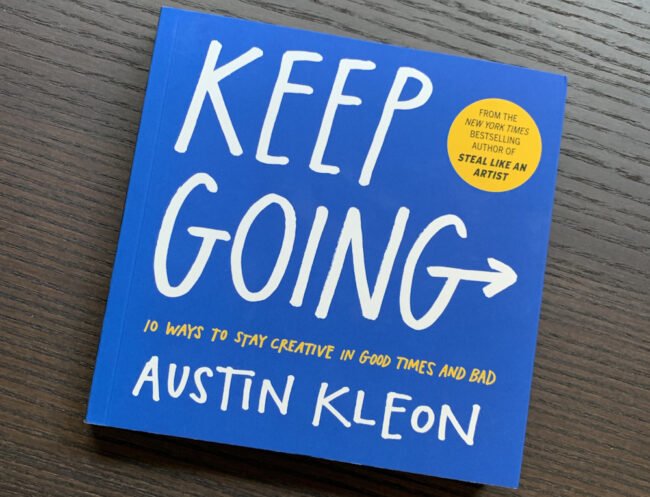
In Keep Going: 10 Ways to Stay Creative in Good Times and Bad, Austin Kleon attempts to answer this question (somewhat prophetically, given the book’s 2019 publication)– how can we, even in trying times, continue to nurture our creativity? Throughout the engaging, full-of-art book, Kleon outlines his argument for how, regardless of occupation, each of us can thrive in our creation of new, meaningful output:

  1. Every day is groundhog day.
  2. Build a bliss station.
  3. Forget the noun, do the verb.
  4. Make gifts.
  5. The Ordinary + Extra Attention = Extraordinary
  6. Slay the art monsters.
  7. You are allowed to change your mind.
  8. When in doubt, tidy up.
  9. Demons hate fresh air.
  10. Plant your garden.

Although Kleon himself writes and draws for a living, his suggestions are also applicable to the practice of emergency medicine, especially for those of us who are in academic, educational, and leadership positions and who need to constantly be creating to stay afloat. The book has an almost Zen quality to it, centering around mindfulness and reframing how we experience the life in front of us, rather than focusing ourselves on chasing an unachievable ideal or becoming absorbed by the mundane. For example, when we’re feeling a creative block, Kleon suggests that we set aside time to draw, like a child does, applying instrument to medium simply to enjoy the process and without an end product in mind– he writes:

“Drawing is simply another way of seeing, which we don’t really do as adults… we’re all going around in a cloud of remembrance and anxiety… and the act of drawing helps us live in the moment and concentrate on what’s really in front of us.”

A cloud of remembrance and anxiety! Yes! That is what the past year has felt like.

If you’re looking to rise out of your personal cloud of remembrance and anxiety, and explore how to infuse your career with creativity to just Keep Going, come join us for the next version of The Leader’s Library! All leaders (past, current, and future) in emergency medicine, of all professions and all locations, are welcome to participate. The book is short and full of drawings, so don’t worry that you won’t have time to read. This will be the most playful and fun iteration of TLL yet! Can’t wait to create with you!

Update

Summary of Book Club Discussion

Book Discussion Group

When: May 25-27, 2021*
Platform: Slack app
Size: 40 registrants

* The Leader’s Library runs asynchronously on the Slack app– jump in whenever you have time!

Signup Process

Deadline to sign up: May 9, 2021

We would absolutely love to learn and grow with you. Sign up now to secure your spot!

Team

  • Felix Ankel, MD: Emergency Physician, Regions Hospital. Medical Director, Education, HealthPartners Institute, Professor of Emergency Medicine, University of Minnesota Medical School (@felixankel)
  • Nikita Joshi, MD: Emergency Department medical director, Alameda County Medical Center, Oakland, California (@njoshi8)
  • Peter Tomaselli, MD: Assistant Residency Program Director, Emergency Medicine, Thomas Jefferson University Hospital/Sidney Kimmel Medical College, Philadelphia, Pennsylvania (@pjtomaselli)
  • Victoria Brazil, MD, MBA: Medical Director of Goal Coast Simulation Service; Co-Producer of Simulcast and Harvard Macy Institute podcasts, Emergency Physician, Bond University (@SocraticEM)
  • Dina Wallin, MD: Assistant Medical Director of PEM, San Francisco General Hospital; Director of Didactics, UCSF-SFGH EM residency, San Francisco, California

Learn more about the other Leader’s Library book clubs.

Listen to all of The Leader’s Library podcasts

By |2021-07-01T18:55:21-07:00Apr 30, 2021|Book Club, Leaders Library, Wellness|

Reading from the Silver Linings Playbook: The ALiEM Connect Project

ALiEM Connect graduation

It feels like yesterday that we were sheltered-in-place, staring at our computers, wondering, “So now what?” 

As COVID-19 paused all in-person educational sessions, the early morning residency conference we used to begrudgingly join quickly became something that we profoundly missed. While we can now be “present” while wearing sweatpants and a button-down shirt, we miss the human connection. Many of us would gladly even suffer through traffic just to be a part of this morning conference tradition.

As educators and innovators, we know what a disruptive force the COVID-19 pandemic has been to the medical community. It has strained our medical and healthcare systems and has irrevocably altered our day-to-day lives. Without a doubt, the pandemic also changed how we delivered educational content to our learners over the past year.

Scholars have written about how likely this pandemic will likely precipitate the much-needed digital transformation of healthcare and health professions education that many of us have expected and hoped for. But while some of these innovations are born out of necessity, they may also inadvertently isolate us from the experiential aspects of education and human interaction that provide meaning to our work. For the ALiEM team, we cherish the opportunity to be part of some of these significant innovative and positive “disruptions,” further aligning our goal of creating an impactful and fulfilling academic life in emergency medicine. 

The Backstory

As a remote team working across continents, the ALiEM team has thrived on digital connection for over a decade. With excellent collaborators and volunteers representing different parts of the world, our daily operations require us to stay connected and work asynchronously to achieve our goals and deliverables. When the lockdowns hit, we leveraged its impact on physical distancing and leaned into connecting with each other even more! They say “chance favors the prepared mind,” and there we were, already on Slack and yearning for the opportunity to harness the power of teamwork using our shared passions, individual creative strengths, and enthusiastic and supportive emojis. There were moments of creating, moments of celebration, and moments of simply being with each other – often through an evening #WifiAndWine.

By the Ides of March 2020, an auspicious time indeed, we knew we were at a turning point. Our friends and work families had been working on the front lines combating the pandemic locally, gathering PPE, and studying the effects of a virus we knew next to nothing about. New information was coming in daily, and the signal-to-noise ratio was low. In some ways, to escape the disruptions going on all around us, we banded together to focus our unique energies toward creating something as novel as the virus itself in the realm of free open-access medical education.

At a time where everyone was feeling alone, we asked ourselves how we could support the joy of learning from and with each other? In truly whirlwind fashion, the first ALiEM Connect conference went from idea to execution in less than 2 weeks, a record-breaking time even for ALiEM. Thank especially to the American Board of Emergency Medicine for sponsoring these events.

We recently made it to the semi-finals at the CORD/ACEP Innovator of the Year competition, where we shared the below video capturing the fun, collaboration, and innovative outcome of our efforts. Oh, and the familiar ratatat of Slack.

Making this a Multiple Win

The secret sauce of the ALiEM team is that we have a diverse group of people, each of whom brings their own perspective and that we are able to share with one another liberally. Dr. Michelle Lin encouraged an environment that is psychologically safe and supportive since the inception of the ALiEM enterprise. It is out of this space that our diverse team was able to successfully bring a massively successful project to fruition amid a global pandemic. What started as a small brainstorming session blossomed into ALiEM Connect – 3 distinct remote conferences featuring nationally-recognized educators and thought leaders enjoyed by residents across the country.

It’s difficult to express as a linear narrative, but looking back, it seems as though our team divided into unique roles without a second thought. Just like a production company, we had the front and back of the house. Those in the front made sure to help get people in the seats to watch; stage managers and coordinators ensured that every part of each of the ALiEM Connect experiences was phenomenally smooth. We had talented individuals who acted as hosts and speakers to ensure that each of these experiences was top-notch and engaging. In the back, Drs. Mary Haas, Yusuf Yilmaz, and Teresa Chan sprung quickly into action to create a program evaluation strategy for our ALiEM Connect program, including a formal institutional review board exemption! All the while, testing and vetting platforms and methods to distribute the material were ongoing. We built upon each technological skill, learned new platforms, and trialed different features. We had barely decided on an open, free, and accessible platform (which was, in fact, no individual platform but an amalgamation of many!) before sending out the invites.

But the fun didn’t stop there! We’re the “academic” life in emergency medicine! How could we not also share our results with the traditional academic community? Within days of finishing our first ALiEM Connect experience, our program evaluation team generated the scaffolding of a manuscript to put together our thoughts and analyze the evaluation data collected. We harnessed the power of metrics from social media platforms (YouTube, Slack, Twitter), website analytics, and end-user experiences. Harnessing all of these analytics and communicating the right message with our academic medicine community was important to inform and help others to replicate similar approaches to their residents. Our team used ready to use metrics which came from YouTube analytics. But we did not stop there as we needed more reports of how the residents and programs interacted during the Connect events in the backchannel, Slack. We developed Python supported software to export and analyze all the messages happening in separate channels. We developed a “Emoji Cloud” to see how the reactions happened, and closely analyzed the messages during the event.

Given the true novelty of the experience, we figured we might as well shoot for the moon, as they say, by submitting our innovation description paper to Academic Medicine. After all, even if they didn’t accept it, we might get some constructive reviews, to say the least. As innovators, we are comfortable with the possibility of failure. We understand the value of the saying, “You miss 100% of the shots you don’t take,” and were prepared to accept “no” as an answer. With that, we took a calculated risk, making use of the same collaborative strategy to craft a manuscript, and clicked submit.

…And we’re glad we took that shot! We are excited to share that what we sent was indeed accepted and express our gratitude for the chance to share our low-cost approach to a large-scale, nationwide residency conference! You may read the Published Ahead-of-Print version of our paper.

Moral of the story…

You might be asking yourself, “What’s the moral of the story here? Of course, with enough academics and experts, yeah, you got a paper published. Cool…” But the papers aren’t the point. In fact, during the COVID-19 pandemic, more papers have been published than ever before – more research is being done, and our whole field is changing. The point is… this is how we got to ENJOY the academic life during a pandemic! We made lemonade (and several other desserts!) out of the lemons we were handed. New knowledge comes from thinking big and trying new things. Turns out, sometimes you also have to write about those experiences and share them with others.

As emergency physicians, we know we’re good in a crisis. But this experience reminded us that by surrounding ourselves with amazing people, we could get a surprising amount of work done (at record speed) and have a fantastically memorable time along the way. The moral of this story is that when you bring great people together and give them a chance to get to know each other, magic happens. ALiEM Connect happens. And we impact more people than we can possibly meet at the touch of our keyboards. We are so grateful for the chance to work alongside all the wonderful people at each of our institutions every day. Still, also, we are indebted to those who are our digital family. Thank you to all of you who make initiatives like ALiEM Connect possible. Academic life in emergency medicine is all about bringing a great team together.

So is the ALiEM team.

How I Work Smarter: Sara Dimeo, MD

One word that best describes how you work?

Collaboratively

Current mobile device

iPhone 11 Pro

Computer

MacBook Pro

What is something you are working on now?

The Impact of Digital Badges on Motivation in Asynchronous Learning

How did you come up with this Idea/Project?

When COVID hit, we had to think creatively on how to engage learners in an online format. Having done a fellowship in Multimedia, Design, Education Technology I was really excited to experiment with different techniques. My main goal is always to create a sense of engagement, even when there is limited ability to do so in a traditional way. One thing I’d seen done in a limited fashion are badges to reward learners, so I decided to explore digital badges and learned they’re becoming increasingly popular in the K-12 literature and other fields. I adopted this to create our own asynchronous curriculum with a badge system to identify learners who were engaging well in the material, and who were performing highly on knowledge-based quizzes.

What’s your office workspace setup like?

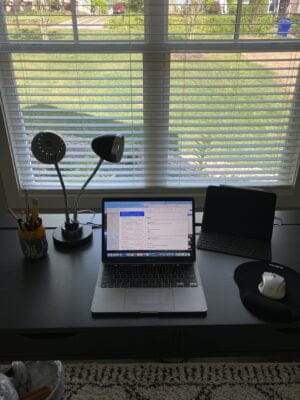
I finally have a dedicated office space in my home, which I love! I work best when I’m on my own away from distractions because I’m a typical EM personality. The window in my office looks out into our yard and the front street which is nice for a mental break. I like to keep my desktop clean (clean desk = clean brain) and just have my laptop and a notepad available to jot down quick thoughts or reminders.

What’s your best time-saving tip in the office or home?

Blocking off chunks of time to accomplish xyz task is helpful for me, as I often have multiple projects and/or tasks on any one given day. Prioritizing is important. I became pretty good at task-switching during my fellowship when I was juggling a lot of non-clinical projects.

What’s your best time-saving tip regarding email management?

I use a delete-flag-archive system, where anything not important in the future is immediately deleted, things that need close follow up are flagged, and everything else is filed into its relevant folder. I have 6-7 folders which I frequently use. One really helpful folder that you don’t always think about is for IDs/passwords!

What apps do you use to keep yourself organized?

I love the Things app for task management. It merges with my Google Calendar and allows you to set due dates for upcoming tasks as well as to documents to-do lists for bigger or more long-term projects. It is my peripheral brain! I also have a whiteboard in my office that displays my big projects. I like checking things off as a sense of accomplishment.

How do you stay up to date with resources?

Twitter is probably my main resource for connecting with colleagues about new ideas…I almost exclusively following folks in medical education. I use Journal Feed for quick synopses of review articles. And of course EMRAP.

What’s your best time-saving tip in the ED?

Try not to delay tough cognitive decision points that will affect the workup/algorithm that you go down. When you are not sure what to do, take a step back to think, call a consultant, or ask the advice of a colleague.

ED charting: Macros or no macros?

Yes! For example, I have an abscess I&D macro that contains less than 5 variables to fill out. Though, I dislike macros for more complicated encounters.

Advice

  • What’s the best advice you’ve ever received about work, life, or being efficient?

    [Great creative minds] think like artists but work like accountants. – Cal Newport, “Deep Work”.

    I personally love to think about new ideas or projects, but unfortunately that does not equate to success. Success is the ability to organize yourself to be productive. This is a work in progress for all of us!

  • What advice would you give other doctors who want to get started, or who are just starting out?

Get involved in a bigger way. Think about serving on a hospital committee or taking a leadership position. It will give you a new experience and accelerate your growth. For me, that was joining the EMRA Education committee, which ultimately led to me serving as the Director of Education for their Board of Directors. It was and has been a life changing experience.

  • Is there anything else you’d like to add that might be interesting to readers?

Find mentors that believe in you. I was told by an advisor that if I wanted to do med ed, I had to have my entire career path laid out and was highly discouraged from considering it. A two year fellowship and an (almost completed) masters later, I’m very glad I trusted my instinct and did not listen to their advice. Eventually I looked elsewhere and found mentors who were willing to help me achieve my goals.

Who would you love for us to track down to answer these same questions?

  • Kat Ogle @DrKittyKat
  • Kristy Schwartz @kaynani32
  • Zach Jarou @zachjarou
  • John Eicken @MedEd_Tech

Read other How I Work Smarter posts, sharing efficiency tips and life advice.

By |2021-04-20T09:12:55-07:00Apr 23, 2021|How I Work Smarter, Medical Education|

Bridge to EM Curriculum: Test your learning at ALiEMU

bridge to EM badges EMRA

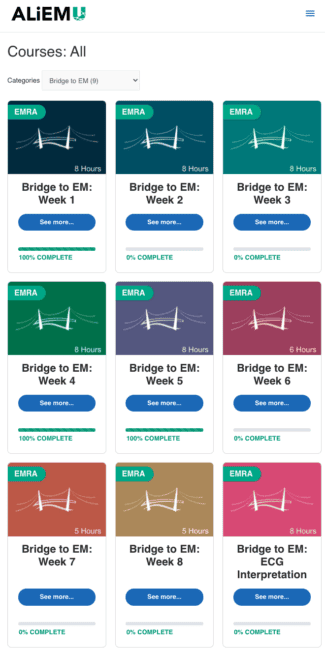
Do you know of a senior Emergency Medicine (EM) medical student about to start internship? We are thrilled to announce that our 8-week, self-paced Bridge to EM learning curriculum has been upgraded with free assessment quizzes, badges, and certificates on ALiEMU. This curriculum, created by Drs. Timothy Wetzel and Christina Shenvi as we all shifted learning to online modalities, has garnered over 100,000 views in less than 10 months and was featured by the Association of American Medical Colleges. This bundled learning experience was created in partnership with our sponsor, Emergency Medicine Residents’ Association (EMRA).

Bridge to EM ALiEMU course grid

Go to the ALiEMU Bridge to EM Series.

Test your knowledge and see if you can get the mega-badge of EM Bridge Crosser, when you successfully pass all 9 Bridge quizzes and attain 64 hours of ALiEMU learning credit.

Sign up for the ALiEMU newsletter for announcements of any new ALiEMU courses.

Sign up for the ALiEMU Coaches newsletter to keep apprised of any changes to the coaching and Educator Dashboard features.

By |2021-03-23T10:41:39-07:00Apr 1, 2021|Academic, ALiEMU|

How I Work Smarter: Christopher Colbert, DO FACEP, FACOEP, FAAEM

One word that best describes how you work?

Practical

Current mobile device

iPhone 12

Computer

iMac Pro / Mac book Pro

What is something you are working on now?

Organizing/Planning the ACOEP’s annual Spring Seminar

How did you come up with this Idea/Project?

I have been part of the planning committee for the spring conference for 5 years.

What’s your office workspace setup like?

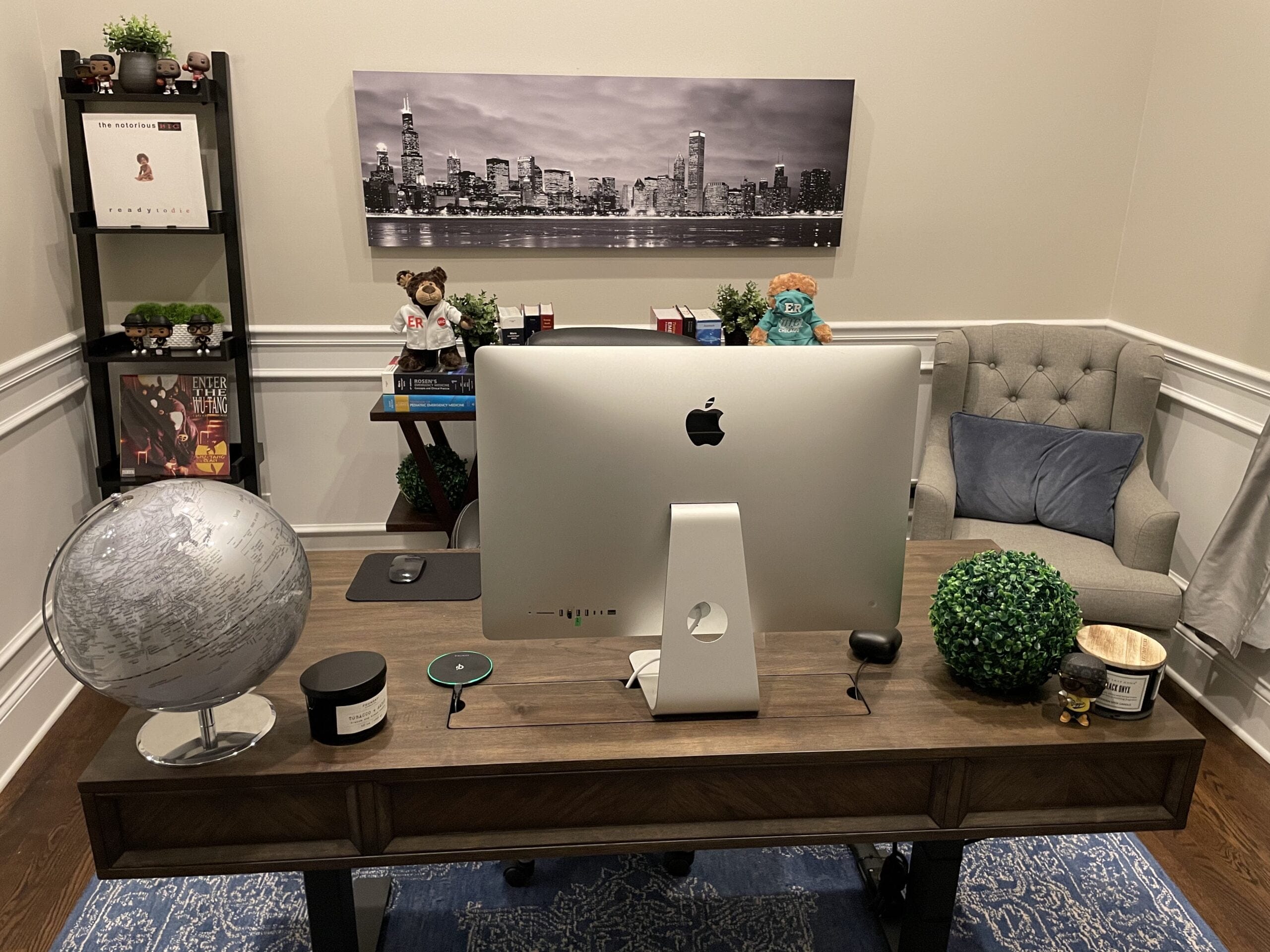
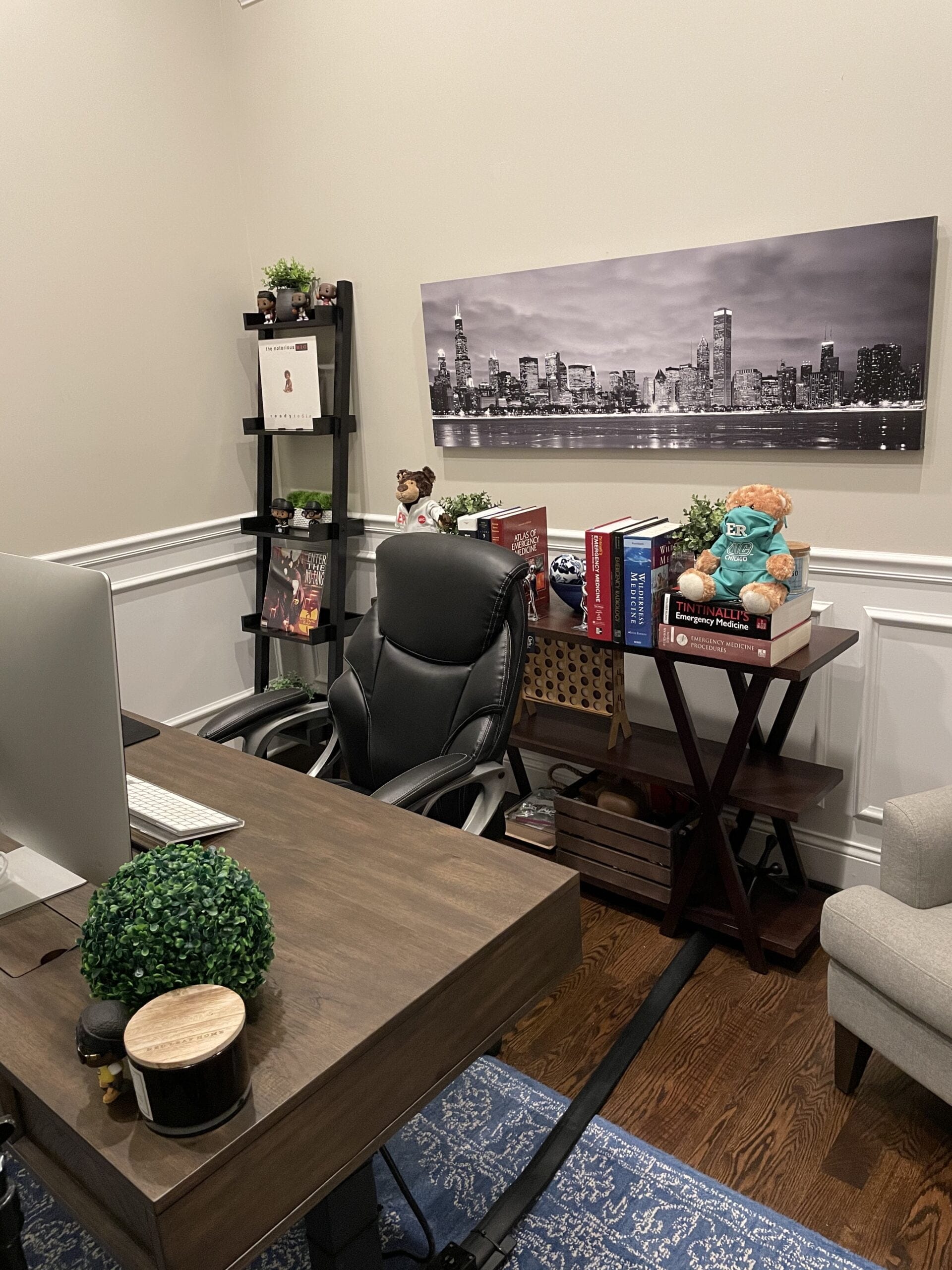
A well-lit room with decent speakers (huge music fan), 2 Macs side-by-side, and most importantly, a very comfy chair.

christopher colbert work smarter office 1

christopher colbert work smarter office 2

What’s your best time-saving tip in the office or home?

Keep your work in your office so that the remainder of your home is a comfortable place “away” from work. This concept will ensure that you maintain focus when completing your office work and support a healthy home that is not overrun by work responsibility outside of the office.

What’s your best time-saving tip regarding email management?

Anything by email that can be completed in 2 minutes or under, make time to complete if the moment is available. It is easy to allow the inbox to overflow throughout the course of a day. Periodically checking one’s email with purpose will ensure that the burden of finishing emails for the course of the day is no more than five minutes.

What apps do you use to keep yourself organized?

Google calendar is what I live by :)

How do you stay up to date with resources? 

FOAMed and journal watch

What’s your best time-saving tip in the ED?

Every time you sit down, document on two charts. As ED physicians we live and breathe based on documented reevaluations.  my recommendation to keep up with a busy room is to document on at least 2 charts each time.

ED charting: Macros or no macros?

Macros expedite charting and make each chart more robust

What’s the best advice you’ve ever received about work, life, or being efficient? 

The key is not to prioritize what’s on your schedule but to schedule your priorities.

– Stephen Covey

What advice would you give other doctors who want to get started, or who are just starting out?

“The key is not to prioritize what’s on your schedule, but to schedule your priorities.”

– Stephen Covey …………… it’s just a really good quote!

Is there anything else you’d like to add that might be interesting to readers?

Most people feel as if change is something that “happens to them”, it is not. One of the most constant themes in life is change. When you notice change starting to take place it is a sign that you need to grow.

Who would you love for us to track down to answer these same questions? 

  • Dr. Marina Del Rios @DraCoquiMD
  • Dr. Andy Little @andyglittle

How I Work Smarter: Molly Estes, MD, FACEP, FAAEM

One word that best describes how you work?

Efficiently

Current mobile device

iPhone 11 Pro

Computer

MacBook Air

What is something you are working on now?

This survey :) In seriousness, trying to complete a survey-based study on the effects of virtual rotations on the 2020-21 EM application cycle.

How did you come up with this Idea/Project?

This idea was generated by a subcommittee I am a part of through the Advising Students Committee in EM (ASCEM) through CORD. After brainstorming about the effects that the required conversion to virtual rotations might have had on this year’s students applying into EM, and how residency programs might view or interpret those “clinical experiences,” we decided to try to gather more data to not only help in the development of future virtual rotations but to also help establish a foundation on which virtual rotation experiences might be able to be interpreted.

What’s your office workspace setup like?

Desk with plenty of space for spreading out papers. Elevated second monitor with wireless full keyboard and mouse. Laptop stand for my MacBook to plug into my second monitor.


What’s your best time-saving tip in the office or home?

Honestly, upgrading to a second monitor and a full keyboard has made my work-life infinitely better! It allows me to work more efficiently just having more space to have multiple applications or documents open and visible at a time.

What’s your best time-saving tip regarding email management?

Stay on top of it! I try to buy into the “zero-inbox” philosophy. First and foremost, unsubscribe from anything you don’t use/need. Second, any of the “trash” emails you get from your institution, faculty group, etc. that you don’t read or need, immediately delete. Then use separate folders to archive messages you’ve responded to but want to hold onto. I do keep some emails in my inbox that include “to-do” items, but I try to daily or every-other-day clear these out too.

What apps do you use to keep yourself organized?

Nothing fancy, I have a running Google doc that includes to-do lists (for work and daily life), long-running projects with remaining steps (I tend to bold the next immediate step or the absolutely-have-to-do-today action item), or just thoughts and ideas. At the very bottom of my Google doc currently is a list of dim-sum restaurants I want to try :) I basically use this document as a second brain, I offload anything that I don’t want to have to constantly be thinking about.

How do you stay up to date with resources?

For current events, I get a daily email from theSkimm. I also subscribe to Journal Feed to stay on top of highlighted new research and publications. I’m an active member of AAEM, CORD, etc., and routinely go to conferences so I usually don’t have to worry about CME.

What’s your best time-saving tip in the ED?

Two tips. First, use the resources that you have. I lean heavily on my social workers, case managers, ED techs, etc. to help offload tasks (within appropriate means of course, but I don’t have to teach the patient how to use crutches if my tech is available to do it). Second, batch tasks. If you have to walk all the way across the department to check on a patient, make sure you also check on the other two patients along the way. Or instead of following up on each individual lab result, do other tasks for 10-15 minutes then review all your results at the same time. Recruit others to help too. If I need to supervise one of my residents with a procedure, I ask them to get all their supplies at the bedside, and if I’m not there in 15 minutes then to come grab me. It allows you to keep multiple tasks all in parallel processing.

ED charting: Macros or no macros?

Eh…. I’m not a big macro person. I have a standard one I use for general ROS and PE by age, but I don’t have extensive macros for HPI or MDMs.

Advice

  • What’s the best advice you’ve ever received about work, life, or being efficient?

    Some of the best life advice I ever got was at the end of med school: “Not every decision has a right and a wrong answer; sometimes there is just a decision.” I feel like particularly in medicine we are trained to view decisions in a multiple-choice format, a series of “wrong” answers and a single “right” answer. For me personally, this advice was freeing. No longer do I have to agonize over every little thing, I can make a decision accepting that every option has both good and bad built into it, and then move on with my life. I don’t have to spend 10 minutes debating if the appropriate admitting service is Cards or Medicine, I can just choose one and trust that if I happen to be wrong no harm has come to the patient. It wasn’t “wrong” there was just a different option.

  • What advice would you give other doctors who want to get started, or who are just starting out?

It’s worth it! The hard work, the committee you’re not sure you want to be a part of, volunteering for that one thing, saying hello to that one person, it is all worth it. Especially when you are just starting out, don’t be afraid to put yourself out there. Now granted, try hard not to over-commit, that way lies burnout. But you would be surprised by the number of connections you make, the opportunities that come your way, just simply by your being around and available.

  • Is there anything else you’d like to add that might be interesting to readers?

Find yourself, mentors. And I specifically say mentors plural because you need more than one. It’s fine to have a mentor for your personal life, a mentor for your work life, and a mentor for your academic life. But make sure you have people around you to support you and help you keep growing.

Who would you love for us to track down to answer these same questions?

  • Tim Young, MD @timpyoung
  • Liz Fierro, MD @liz_fierro_md

Read other How I Work Smarter posts, sharing efficiency tips and life advice.

Go to Top