How I Work Smarter: Luz Silverio, MD

how I work smarter Dr Luz Silverio

One word that best describes how you work?

Fitfully and obsessively

Current mobile device

Two: an iPhone 8 supplied by my job for clinical work, and an iPhone 10 for home.

Computer

A very old MacBook Air that constantly pings me, requesting “more space.” I keep putting it in larger rooms, but…

What is something you are working on now?

I’ve been working on a series of 5-10 minute talks to be given prior to shifts that I call “Journal Watch Pictionary.” I read journal articles and then illustrate their key points using my own medium-poor quality cartoon illustrations. It’s fun and I like making people guess what I’m trying to draw, especially because I feel like that helps them pay attention and learn. It also keeps people up-to-date with current literature without having to get pedantic.
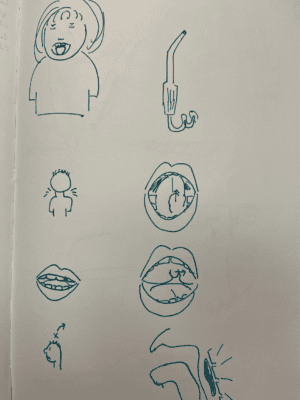
An example of the doodles used to illustrate Journal Watch Pictionary

How did you come up with this Idea/Project?

One of my life goals is to do only high-yield projects. The Journal Watch Pictionary project serves several purposes:

  1. It forces me to read journals.
  2. It allows me to be playful and do art.
  3. It creates a theme for small disparate talks so I can slowly build a “body of work.”
  4. Frankly, it’s easier than cobbling together a talk de novo.

What’s your office workspace setup like?

I use this terrible roll-top desk that was a gift from my father-in-law. It’s not a functional modern-day workspace by any means because there is no space for a large monitor. On the other hand, it has lots of cool cubbies into which I can put flash drives, pens, highlighters, random electronic equipment for podcast recording, and it has a good-sized work surface. The nicest thing about it is that it has a roll-top, which means I can spread my stuff all over the desk and then if I want to look respectable and put together (this is theoretical as this is the pandemic and no one has entered my home for the past 3 months) I can just roll it closed. Even better, it locks, so my 2-year-old has no access to my clinical stuff and he can’t do “projects” using my expensive fountain pens or steal my magic rub eraser.

how I work smarter Dr Luz Silverio office setup

The rolltop desk in action

What’s your best time-saving tip in the office or home?

At home: Outsource/delegate. I very carefully weigh the cost and time it takes to do work myself and then often hire someone to do it for me. To be honest I often think I’m doing really well with outsourcing/delegating and then I’ll get stressed out and realize that a good percentage of my stressors are things that I should/could be handing off. I then outsource/delegate more!

At “office” (imagine roll-top chaos): I’m quick to call someone if there’s any miscommunication although sometimes people are nervous to answer the phone. I find it easier and more efficient than a weird song and dance that you have to soft-peddle with emojis. Most of the time we are all good people doing our best but that doesn’t come through on the screen sometimes.

What’s your best time-saving tip regarding email management?

I try not to get too worried about being behind on emails. By this I mean I don’t get all verklempt about taking a while to respond to someone, but of course I apologize if an answer has been wallowing for weeks. If something is important and someone’s really burning up about a response, they’ll nudge me again!

What apps do you use to keep yourself organized?

Google Keep (which is like post-its for your computer and phone), Google calendar. I am a big fan of a handwritten checklist and a timeline for a day with hours and tasks designated for each hour. If a task takes less than an hour that means I’m winning! If a task takes more than an hour it means I’m still winning because I’m doing the task.

High-tech scheduling system

How do you stay up to date with resources?

I read Annals of Emergency Medicine and the Journal of Emergency Medicine. I also read ACEP Now and EM News. I get these all delivered to my house because I hate trees. In all honesty, I have found that trying to read and absorb on my computer screen is not as enjoyable as reading in print, and for something as arduous as reading primary literature, I need to make the experience as delicious as possible. This means that I am often reading these periodicals in a bubble bath, with a face mask on (one of the nourishing ones, not the disease preventers), and a glass of wine on the rim of the bathtub. Every shift I force myself to ask a clinical question and then that’s my homework assignment for my next shift. My last clinical question: Ward catheters and Bartholin cysts: Do we still have to do this? I also listen to podcasts on my commute but don’t consider that groundbreaking.

What’s your best time-saving tip in the ED?

When asking someone to do something, say something nonclinical first. For example: first say, “Cool looking truck! I would get it in red.” Then say, “Could you recheck the vital signs in bed 5A?” This is super important in the long run–when people like you, they have your back, anticipate clinical problems for you, aren’t afraid to speak up if they think you’re wrong, and in general, prioritize you higher for future clinical interactions. Also, if you’re “rude” later (i.e., direct and forthright) they know it’s because you mean business.

ED charting: Macros or no macros?

Macros with care. More importantly, if you haven’t tried Dragon or other dictation software in the past 5 years it has gotten a lot better

Advice

  • What’s the best advice you’ve ever received about work, life, or being efficient?

Just remember, “If I were a dude, would I care?”

  • What advice would you give other doctors who want to get started, or who are just starting out?

Be humble, be kind, remember that there are many ways to spread health and wellness in the clinical context. Listen and absorb when you have capacity and give yourself some grace when you have no capacity left. Try to do multi-purpose projects. If you find out that you hate what you’re working on at least it’s high yield.

Who would you love for us to track down to answer these same questions?

  • Erin Kane
  • Jen Abele

Read other How I Work Smarter posts, sharing efficiency tips and life advice.

SAEM Clinical Image Series: Strange Eyes

sun-setting eyes

A 3-month-old boy, born full-term via normal spontaneous vaginal delivery to a gravida 2 para 1 mom with negative prenatal labs, presents with abnormal eye movement and position. His parents report 2 days of an increase in bulging of the soft spot, head size, and abnormal eye movement. He has not been able to look at his mother “like he used to.” This is associated with an increase in fussiness, poor feeding, and non-bilious, non-bloody vomiting. He also had increased sleepiness and difficulty waking up for feedings overnight.

The patient has normal urination with no weight loss, diarrhea, or fever.

(more…)

By |2020-11-21T17:43:41-08:00Nov 16, 2020|Academic, Emergency Medicine, SAEM Clinical Images|

SAEM Clinical Image Series: An Incidental Finding

nail gun

A middle-aged man presented after a motor vehicle collision with a logging truck at 55 miles per hour with low back pain. A computed tomography scan (CT) of the abdomen and pelvis at an outside facility showed a burst fracture of the third lumbar vertebra (L3). The patient had no other complaints. Given the fracture, additional CT imaging was done and the above finding was discovered.

After the incidental finding was found, the patient reported a nail gun accident three years prior where he thought it had just recoiled and struck him in the lip and nose, causing a lip laceration and a minor bloody nose. The patient was seen in the emergency department. The laceration was repaired, and he was discharged without imaging. The patient denied any significant residual symptoms or personality changes. The patient had no idea that a nail had discharged from the gun and lodged in his face and brain.

(more…)

Education Theory Made Practical (Volume 3): An ALiEM Faculty Incubator eBook Project

The ALiEM Team is delighted to announce another eBook publication: the third volume in the Education Theory Made Practical series. This book was a labor of love written by the 2018-19 Faculty Incubator class. We are very proud of all our Faculty Incubator alumni who made this happen. Their hard work has been compiled in this FREE, peer-reviewed eBook. We sincerely feel that it will be useful for all the educators out there, wrestling with the issue of integrating theory into practice. Special shout-out to the incredible Dr. David Sklar (former Editor-in-Chief of Academic Medicine) for providing us a thought-provoking foreword.


Download or View the Book Now

The book is available in 2 formats:

iBook format via the iTunes bookstore 

PDF format via ResearchGate


About the Book 

The Education Theory Made Practical series aims to make the theoretical underpinnings of education psychology come alive for health professions teachers, who are seeking to use theory to inform their clinical and classroom teaching.


Table of Contents

Chapter 1: Six Steps Model of Curriculum Development

Chris Lloyd, DO; Simiao Li-Sauerwine, MD, MS; Shannon McNamara, MD


Chapter 2: The Kirkpatrick Model

Christoper Fowler, DO; Lisa Hoffman, DO; Shreya Trivedi, MD; Amanda Young, MD


Chapter 3: Realist Evaluation

Jason An, MD; Christine Stehman, MD; Randy Sorge, MD


Chapter 4: Mastery Learning

Michael Barrie, MD; Shawn Dowling, MD, FRCPC; Nicole Rocca, MD, FRCPC


Chapter 5: Cognitive Theory of Multimedia Learning

Laurie Mazurik, MD; Elissa Moore, DO; Megan Stobart-Gallagher, DO; Quinn Wicks, MD


Chapter 6: Validity

Rebecca Shaw, MBBS; Carly Silvester, MBBS


Chapter 7: Programmatic Assessment

Elizabeth Dubey, MD; Christian Jones, MD; Annahieta Kalantari, DO


Chapter 8: Self-Assessment Seeking

Nilantha Lenora, MD; Layla Abubshait, MD; Manu Ayyan, MBBS


Chapter 9: Bolman and Deal Four-Frame Model

Lexie Mannix, MD; Shawn Mondoux, MD; David Story, MD


Chapter 10: Kotter’s Stages of Change

Dallas Holladay, DO; Melissa Parsons, MD; Gannon Sungar, DO


About our Process

As part of the 2018-19 Faculty Incubator program, each 2 or 3-person team authored a primer on a key education theory on the International Clinician Educator (ICE) blog. These posts were published serially over a 10-week period. Each post featured a key educationally-relevant theory by starting with a vignette that situated the theory. Following this vignette, there was an explanation, a short history of the theory, and an annotated bibliography for further reading. To ensure high quality, we then asked the #MedEd and #FOAMed online communities to join us in peer-reviewing these posts. After incorporating many of the peer review comments, each blog post was converted into a book chapter within this first volume of a series of books for budding clinician-educators – the Education Theory Made Practical series.


How to Cite This Book

Robinson D, Chan TM, Krzyzaniak S, Gottlieb M, Schnapp B, Spector J, Papanagnou D (eds). Education Theory Made Practical: Volume 3. 1st ed. Digital File. San Francisco, CA: Academic Life in Emergency Medicine; 2020. ISBN: 978-0-9992825-7-1. Available at: https://books.apple.com/us/book/education-theory-made-practical/id1534232421?ls=1


Education Theory Made Practical home page

By |2020-11-06T04:41:47-08:00Nov 6, 2020|Academic, Book Club|

SAEM Clinical Image Series: Eye Injury

eye

An 11-year-old male presented to a pediatric trauma center following a motor vehicle collision (MVC). He was the restrained front-seat passenger when his vehicle was struck head-on, causing frontal airbag deployment. His primary complaint was pain around his right eye with associated blurry vision. He denied diplopia, pain with extraocular movements, flashers, floaters, or curtains in his vision.

(more…)

IDEA Series: Virtual “Faux-tation” Rotation for 4th Year Medical Students Interested in Emergency Medicine

Visiting clerkships have traditionally offered the opportunity for extended contact among medical student applicants and residency program representatives, allowing for enhanced assessment of mutual compatibility. Accordingly, visiting clerkships are consistently rated as an essential consideration among residency program leadership when reviewing applications, and among medical students, as they determine “fit” [1,2]. The COVID-19 pandemic has resulted in institutional restrictions on visiting clerkships. Despite the now limited opportunities for medical students to see residency programs of interest in-person, demand for these experiences remains high. Opportunities that allow for increased interaction among medical student applicants and residency programs that maintain compliance with COVID-19 restrictions are needed to fill this gap. Virtual rotations have previously been described in the literature in multiple other specialties [5]. Several emergency medicine programs have advertised a formal virtual rotation experience via the Council of Residency Directors’ (CORD) listserv that offers course credit to student rotators.

(more…)

Treating Blood Pressure in Intracranial Hemorrhage

hemorrhagic stroke equal podcast

Blood pressure control in the setting of ischemic stroke has a clearly recognized benefit in patient outcomes. The impact of blood pressure control in hemorrhagic stroke is not as well understood. The ACEP E-QUAL Network podcast, a partnership with ALiEM to promote clinical practice improvements, reviewed this topic with Dr. Latha Ganti (University of Central Florida College of Medicine). Dr. Ganti addressed the evidence behind recommended blood pressure targets and the available medications to achieve control. We present highlights from this discussion with Dr. Jason Woods.


What is the goal of blood pressure control in hemorrhagic stroke?

Management of blood pressure in intracranial hemorrhage (ICH) raises questions about the benefit of limiting hematoma expansion while maintaining cerebral perfusion. While it seems intuitive that hypertension should be controlled to limit hematoma expansion, patients with hemorrhagic stroke may be dependent on higher blood pressures for adequate perfusion.

Does lowering blood pressure lead to perihematomal ischemia?

ICH Adapt studies did not show evidence of decreased cerebral blood flow in perihematomal tissue and demonstrated that there is likely preservation of autoregulation which prevents ischemia [1].

Does lowering BP help prevent hematoma expansion and improve outcomes?

The risk of hematoma expansion is highest within the first couple of hours following initial bleeding. Hematoma expansion is clearly associated with worse outcomes. Scoring tools exist to estimate the risk of hematoma expansion. The “spot sign,” seen on source images from a computed tomography angiogram of the brain, suggests an area of dynamic bleeding.

  • ICH ADAPT: no difference in hematoma expansion or clinical outcome with acute blood pressure lowering [2].
  • INTERACT 2: intensive lowering of blood pressure did not result in a significant reduction in mortality or severe disability [3].
  • ATACH 2: intensive lowering of blood pressure did not improve functional outcomes but was associated with increased renal dysfunction [4].

What is the optimal systolic blood pressure (SBP) target?

AHA Guidelines 2015

  • ICH patients with SBP 150-220 mmHg, lower to 14 mmHg is safe
  • ICH patients with SBP > 220 mmHg, aggressive reduction with continuous infusion may be reasonable

So what’s the right thing to do? If data suggests that lowering may not be as beneficial, what should the target blood pressure be?

  • Target SBP 140-160 mmHg is a reasonable target

What medications are preferred for blood pressure control in ICH?

The ideal agent for blood pressure management in ICH would have a quick onset, but short duration, to allow titration.

Recommended first-line:

  • Labetalol
    • Onset < 5 min
    • Duration of effect 2-4 hr
    • IV bolus dose: 20 mg, followed by 20-80 mg every 10 min to a total dose of 300 mg.
    • Infusion dose: 0.5 mg-2 mg/min
    • Avoid in: asthma, COPD, heart failure, AV block
  • Nicardipine
    • Onset 1-2 min
    • Half-life ~ 40 min
    • Infusion dose: 0.5-1 mcg/kg/min, max 3 mcg/kg/min
  • Clevidipine
    • Onset 1-4 min
    • Duration of effect 5-15 min
    • Infusion dose: 1 mg/hr, up to 21 mg/hr, titrate by 2.5 mg/hr every 5-10 min
    • Avoid in: severe aortic stenosis, and lipid metabolism dysfunction or known allergy to eggs or soy (delivered as lipid emulsion)

Available second-line (mostly off-label, not preferred)

  • Esmolol
  • Fenoldopam
  • Hydralazine
  • Enalaprilat

Conclusions

When it comes to blood pressure: keep it simple.

  • Target SBP 140-160 mmHg
  • Top three drugs: Labetalol, Nicardipine, Clevidipine

Although labetalol has common contraindications, it is available as a bolus dose. In a clinical setting where drips may not be readily available, Labetalol can be easier to get.

Interested in more ACEP-EQUAL podcasts?

Listen to the other ACEP E-QUAL podcasts on our Soundcloud account.

References

  1. Butcher K, Jeerakathil T, Emery D, et al. The Intracerebral Haemorrhage Acutely Decreasing Arterial Pressure Trial: ICH ADAPT. Int J Stroke. 2010;5(3):227-233. PMID: 20536619
  2. Butcher KS, Jeerakathil T, Hill M, et al. The Intracerebral Hemorrhage Acutely Decreasing Arterial Pressure Trial. Stroke. 2013;44(3):620-626. PMID: 23391776
  3. Anderson CS, Heeley E, Huang Y, et al. Rapid blood-pressure lowering in patients with acute intracerebral hemorrhage. N Engl J Med. 2013;368(25):2355-2365. PMID: 23713578
  4. Qureshi AI, Palesch YY, Barsan WG, et al. Intensive Blood-Pressure Lowering in Patients with Acute Cerebral Hemorrhage. N Engl J Med. 2016;375(11):1033-1043. PMID: 27276234
Go to Top