Management of Iron Toxicity

 Iron toxicity is determined by the amount of elemental iron (Fe) ingested. Examples of Fe formulations and the amount of elemental Fe contained in each formulation are listed in the table below (adapted from 1).



Iron toxicity is determined by the amount of elemental iron (Fe) ingested. Examples of Fe formulations and the amount of elemental Fe contained in each formulation are listed in the table below (adapted from 1).
 Clinical Toxicology has published guidelines for out-of-hospital management of 16 distinct overdoses and their dose thresholds, above which, pediatric patients should be referred to the Emergency Department for evaluation. Clinical Toxicology is the official journal of the American Academy of Clinical Toxicology (AACT, @AACTinfo), the American Association of Poison Control Centers (AAPCC, @AAPCC), and the European Association of Poisons Centres and Clinical Toxicologists (EAPCCT). There are two caveats to be aware of regarding these guidelines.
This PV Card summarizes the pediatric ingestion dose thresholds for referral to an ED.
Adapted from [1–16]
Go to ALiEM (PV) Cards for more resources.
Thanks to Zlatan Coralic, PharmD (@ZEDPharm) for his excellently detailed expert peer review and suggestions for revisions for this important card.
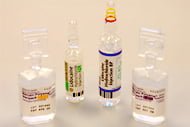 Local anesthetics (LAs) are widely employed to achieve tissue infiltration, peripheral and regional anesthesia, and neuraxial blockades. Despite their well-established toxic dose limits, these agents continue to pose a substantial risk of morbidity and mortality due to local anesthetic toxicity and overdose.
For example, LAs and epinephrine account for a large proportion of medication errors resulting in adverse patient outcomes due to drug dosing miscalculations or errors converting between units. Dosage calculations vary by patient weight as well as by pharmacokinetics and pharmacodynamics of individual LA formulations. Further, non-standard units, additives (epinephrine), and varying concentrations among LAs complicate correct dosage derivations.
In an effort to curb calculation errors and avert LA toxicity, Williams and Walker derived a helpful nomogram1 to calculate the maximum, weight-based volume of commonly used LAs (lidocaine, prilocaine, bupivacaine, and ropivacaine). This nomogram was validated against a calculator in the original article. Please note that while this nomogram may aid in dosage verification, there is no substitute for a second, independent derivation of the total maximum dose using a different method, as an additional safeguard to prevent dosage error.
LA toxicity presents clinically as a constellation of symptoms including, but not limited to, tinnitus, circumoral tingling, metallic taste, and dizziness. Severe manifestations include altered mentation, arrhythmias, and cardiovascular collapse. Management is predicated upon stopping the offending agent, providing supportive measures, and administering weight-based intravenous 20% lipid emulsion. The authors, Williams and Walker, derived a separate nomogram to guide treatment by calculating the appropriate weight-based lipid therapy, specifying the initial bolus amount, infusion rate, and total maximum dose of lipid emulsion.
Both the toxicity and lipid emulsion nomograms are displayed in this Paucis Verbis card.
The Devine formulation is the most commonly accepted calculation (most applicable for people at least 60 inches, or 5 feet, tall):
See the MDCalc calculator for IBW.
 We are all familiar with the concept of pediatric EDs. We see them as medical students, we train in them as residents, and we work alongside pediatric EM fellows. It is generally clear what pediatric EDs have to offer: smaller sized beds and equipment, nurses trained in pediatric triage and assessment who know how to put IVs in babies and calm crying kids, and physicians with training in pediatric Emergency Medicine. But what about the other end of the age spectrum? Over the last 10 years geriatric EDs, also called Senior EDs, have been popping up around the country. You may have been wondering why that is, and what they have to offer. Here are a few thoughts.
 You are spending a month in rural Kenya, doing an ultrasound teaching course. Your enthusiastic participants have been ultrasounding every chance they get. Unfortunately, this has caused your ultrasound gel supplies to dwindle. It will be a month before a new shipment of gel arrives from Nairobi. This gel will cost about $5 per bottle, which is a considerable expense for the local hospital’s budget.

Most of us would agree that massive PE is treated with fibrinolysis and non-massive PE is treated with anticoagulation. The area of great debate has been the optimal treatment for sub-massive PE. The MOPETT Trial was published in January 2013 and although the patient population was small, it did show a huge benefit in pulmonary pressures at 28 months with fibrinolysis. The next study we have all been waiting for is the Pulmonary Embolism Thrombolysis (PEITHO) trial, which was just published yesterday in the NEJM, evaluating fibrinolysis for patients with intermediate-risk PE.
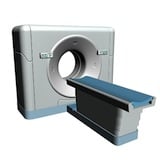 It appears that the excitement and utilization of computed tomography (CT) imaging in the emergency department (ED) has far outpaced our concern for the short- and long-term consequences of increased reliance on this technology. CT has greatly supplemented, or even replaced, our clinical decision making for many chief complaints. Many articles document the dramatic increased CT use in contemporary practice, including a 330% increase in the rate of CT imaging from 1996 to 2007. The likelihood of a CT order being part of any ED encounter now approaches 15%, with no signs of decline.1