Traumatic Brain Injuries in Older Adults
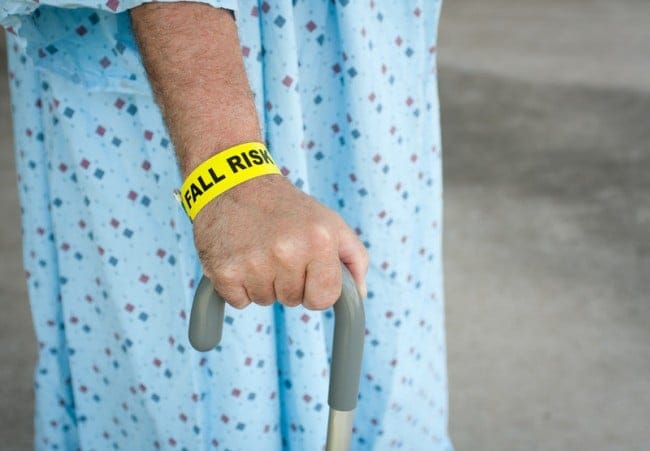 Older adults are at high risk of poor outcomes from even minor head injuries. We see many older patients in the ED who present after a fall or head injury, and we have good decision rules for which patients need brain imaging.1 However, even patients with mild traumatic brain injuries, who have a negative CT scan, are at risk for mortality and significant long-term sequelae. The CDC has called traumatic brain injuries a ‘silent epidemic’.2,3 The first steps to breaking that silence are awareness and recognition.
Case
A 75 year old male who is not on any anticoagulants presents to your ED after a mechanical fall from standing. He is mildly confused, and amnestic to the event, but otherwise has no neurologic deficits. He has some mild dizziness when he stands. What is the diagnosis, and what should you tell the patient and his family to expect?
Traumatic Brain Injuries
 From 2002-2006, there were about 142,000 ED visits by older adults (age 65 and over) for TBIs, 81,500 hospitalizations, and over 14,300 deaths.4 The hospitalization and death rates are much higher in this group than in younger adults. Older adults account for only 10% of TBI-related ED visits, but 50% of deaths.5 Many studies have tried to find a cutoff at which age contributes to increased morbidity and mortality, and the values have ranged from 39 to 66. However, there is consensus that after age 75, the mortality is much higher.5 Falls are the most common cause of brain injury in older adults, responsible for 60% of TBIs, compared with 33% in the population overall.2,6 Falls are also the most common cause of trauma-related mortality.7 About 8% of older adults will visit the ED every year because of a fall, and a quarter of those patients are admitted.2
There are multiple factors that put older adults at higher risk for TBI and adverse sequelae from it:
- They have more frequent falls. Falls are multifactorial. Gait instability, as well as poly-pharmacy can both contribute.
- They have higher injury severity from falls than younger patients. This may be in part due to higher rates of anti-coagulant therapy, but also physiological and anatomic changes as the dura becomes more adherent to the skull.2
- Older adults have more prolonged courses following injury, with slower recovery rates.8 They are at higher risk of secondary consequences such as skin breakdown from decreased mobility.
Traditionally, TBI severity has been determined based on GCS, duration of loss of consciousness and post-traumatic amnesia as outlined in this Northeastern University site. However, this determination is challenging because the GCS may fluctuate (it may improve or may worsen) with time. In addition, the patient may not fall neatly into one category based on each of those criteria. Finally, this classification system also does not take into account imaging findings, which will affect prognosis and management. The literature on this topic is complicated in part by the fact that certain publications equate concussion with mild TBI, while others consider the two separate entities.9 Other classification systems, such as the Mayo TBI classification take into account symptoms as well as CT findings.10 Acutely in the ED, the first priority is to stabilize and resuscitate, to manage the airway if needed, and to evaluate for any other trauma. If the patient is stable and imaging negative, we should at least warn the patient that there can be delayed symptoms, and encourage early follow up for re-evaluation.
Mild TBI in Older Adults
The diagnosis of mild TBI in older adults can be challenging if the patient’s baseline cognitive function is not known. It is important to try to speak with family members or caregivers who know the patient to establish whether they are usually oriented to person, place, time, and events before you can establish whether their state in the ED is a change or not. Even in older patients with mild TBIs, there are high rates of abnormal CT findings in patients with mild TBIs. In one report, 14% of older adults with mild TBIs had an abnormal CT scan, and 20% of those required neurosurgical intervention.11
Older age is associated with worse outcomes and more prolonged symptoms following injury.5,12 The mortality and rates of adverse outcomes are high even in patients with mild TBIs without abnormal CT findings. The CRASH study data13 were used to create an online prognostic tool for outcomes after TBI. Based on their predictive models, for a 70 year old male in the United States who has a GCS of 14 after TBI, with bilaterally reactive pupils, no major extra-cranial injuries, and a negative CT, the risk of 14 day mortality is 6.7%, and the risk of “unfavorable outcome” at 6 months, which they define as “dead, vegetative state, or severe disability as defined by the Glasgow Outcome Score” is 35%. By contrast, a 40-year old male with all the same characteristics will have a 14 day mortality of 0.9%, and a 6 month risk of unfavorable outcomes of 6.2%. This tool can be useful for anticipating which patients will need more services and closer follow-up, and also to help give patients and families some sense of what to expect.
As the example above illustrates, even with a mild TBI and a negative CT head, patients can experience significant, long-term sequelae, such as:6
- Headaches
- Worse or new cognitive impairment
- Vestibular dysfunction and gait instability or vertigo
- Fatigue
- Depression or behavioral changes
- Sleep difficulties
- Hearing or vision changes
Case Conclusion
This patient has a GCS of 14 and has suffered a mild TBI. His 14 day mortality risk is 6.7%, and the 6 month risk of unfavorable outcome is 35%. If the head CT is negative, then a symptom and functional assessment should be done. If he is able to ambulate easily, and has family or a caregiver who can assist him if needed, he may be able to be discharged home with follow-up for physical therapy and early reassessment. If he is unstable, or is too confused to manage his activities of daily living and self-care, then other options such as admission, or referral to a rehab or skill nursing center should be considered.
The Future
In 2003, the annual cost of caring for older adults with TBI was estimated at $2.2 billion.2 As the population of older adults grows, we can expect to see even more patients in the ED for falls and TBIs. Both the impact on the health care system and resource utilization, as well as the need for longer term services, therapy visits, and nursing care are important public health concerns. Most importantly, however, the impact on individuals and their families can be great. In the ED, we play a critical role in helping educate patients and families about their injury and potential sequelae. In addition, at the time of their injury, we have the opportunity to help connect them to services to improve their changes of recovery and minimize loss of function.
Take Home Points
- Even if a CT scan is negative, if there are concussive symptoms, make sure to tell the patient they have suffered a concussion, and set expectations that the symptoms may resolve quickly but can sometimes be prolonged (3 months) or permanent (>18 months).
- Make sure the patient can walk stably, and will be able to manage at home with the degree of help they have available.
- Help facilitate early follow up for therapy or rehab if needed (speech, vestibular, physical), though most patients requiring these service will likely be admitted from the ED. Therapy, rehabilitation, and good nursing care can help reduce the sequelae of TBIs by maximizing early function, and preventing loss of muscle mass, skin breakdown, and contractures.5
- Refer to a concussion clinic if you have one available.
- Avoid ‘ageism’ and do not assume the patient does not need or will not want maximal intervention and follow up services simply because they are older or have some cognitive deficits.
- Have a low threshold to admit if you are concerned about their safety or if they are at high risk of deterioration.
References
- Jagoda A, Bazarian J, Bruns J, et al. Clinical policy: neuroimaging and decisionmaking in adult mild traumatic brain injury in the acute setting. Ann Emerg Med. 2008;52(6):714-748. [PubMed]
- Thompson H, McCormick W, Kagan S. Traumatic brain injury in older adults: epidemiology, outcomes, and future implications. J Am Geriatr Soc. 2006;54(10):1590-1595. [PubMed]
- CDC’s Report to Congress on Traumatic Brain Injury Epidemiology and Rehabilitation | Concussion | Traumatic Brain Injury | CDC Injury Center . cdc.gov. http://www.cdc.gov/traumaticbraininjury/pubs/congress_epi_rehab.html. Published 2016. Accessed October 14, 2016.
- Traumatic Brain Injury in the United States: Emergency Department Visits, Hospitalizations, and Deaths 2002-2006 [PDF]. cdc.gov. http://www.cdc.gov/traumaticbraininjury/pdf/blue_book.pdf. Accessed October 14, 2016.
- Stippler M, Holguin E, Nemoto E. Traumatic brain injury in elders. Annals of Long Term Care: Clinical Care and Aging. 2012;20(5):41-46.
- Filer W, Harris M. Falls and traumatic brain injury among older adults. N C Med J. 2015;76(2):111-114. [PubMed]
- Carpenter C, Heard K, Wilber S, et al. Research priorities for high-quality geriatric emergency care: medication management, screening, and prevention and functional assessment. Acad Emerg Med. 2011;18(6):644-654. [PubMed]
- Frankel J, Marwitz J, Cifu D, Kreutzer J, Englander J, Rosenthal M. A follow-up study of older adults with traumatic brain injury: taking into account decreasing length of stay. Arch Phys Med Rehabil. 2006;87(1):57-62. [PubMed]
- Mack L, Chan S, Silva J, Hogan T. The use of head computed tomography in elderly patients sustaining minor head trauma. J Emerg Med. 2003;24(2):157-162. [PubMed]
- King N. A systematic review of age and gender factors in prolonged post-concussion symptoms after mild head injury. Brain Inj. 2014;28(13-14):1639-1645. [PubMed]
- MRC C, Perel P, Arango M, et al. Predicting outcome after traumatic brain injury: practical prognostic models based on large cohort of international patients. BMJ. 2008;336(7641):425-429. [PubMed]
- Sharp D, Jenkins P. Concussion is confusing us all. Pract Neurol. 2015;15(3):172-186. [PubMed]
- Malec J, Brown A, Leibson C, et al. The mayo classification system for traumatic brain injury severity. J Neurotrauma. 2007;24(9):1417-1424. [PubMed]

 What is the most commonly fractured carpal bone in adults? It’s the scaphoid bone. As a bonus it has the dreaded complication of avascular necrosis. So how good are the physical exam and imaging modalities in diagnosing a fracture? What is the likelihood ratio (LR) that snuffbox tenderness predicts a fracture? Bottom lines: The exam is highly sensitive but poorly specific, such that one can only confidently state that a NON-tender snuffbox and scaphoid tubercle essentially rule out an acute scaphoid fracture. Also negative x-rays for patients with scaphoid tenderness still yield a fracture post-test probability of 25%. This PV card breaks down all the LRs.
 Below we have listed our selection of the 14 highest quality blog posts related to 5 advanced level questions on pediatric topics posed, curated, and approved for residency training by the