


Trick of the Trade: Ultrasound for Pedal Pulse Identification and ABI
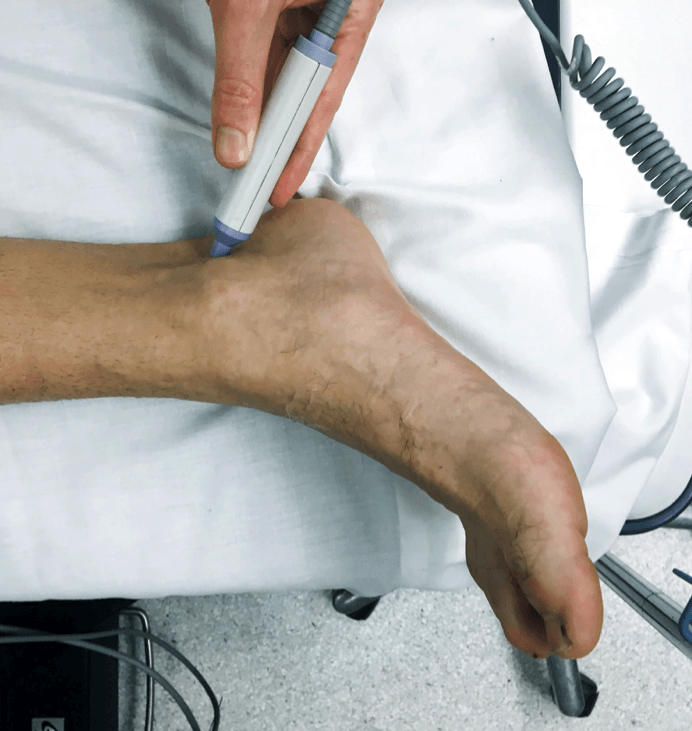 The Problem: A patient is rolled in to your ED by EMS with extremity trauma. You’re rightfully concerned about possible vascular injury to an upper or lower extremity, but you can’t palpate a dorsalis pedis (DP) or posterior tibialis (PT) pulse! You spend minutes, whisking the doppler probe, attempting to hear a waveform in a busy ED. Unfortunately you can’t seem to hear the “whoosh,” making accurate it nearly impossible for you to measure ankle-brachial indices (ABI). 1–3
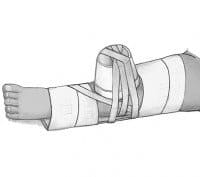 So much attention is appropriately focused on the anatomy and technique for intraosseous needle placement. In contrast, very little attention is paid to securing the needle. Often this involves a make-shift setup which involves gauze, wraps, and/or tape. This becomes especially important in the prehospital setting where these can be easily dislodged. The following trick stems from a
 You are working a shift in the emergency department, and you hear the ambulance sirens. EMS is bringing you two patients, friends from a nearby shelter. Per report, the two men were “smoking drugs” together outside of the shelter. Bystanders noted that the 29-year-old man became increasingly agitated, shouting, banging on the door, and threatening his other shelter mates, while the other, a 50-year-old man, laid down on the sidewalk. EMS also reports picking up these patients in an area known for high “K2” use.
 Welcome to another ultrasound-based case, part of the “Ultrasound For The Win!” (
 Below we have listed our selection of the 12 highest quality blog posts related to 5 advanced level questions on critical care topics posed, curated, and approved for residency training by the