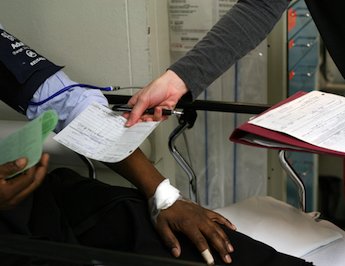
Trick of the Trade: Squeeze test for confirmation of IO placement
 Venipuncture is the most common invasive procedure performed in the emergency department 1 , likely due to the fact that the vast majority of our laboratory evaluations require blood and many of our life saving interventions require access to the patient’s systemic circulation. Most of the time emergency department staff are able to perform this procedure easily, but occasionally you find that your patient is the dreaded “difficult stick”. Literature suggests that the landmark technique is successful on the initial venipuncture 74-77% of the time. 2–5 Success rates rise after multiple attempts, but what happens when you don’t have the luxury of time? What happens when your patient will die if you don’t get life saving medications into their circulation promptly? There are a few options when you can’t get IV access through traditional means, among them external jugular vein cannulation, central line, ultrasound-guided IV, and the intraosseous lines (IO).6 However, when managing the crashing patient, a wise decision is to use the quickest option, which is often the IO.
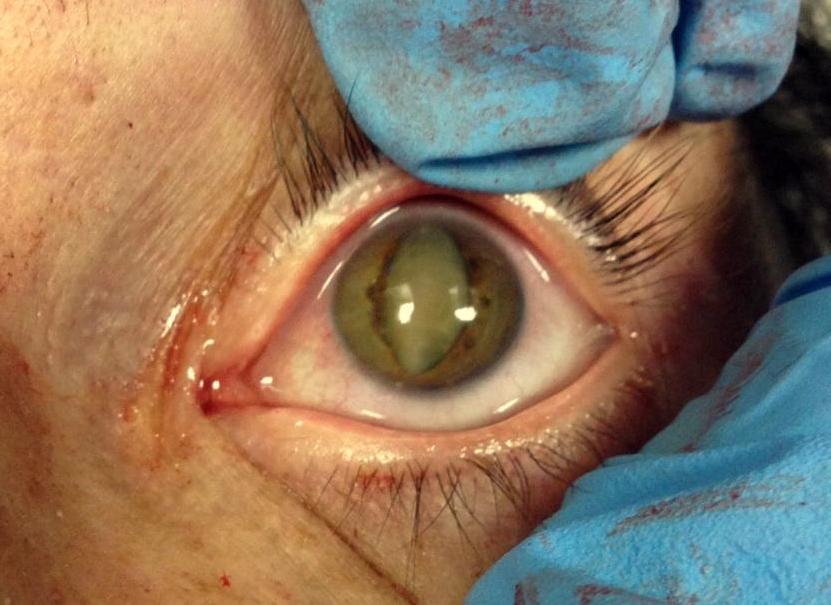
 An 82-year-old female is brought into the Emergency Department by family for a several day history of progressive altered mental status. You initiate a broad workup. However, soon after initial evaluation, you are called back into the room. The patient’s vitals are as follows and concerning for septic shock and an alarming serum sodium level.
 Welcome to another ultrasound-based case, part of the “Ultrasound For The Win!” (#US4TW) Case Series. In this peer-reviewed case series, we focus on real clinical cases where bedside ultrasound changed management or aided in diagnoses. In this case, a 38-year-old pregnant woman presents with acute right-sided abdominal pain radiating to her flank.