


Diagnose on Sight: Diffuse Desquamating Dermatitis
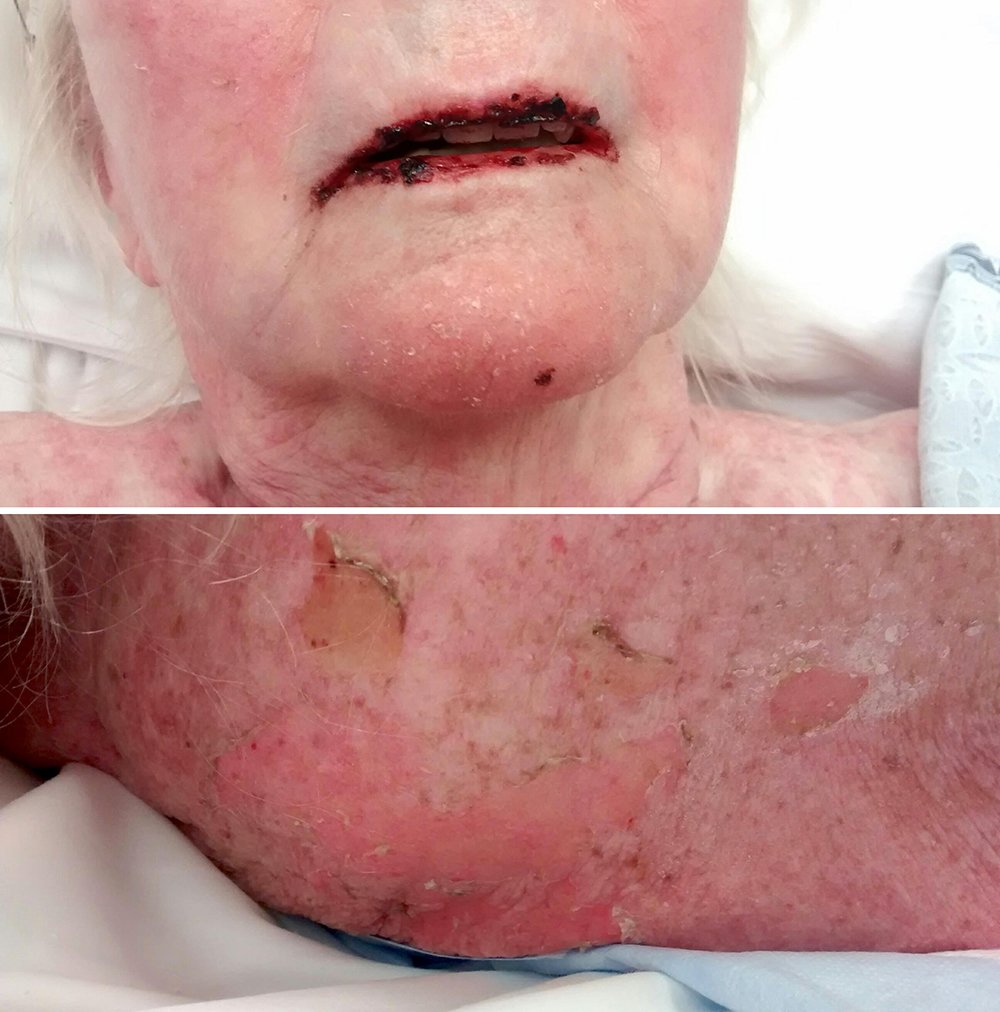 Case: An 84 year old female presents with five days of a diffuse rash. She had a seizure and was started on phenytoin 2 weeks ago. Her mouth, labia, and medial canthi are involved. There are scattered areas of desquamation comprising less than a tenth of her total body surface area. She is tachycardic and febrile. Her complete blood count differential is normal. What is the diagnosis?


 We are incredibly excited to announce the development of our newest project — ALiEMU. This top-secret project has been in the works for only 3 months, but has gained incredible momentum thanks to our all-star team, led by Dr. Chris Gaafary, who is our ALiEMU Chief of Design and Development… while he is not busy being an incoming EM chief resident at the University of Tennessee.
 Currently, guidelines recommend therapeutic hypothermia for comatose adults with out-of-hospital cardiac arrest (OHCA). A recent trial of adults with OHCA showed that therapeutic hypothermia with the use of a targeted temperature of 33°C vs maintained therapeutic normothermia of 36°C, did not improve outcomes. There is a paucity of randomized trials of therapeutic hypothermia in children with OHCA, but sometimes adult trials get extrapolated to pediatrics. There are differences between adult and pediatric populations with OHCA, which makes it difficult to extrapolate the results of the adult trials to a pediatric population.
 Welcome to another ultrasound-based case, part of the “Ultrasound For The Win” (#US4TW) Case Series. In this peer-reviewed case series, we focus on real clinical cases where bedside ultrasound changed management or aided in diagnoses. In this case, a 101-year-old man presents after being found down with altered mental status.