PV card: Early repolarization vs STEMI on ECG
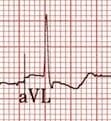
You are handed an ECG for a 50 year old man with moderate chest pain for 2 hours now and no associated symptoms typical for ACS, PE, aortic dissection, or any other red flags of chest pain. He has no prior ECG’s on file.
- Is this early repolarization or ST elevation MI?
- Should I activate the cardiac catheterization lab?
Image courtesy of Dr. Steve Smith at HQMedEd-ecg.blogspot.com
Here are some great literature-based pearls compiled by Dr. Jason West (@JWestEM), an EM resident from Jacobi/Montefiore.
PV Card: ECG – Early Repolarization vs ST Elevation MI
Adapted from [1–7]
Go to ALiEM (PV) Cards for more resources.
Furthermore, there is a formula to differentiate early repolarization vs STEMI, per Dr. Smith’s publication6:
(1.196 x STE60V3) + (0.059 x QTc) – (0.326 x RA V4)
- STE60V3 = STE elevation height at 60 msec (1.5 small boxes) after the J-point in lead V3 (mm)
- QTc = The computer-read QTc interval
- RA V4 = R wave amplitude in lead V4 (mm)
A result of > 23.4 is predictive of a LAD occlusion causing a STEMI, rather than early repolarization.
P.S. The above ECG image shows early repolarization.
References
- Brady W, Syverud S, Beagle C, et al. Electrocardiographic ST-segment elevation: the diagnosis of acute myocardial infarction by morphologic analysis of the ST segment. Acad Emerg Med. 2001;8(10):961-967. [PubMed]
- Brady W, Perron A, Syverud S, et al. Reciprocal ST segment depression: impact on the electrocardiographic diagnosis of ST segment elevation acute myocardial infarction. Am J Emerg Med. 2002;20(1):35-38. [PubMed]
- Smith S. Upwardly concave ST segment morphology is common in acute left anterior descending coronary occlusion. J Emerg Med. 2006;31(1):69-77. [PubMed]
- Larson D, Menssen K, Sharkey S, et al. “False-positive” cardiac catheterization laboratory activation among patients with suspected ST-segment elevation myocardial infarction. JAMA. 2007;298(23):2754-2760. [PubMed]
- Nfor T, Kostopoulos L, Hashim H, et al. Identifying false-positive ST-elevation myocardial infarction in emergency department patients. J Emerg Med. 2012;43(4):561-567. [PubMed]
- Smith S, Khalil A, Henry T, et al. Electrocardiographic differentiation of early repolarization from subtle anterior ST-segment elevation myocardial infarction. Ann Emerg Med. 2012;60(1):45-56.e2. [PubMed]
- Chung S, Lei M, Chen C, Hsu Y, Yang C. Characteristics and prognosis in patients with false-positive ST-elevation myocardial infarction in the ED. Am J Emerg Med. 2013;31(5):825-829. [PubMed]


Appendicitis is the most common pediatric surgical emergency accounting for 5% of urgent pediatric outpatient visits for abdominal pain. Computed tomography (CT) and ultrasonography (US) are two imaging modalities used in the diagnostic evaluation of acute pediatric appendicitis. Both have decreased the incidence of negative appendectomy results. It is well known that CT has greater diagnostic accuracy than US for diagnosing acute appendicitis, but there is concern over long-term cancer risk, with routine use of CT in children.