Trick of the Trade: Got a shoulder dislocation? Park it

Myriad techniques exist to reduce shoulder dislocations, which includes scapular rotation, Hennepin, Snowbird, Cunningham, and Legg maneuvers. They are nicely reviewed at ShoulderDoc.co.uk. You can also supplement any technique with ultrasound-guided intraarticular lidocaine for improved pain control.
Recently, Dr. Jay Park (Beth Israel Medical Center in New York) contacted me about his novel approach to shoulder reduction which anatomically makes sense. If his animation video doesn’t convince you, check out the video of an actual reduction.
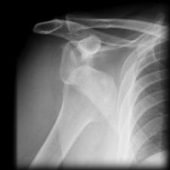 A patient comes into your department with an obvious shoulder dislocation. You know you can easily reduce the shoulder and have the patient discharged before the orthopedic consultant calls back. But what if there is a fracture? Do you need to get that plain film before popping it back into place?
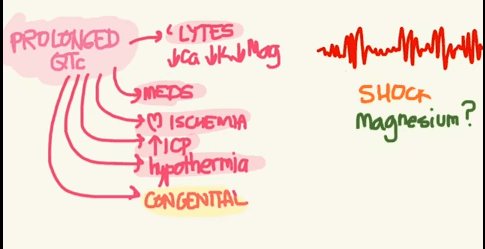 Torsades de pointes is a polymorphic form of ventricular tachycardia. Why does this occur? What does it characteristically look like? Why is this an important form of ventricular tachycardia to differentiate from the more classic monomorphic ventricular tachycardia? View this short 9 minute video on QT intervals and Torsades de Pointes.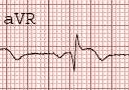
 Wellen’s Syndrome was first described in 1982 in which 75% of patients with t wave inversions in V2-V4 went on to have an acute myocardial infarction (MI). This was again repeated in 1989, and showed that all patients with this morphology had >50% LAD stenosis. The incidence in the United States is about 10-15%.