PV Card: Dermatomal and Myotomal Maps

There are some things in life which I just can’t memorize and dermatomal/myotomal maps are one of them. Weird cases of peripheral neurologic symptoms have presented to the ED in the setting of trauma and no trauma. So purely for selfish reasons, I’m making my own map to have on file.

This installment of the Paucis Verbis (In a Few Words) e-card series reviews Sensory and Motor Function Testing by Levels.

PV Card: Dermatomal and Myotomal Maps

Go to ALiEM (PV) Cards for more resources.
By |2021-10-08T09:42:25-07:00May 28, 2010|ALiEM Cards, Neurology, Orthopedic|

Trick of the trade: Endotracheal tube lubrication

ETT_Lubricatesm-1
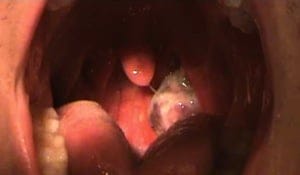
Does your endotracheal tube get caught up on a swollen or floppy epiglottis during insertion?

Trick of the Trade: Endotracheal tube lubrication

Occasionally the endotracheal tube may become “caught up” along the epiglottis. Because it is difficult to predict when this may happen, pre-lubricate the endotracheal tube cuff and tip with a thin layer of water-soluble lubricant, such as K-Y jelly. This lubricant can also minimize the degree of surface trauma to the trachea and tracheal rings as the tube passes the vocal cords.

By |2016-11-11T19:00:45-08:00May 26, 2010|Tricks of the Trade|

Paucis Verbis card: Ottawa knee, ankle, and foot rules

Often times, I get called to triage to help decide whether a patient should be sent to Radiology for an initial x-ray after injuring their knee, ankle, and/or foot. After teaching one of the nurses about the Ottawa rules, she taped a list of these rules on the triage wall.

This installment of the Paucis Verbis (In a Few Words) e-card series reviews Ottawa Knee, Ankle, and Foot Rules.

(more…)

By |2021-10-19T19:39:35-07:00May 7, 2010|ALiEM Cards, Orthopedic, Radiology|

Trick of the trade: Percuss the spine in low back pain

 SpineAnatomysmMany patients present to the Emergency Department for low back pain. Determining whether these patients have a red-flag diagnosis can be difficult. Red flag diagnoses include:

  • Fracture
  • Cauda equina syndrome/ spinal cord compression
  • Spinal infection
  • Vertebral malignancy

Almost all patients presenting with back pain, whether it be a muscle spasm or a spinal epidural abscess, will have back tenderness to some extent. So, how can you better differentiate benign from dangerous etiologies?

(more…)

By |2016-11-11T19:01:21-08:00May 5, 2010|Tricks of the Trade|

Paucis Verbis card: Vasopressors and Inotropes for Shock

IVdripsmThe treatment of shock should focus on correcting the underlying pathophysiology. With persistent hemodynamic instability, a vasopressor and/or inotrope should be selected. Reviewing receptor physiology can help you select the best-fit agent for the patient’s clinical condition. There is an especially useful table on medication selection in the reviewed 2008 EM Clinics of North America article.

This installment of the Paucis Verbis (In a Few Words) e-card series reviews Vasopressors and Inotropes for the Treatment of Shock.

PV Card: Vasopressors and Inotropes in Shock


Adapted from [1]
Go to ALiEM (PV) Cards for more resources.
Edit 3/28/14: Dopamine removed as second-tier agent for septic shock (mainly reserved for rare cases of inappropriate bradycardia at low risk for arrhythmias)

Reference

  1. Ellender T, Skinner J. The use of vasopressors and inotropes in the emergency medical treatment of shock. Emerg Med Clin North Am. 2008;26(3):759-86, ix. [PubMed]
By |2021-10-19T18:48:16-07:00Apr 30, 2010|ALiEM Cards, Cardiovascular, Tox & Medications|

Paucis Verbis card: Skipping the CT prior to LP for meningitis

LumbarPunctureWith increasing awareness of CT’s irradiation risk, I thought I would review a classic 2001 article from the New England Journal of Medicine. Head CT’s previously were commonly performed prior to all lumbar punctures (LP) to rule-out meningitis. When can you safely go straight to an LP without imaging?

Caveat: This review only applies to those patients in whom you suspect meningitis. This does not apply to those being worked up for subarachnoid hemorrhage.

(more…)

By |2021-10-19T19:36:53-07:00Apr 23, 2010|ALiEM Cards, Neurology, Radiology|
Go to Top