SAEM Clinical Image Series: Pediatric Rash

pediatric rash

A 17-month-old girl with a history of eczema presents to the pediatric emergency department for evaluation of a rash. The rash is different from her usual eczema, developed three days prior to presentation, and is described as red with yellow crusting. Her mother also noticed blistering in her groin and under her axilla. She has associated fussiness and decreased feeding, but no fever.

Vitals: T 37.7°C; HR 161; BP 115/75; RR 24; O2 sat 100% on room air

General: Fussy but consolable

Eyes: No conjunctival erythema or discharge

Mouth: Yellow crusting and fissuring surrounding mouth; no intra-oral lesions

Neck: No nuchal rigidity

Cardiovascular: Tachycardic with regular rhythm; no murmurs

Respiratory: Normal rate; normal breath sounds

Abdomen: Non-tender to palpation; non-distended; normal bowel sounds

Neurologic: Alert

Skin: Diffusely erythematous; scaling rash over the face with areas of yellow crusting; erythematous areas with blistering/desquamation to the anterior trunk, axilla, and inguinal regions

Complete blood count (CBC) and comprehensive metabolic panel (CMP) unremarkable.

Staphylococcal scalded skin syndrome caused by impetigo.

This case describes a patient with a rash, blistering/desquamation of axilla and groin, and systemic symptoms consistent with staphylococcal scalded skin syndrome (SSSS). Clinical features of SSSS include erythema to intertriginous areas, rapid progression of erythema, and systemic symptoms such as fever, irritability, and poor oral intake. Mucous membranes are not typically involved. Physical exam findings include perioral crusting and fissuring (seen in photo), blanching erythema, desquamation, shallow skin erosions, and a positive Nikolsky sign. SSSS is caused by exfoliative toxin A (ETA) and exfoliative toxin B (ETB), two exotoxins produced by certain strains of S. aureus. ETA and ETB cause the breakdown of keratinocyte adhesions within the epidermis, leading to desquamation. Infection with S. aureus at any site can cause SSSS, including bacterial conjunctivitis, wound/skin infection, staphylococcal pneumonia, pyomyositis, septic arthritis, and endocarditis. SSSS is more common in children, a phenomenon thought to be due to a lack of protective antibodies against staphylococcal antigens. The diagnosis of SSSS is clinical but can be confirmed with histopathology. In this case, the extensive yellow, crusting lesions of the face suggest impetigo, a superficial skin infection predominantly caused by S. aureus, as the etiology of SSSS. Children with eczema are at increased risk of impetigo due to disruption of the normal skin barrier. Complications of SSSS include fluid losses due to extensive skin breakdown, electrolyte abnormalities, sepsis, and death.

Penicillinase-resistant penicillins (oxacillin, nafcillin) or first- or second-generation cephalosporins. Clindamycin monotherapy should be avoided due to high rates of resistance. Management of SSSS in most cases also includes hospitalization for IV antibiotics and supportive care. In patients with significant skin involvement, admission to either an ICU or burn unit is warranted for close monitoring and wound care.

Take-Home Points

  • Staphylococcal scalded skin syndrome (SSSS) is caused by the release of S. aureus exfoliative toxins A and B into the bloodstream, thus SSSS can be caused by any infection caused by S. aureus.
  • Penicillinase-resistant penicillins are the first-line therapy in patients with SSSS. First- and second-generation cephalosporins, as well as vancomycin, can also be considered.
  • Treatment with clindamycin monotherapy should be avoided in patients with SSSS due to high levels of resistance among strains of S. aureus which cause SSSS.

  • Mishra AK, Yadav P, Mishra A. A Systemic Review on Staphylococcal Scalded Skin Syndrome (SSSS): A Rare and Critical Disease of Neonates. Open Microbiol J. 2016 Aug 31;10:150-9. doi: 10.2174/1874285801610010150. PMID: 27651848; PMCID: PMC5012080.
  • Paller A, Mancini, A. Hurwitz Clinical Pediatric Dermatology: A Textbook of Skin Disorders of Childhood and Adolescence. Edinburgh, Scotland: Elsevier; 2015.
  • Handler MZ, Schwartz RA. Staphylococcal scalded skin syndrome: diagnosis and management in children and adults. J Eur Acad Dermatol Venereol. 2014 Nov;28(11):1418-23. doi: 10.1111/jdv.12541. Epub 2014 May 20. PMID: 24841497.
  • Braunstein I, Wanat KA, Abuabara K, McGowan KL, Yan AC, Treat JR. Antibiotic sensitivity and resistance patterns in pediatric staphylococcal scalded skin syndrome. Pediatr Dermatol. 2014 May-Jun;31(3):305-8. doi: 10.1111/pde.12195. Epub 2013 Aug 23. PMID: 24033633; PMCID: PMC4349361.
  • Neubauer HC, Hall M, Wallace SS, Cruz AT, Queen MA, Foradori DM, Aronson PL, Markham JL, Nead JA, Hester GZ, McCulloh RJ, Lopez MA. Variation in Diagnostic Test Use and Associated Outcomes in Staphylococcal Scalded Skin Syndrome at Children’s Hospitals. Hosp Pediatr. 2018 Sep;8(9):530-537. doi: 10.1542/hpeds.2018-0032. PMID: 30139766; PMCID: PMC6317540.


SAEM Clinical Image Series: Painful Blue Arm

arm swelling

A 68-year-old male with a past medical history of hypertension, hyperlipidemia, and recent ileostomy secondary to small bowel obstruction presented for acute left arm swelling, discoloration, and numbness since last night. He endorses sudden onset of painful edema with the development of purple discoloration. He denies trauma, history of similar problems, chest pain, or shortness of breath. He endorses difficulty flexing at the elbow secondary to the amount of swelling, pain, and numbness to the arm. The patient had a peripherally inserted central catheter (PICC) line placed in the left upper extremity two weeks ago.

Vitals: T 37.1°C; HR 80; BP 154/82; RR 18; O2 sat 100% on RA

General: Moderate distress secondary to pain but non-toxic appearing

Cardiovascular: Regular rate and rhythm; no murmurs; left ulnar artery 2+; left radial artery 1+ to palpation; bedside doppler—triphasic left ulnar artery and biphasic left radial artery; capillary refill three seconds

Respiratory: Lungs clear to auscultation bilaterally; no adventitious breath sounds

Musculoskeletal: Left upper extremity with global nonpitting edema from fingers to shoulder; skin with purple cyanotic discoloration; moderately tender to palpation throughout the entire limb; no crepitus or bullae; pain is not out of proportion; soft compartments throughout the left upper extremity

Neurologic: Alert and oriented to person, time, and place; Glasgow Coma Scale 15; cranial nerves II-XII grossly intact; sensation decreased in left upper extremity; all other extremities intact

Complete blood count (CBC): Unremarkable

Partial thromboplastin time (PTT) and International normalized ratio (INR): Unremarkable

Phlegmasia cerulea dolens (PCD) of the Upper Extremity. It’s just a deep venous thrombosis (DVT) right?

PCD is not just another DVT, it’s a severe limb-threatening (12-25% amputation rate) and life-threatening (25-40% mortality rate) disease that presents with marked swelling in the extremity, pain, and cyanosis.

The pathophysiology of PCD involves complete obstruction of both superficial and deep venous return, resulting in increased interstitial tissue pressure, arrest of capillary flow, tissue ischemia, and ultimately, gangrene. Upper extremity involvement is rare and only occurs in approximately 2-5% of all phlegmasia cases. PCD presents with key characteristics: marked edema, severe pain, pathognomonic blue discoloration/cyanosis, and eventually ischemia.

Ultrasound is the best initial modality for suspected PCD and bedside ultrasound with two-point compression can be quickly performed by the emergency physician.

Management should include fluid resuscitation, systemic anticoagulation, and emergent vascular surgery or interventional radiology consult for possible thrombectomy or catheter-directed thrombolysis.

Take-Home Points

  • PCD is a rare, life-and-limb-threatening disease that can rapidly progress to gangrene and tissue death.
  • Phlegmasia cerulea dolens literally translates to “painful blue inflammation.” Large clot burden causes severe pain, cyanosis, and marked edema.
  • Prompt evaluation with ultrasound, treatment with anticoagulation, and emergent vascular surgery or interventional radiology consultation are essential.

  • Chaochankit W, Akaraborworn O. Phlegmasia Cerulea Dolens with Compartment Syndrome. Ann Vasc Dis. 2018 Sep 25;11(3):355-357. doi: 10.3400/avd.cr.18-00030. PMID: 30402189; PMCID: PMC6200621.
  • Kommalapati A, Kallam A, Krishnamurthy J, Tella SH, Koppala J, Tandra PK. Upper Limb Phlegmasia Cerulea Dolens Secondary to Heparin-induced Thrombocytopenia Leading to Gangrene. Cureus. 2018 Jun 21;10(6):e2853. doi: 10.7759/cureus.2853. PMID: 30148006; PMCID: PMC6104908.
  • Kou CJ, Batzlaff C, Bezzant ML, Sjulin T. Phlegmasia Cerulea Dolens: A Life-Threatening Manifestation of Deep Vein Thrombosis. Cureus. 2020 Jun 12;12(6):e8587. doi: 10.7759/cureus.8587. PMID: 32670722; PMCID: PMC7358928.
  • Onuoha CU. Phlegmasia Cerulea Dolens: A Rare Clinical Presentation. Am J Med. 2015 Sep;128(9):e27-8. doi: 10.1016/j.amjmed.2015.04.009. Epub 2015 Apr 22. PMID: 25910785.


By |2022-01-04T11:48:50-08:00Jan 10, 2022|Cardiovascular, SAEM Clinical Images|

SAEM Clinical Image Series: Inguinal Masses

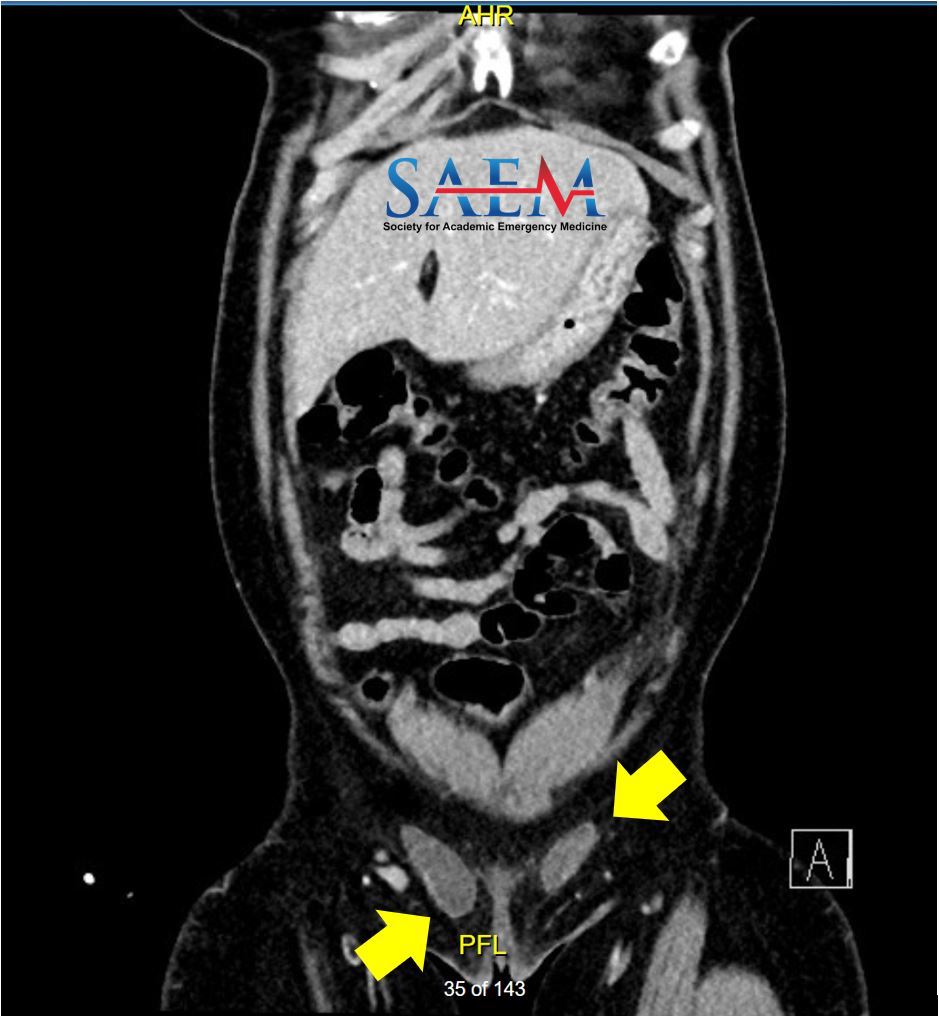
A 50-year-old female with a past medical history of gastritis and marijuana abuse presents to the Emergency Department (ED) with epigastric abdominal pain for one day. The patient reports she was seen in the ED one month prior for similar symptoms and had an ultrasound of the gallbladder, which was negative. She was discharged home with prescriptions for Pepcid, Carafate, and Zofran. Once discharged home she did not experience any symptoms until the day prior to presenting again to the ED. The patient denies nausea, vomiting, back pain, dysuria, hematuria, subjective fevers, chills, diarrhea, vaginal bleeding, vaginal discharge, chest pain, or shortness of breath. Of note, the patient also reports intermittent bilateral inguinal discomfort, stating she believed she had inguinal hernias, which would become tender without exertion or any notable inciting factor.

Vitals: HR 82; T 97.1°F; BP 147/95; RR 20; O2 sat 100% on room air

General: No acute distress

Cardiovascular: Regular rate and rhythm; no murmur; bilateral upper extremity and lower extremity pulses palpable

Gastrointestinal: Soft; generalized tenderness, predominantly epigastric; no abdominal masses

Genitourinary: Pelvic exam deferred; normal external vaginal exam; bilateral inguinal masses, non-tender, no overlying cellulitis

White blood cell (WBC) count: 5.64 k

Hemoglobin (Hgb): 10.4 g/dL

Hematocrit (Hct): 33.0%

Platelet count: 279 k

Complete metabolic panel (CMP): Unremarkable

Urine pregnancy test (UPT): Negative

DDX: Bilateral inguinal hernias, abscess, undescended testicles.

The abnormal findings in this patient were consistent with undescended rudimentary testicles in a patient without a prior diagnosis of true hermaphroditism (an ovotesticular disorder of sex development [DSD]). Our patient was phenotypically a female, with developed breasts, vagina, uterus, and ovaries, although uterus and ovaries were noted to be diminutive on imaging. Our patient identified herself as a female of homosexual orientation.

True hermaphroditism is characterized as the presence of seminiferous tubules and ovarian follicles in the same individual. Genitalia is usually ambiguous; however, patients may appear phenotypically male or female. Reproductive organ differentiation is a complex process involving multiple pathways and receptors, predominantly antimüllerian hormone (AMH). When testes differentiate, the secretion of AMH will lead to regression of müllerian structures, and lack of AMH will result in progression of female organ development (e.g., fallopian tubes, uterus, cervix, and upper vagina). The vast majority of patients with hermaphroditism will have a uterus or uterine horn, and most patients have breast development, ovulation, and menstruation.

Patients should be educated about the importance of close follow-up and the possible complications involved with this diagnosis. Although some patients may be asymptomatic and therefore undiagnosed, undescended testicles are at a slightly increased risk for gonadal tumors and may also suffer from testicular torsion. Patients may need to have a biopsy of undescended testes to confirm testicular tissue and be required to have surgical removal of testes.

Take-Home Points

  • The differential diagnosis for bilateral inguinal masses in a phenotypically female patient includes undescended testicles.
  • Patient education is of utmost importance as undescended testicles are still at risk of testicular torsion and carry an increased risk of testicular cancer.

  • English RE, Tulloch DN, Blaquiere RM. The demonstration of true hermaphroditism by computed tomography. Clin Radiol. 1986 Nov;37(6):593-4. doi: 10.1016/s0009-9260(86)80035-6. PMID: 3791859.
  • van Niekerk WA, Retief AE. The gonads of human true hermaphrodites. Hum Genet. 1981;58(1):117-22. doi: 10.1007/BF00284158. PMID: 6895206.
  • Walker AM, Walker JL, Adams S, Shi E, McGlynn M, Verge CF. True hermaphroditism. J Paediatr Child Health. 2000 Feb;36(1):69-73. doi: 10.1046/j.1440-1754.2000.00432.x. PMID: 10723695.
  • White, P. C. (2012). Disorders of Sexual Development. In Goldman’s Cecil Medicine (pp. 1511–1519). Elsevier. https://doi.org/10.1016/B978-1-4377-1604-7.00241-4


By |2022-01-01T23:43:19-08:00Jan 3, 2022|Genitourinary, SAEM Clinical Images|

SAEM Clinical Image Series: I Have a Stomachache

stomachache

An 18-year-old male with no significant past medical history presents with diffuse abdominal pain and multiple episodes of non-bloody, non-bilious vomiting for three days. The patient was seen yesterday at another facility and states he was diagnosed with gastritis and discharged with Zofran, which provided no relief. He denies fever, diarrhea, or urinary symptoms and states his last bowel movement was two days ago and was consistent with his usual bowel movements.

Vitals: T 97.7ºF; HR 138; BP 122/98; RR 18; O2 sat 99% on RA

General: Thin male, appears uncomfortable

Abdominal: Mild distention with diffuse tenderness to palpation; no guarding or rebound tenderness

White blood cell (WBC) count: 13k

Complete metabolic panel (CMP): Mild hypokalemia; otherwise unremarkable

Lactate: 4.9

Urinalysis (UA): Mild ketonuria; no hematuria; no evidence of infection

Superior Mesenteric Artery (SMA) syndrome also known as Wilke’s or Cast Syndrome is a condition where the third section of the duodenum gets compressed between the superior mesenteric artery and the aorta leading to a proximal obstruction in the duodenum and stomach. The most common etiology of SMA syndrome is the loss of the mesenteric fat pad surrounding the SMA. This leads to an acute angulation between the SMA and the aorta, thus compressing the duodenum and causing a partial or complete obstruction. While the condition is rare, predisposing factors include sudden weight loss and chronic illnesses such as malabsorption syndromes, AIDS, and malignancy.

Treatment in the acute stage is conservative management including gastric decompression, IV fluids, correction of electrolyte abnormalities, and nutritional support, which may include temporary gastro-jejunostomy (GJ) tube placement. Severe refractory cases may require surgical intervention. This patient was admitted and treated conservatively, including a temporary GJ tube placement which was removed a few months later.

Take-Home Points

  • Consider SMA syndrome in patients with a history of sudden weight loss or chronic illness.
  • Look for very proximal obstruction on CT with significant gastric distension.
  • Acute management is conservative treatment.

  • Hamden, A. & Scovell, S. (2020). Superior Mesenteric Artery Syndrome. In K. Collins (Ed.), UpToDate. Retrieved January 4, 2021, from https://www.uptodate.com/contents/superior-mesenteric-artery-syndrome
  • Niknejad, M. & Ranschaert, E. (2018). Superior Mesenteric Artery Syndrome. Radiopedia.org. Retrieved January 4, 2021, from https://radiopaedia.org/articles/superior-mesenteric-artery-syndrome?lang=us
  • Karrer FM. (2017). Superior Mesenteric Artery Syndrome. Medscape Reference. Retrieved December 22, 2020, from http://emedicine.medscape.com/article/932220-overview Genetic and Rare Diseases Information Center. (2018). Superior Mesenteric Artery Syndrome. [Online]. Available at: https://rarediseases.info.nih.gov/diseases/7712/superior-mesenteric-artery-syndrome#:~:text=Superior%20mesenteric%20artery%20syndrome%20(SMAS,complete%20blockage%20of%20the%20duodenum


SAEM Clinical Image Series: Vomiting in the Pediatric Patient

vomiting

A 2-year-old boy with a past medical history of Hirschsprung disease presents to the emergency department (ED) with vomiting, abdominal distension, and inability to tolerate PO for one day. His parents had been instructed by their pediatric surgeon to perform rectal irrigations 2-3 times daily for the few days prior to presentation.

Vital signs within normal limits.

General: Appears lethargic

HEENT: Oral mucosa dry

Abdomen: Moderately distended; decreased bowel sounds

Skin: Normal turgor

Non-contributory

The differential diagnosis for pediatric patients presenting with vomiting is broad and includes but is not limited to gastritis, diabetic ketoacidosis, pyloric stenosis, appendicitis, intussusception, urinary tract infection, colic, toxic ingestion, volvulus, incarcerated hernia, and bowel obstruction. However, in a child with Hirschsprung disease who presents with vomiting, an emergency medicine physician must maintain a high degree of suspicion for Hirschsprung-associated enterocolitis (HAEC).

Hirschsprung disease is a rare congenital condition affecting approximately 1-in-5,000 births that refers to a functional intestinal obstruction due to the absence of ganglionic cells in the myenteric plexus of the distal colon. Life-threatening complications of Hirschsprung disease include bowel obstruction, Hirschsprung-associated enterocolitis (HAEC), and toxic megacolon. HAEC is the leading cause of morbidity and mortality in these patients. HAEC can present with vague symptoms such as fever, diarrhea, vomiting, rectal bleeding, constipation, and lethargy. Due to these nonspecific symptoms, it is necessary for emergency medicine physicians to maintain a high index of suspicion for HAEC. Once diagnosed, immediate resuscitation should begin with the placement of a rectal tube for decompression, initiation of broad-spectrum antibiotics and fluids, as well as urgent pediatric surgery consultation.

Take-Home Points

  • HAEC can present with nonspecific symptoms of diarrhea, vomiting, fever, lethargy, abdominal distension, and obstipation.
  • HAEC must be quickly identified in patients with Hirschsprung disease due to the risk of rapid decompensation from hypovolemic shock secondary to dehydration, septic shock from HAEC, and the development of toxic megacolon.
  • HAEC is the leading cause of morbidity and mortality in pediatric patients with Hirschsprung disease.

  • Guillaume AWD, Miller AC, Nguyen MC. Enterocolitis in a Child With Hirschsprung Disease. Pediatr Emerg Care. 2019 Jul;35(7):e131-e132. doi: 10.1097/PEC.0000000000001108. PMID: 28328696.
  • Demehri FR, Halaweish IF, Coran AG, Teitelbaum DH. Hirschsprung-associated enterocolitis: pathogenesis, treatment and prevention. Pediatr Surg Int. 2013 Sep;29(9):873-81. doi: 10.1007/s00383-013-3353-1. PMID: 23913261.
  • Gosain A. Established and emerging concepts in Hirschsprung’s-associated enterocolitis. Pediatr Surg Int. 2016 Apr;32(4):313-20. doi: 10.1007/s00383-016-3862-9. Epub 2016 Jan 19. PMID: 26783087; PMCID: PMC5321668.
  • Maloney, Patrick J. “Gastrointestinal Disorders.” Rosen’s Emergency Medicine: Concepts and Clinical Practice. 9th Edition. Chapter 171. Page 2126-2144. 2018.


SAEM Clinical Image Series: Painful Weeping Rash

rash

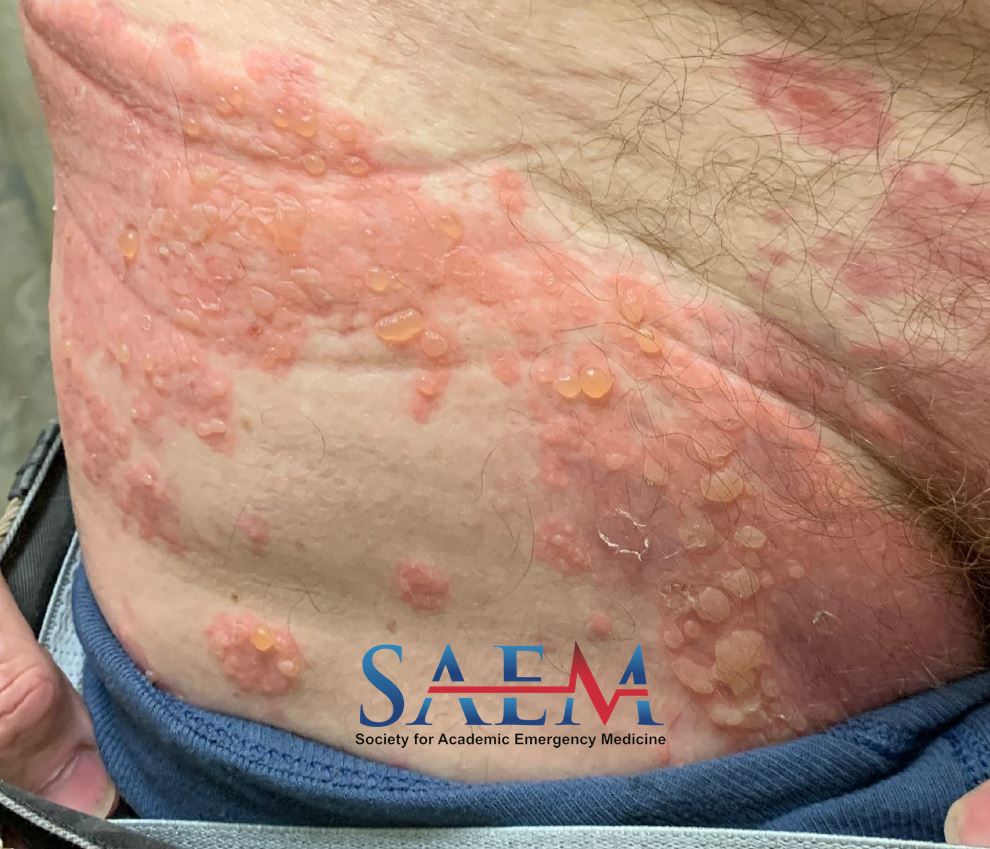
A 67-year-old nontoxic appearing male patient with a history of coronary artery disease, hyperlipidemia, transient ischemic attack, gout, renal colic, and squamous cell carcinoma presents with concern for multiple new painful lesions on his body. The rash first appeared five months ago but disappeared for some time before reappearing. It has worsened over the past few weeks. He has pain, erythema, pruritus, and urticarial, blistering, crusted lesions. He has had clear drainage from ruptured blisters. His only recent change in medication is an increase in his allopurinol (initiated four months ago; increased three weeks ago). He has tried Benadryl and steroids with minimal relief and is quite frustrated as this is his fourth emergency department visit for this complaint.

Skin: Multiple areas of 1-3 cm bullae (both tense and flaccid as well as open/ulcerated) on the trunk, groin, axilla, inguinal folds, palms, and dorsum of feet, not on soles; papules coalesce into annular plaques; no mucosal involvement

None. Complete blood count (CBC) from seven days prior showed normal counts and 9.4% eosinophils.

This patient has bullous pemphigoid. Also included on the differential is bullous lupus erythematosus, urticaria, DRESS (Drug Reaction with Eosinophilia and Systemic Symptoms), epidermolysis bullosa, and erythema multiforme.

Diagnosis may be made through clinical recognition of the typical features. The workup for a definitive diagnosis begins with histopathologic direct immunofluorescence from a skin biopsy of the edge of a blister and the surrounding normal-appearing skin, which is then confirmed with indirect immunofluorescence of the patient’s serum.

Take-Home Points

  • Bullous pemphigoid is a chronic, inflammatory, subepidermal, blistering disease. It is the result of an attack on the basement membrane of the epidermis by IgG +/-IgE immunoglobulins and activated T lymphocytes.
  • It primarily affects elderly individuals in their 50s-70s, with an average age at onset of 65 years, and is often associated with stroke or dementia.
  • The most common treatments for bullous pemphigoid are anti-inflammatories (topical and oral steroids), immunosuppressants, and doxycycline. Treatment regimens are aimed to minimize the systemic side effects of the treatment itself, while also decreasing inflammation, blister formation, and autoantibody production.
  • Oakley, A. Bullous pemphigoid. Jan 2016. [Online] Available at:
    https://dermnetnz.org/topics/blistering-skin-conditions/
  • Chan, L. Bullous Pemphigoid. Oct 2020. [Online] Available at: https://emedicine.medscape.com/article/1062391-overview


By |2021-12-02T13:13:48-08:00Dec 6, 2021|Dermatology, SAEM Clinical Images|

SAEM Clinical Image Series: Chronic Back Pain

A 52-year-old male with a past medical history of prostate cancer status post radiation therapy 10 years prior presents to the emergency department (ED) with the chief complaint of low back pain worsening over the past year. He characterizes the pain as a “dull, aching stiffness” associated with decreased motility.

Vitals: BP 128/82; HR 72; RR 18; T 37°C

General: Alert and oriented

MSK: Decreased range of motion of the lumbar spine with flexion; Heberden’s and Bouchard’s nodes on multiple fingers

Neurologic: Within normal limits with no focal motor or sensory deficits appreciated; deep tendon reflexes 2+ throughout

Comprehensive metabolic panel (CMP), complete blood count (CBC), erythrocyte sedimentation rate (ESR), calcium, phosphorous, and urinalysis all within normal limits.

Prostate-specific antigen (PSA): undetectable

HLA-B27: negative

Diffuse Idiopathic Skeletal Hyperostosis (DISH).

The classic clinical presentation is an older male with increasing back pain and stiffness that is worse in the morning, as seen in 80% of affected individuals. Common labs are unremarkable in patients with DISH. Peripheral joint involvement is possible, especially in joints that are not normally affected by primary osteoarthritides, such as the foot and ankle. Heel spurs, Achilles tendinitis, and plantar fasciitis may be seen as well. Differentiating features of DISH compared to ankylosing spondylitis include older age of presentation, preservation of facet joints and disk spaces, and no association with HLA-B27.

This patient has an increased risk of spinal fractures. Thus, if an older patient with known DISH presents with acute back pain following minor trauma, the workup will require a comprehensive neurovascular exam and imaging of the entire spine due to the patient’s disposition to spinal fractures.

Take-Home Points

  • Diffuse idiopathic skeletal hyperostosis (DISH) is an occult noninflammatory disorder of unknown etiology characterized by calcification and ossification of spinal ligaments and entheses on imaging.
  • Diagnostic criteria include linear calcification and ossification along the anterolateral aspect of multiple consecutive vertebral bodies, most often seen in the thoracic spine and less commonly seen in the cervical and lumbar spines.
  • Therapy for patients with DISH is similar to that of chronic lower back pain: physical therapy, exercise, and symptomatic pain management with acetaminophen or NSAIDs.
  • Patients should be educated to monitor acute changes in localized spine pain or neurologic disturbances, as DISH predisposes patients to fractures, even from minor injuries.

  • Cammisa M, De Serio A, Guglielmi G. Diffuse idiopathic skeletal hyperostosis. Eur J Radiol. 1998 May;27 Suppl 1:S7-11. doi: 10.1016/s0720-048x(98)00036-9. PMID: 9652495.


By |2021-11-08T10:47:24-08:00Nov 22, 2021|Orthopedic, Radiology, SAEM Clinical Images|
Go to Top