SAEM Clinical Images Series: Incidental Finding on Bedside Echo

echo

A 48-year-old female with a past medical history of opioid use disorder on suboxone presents with abdominal pain for one day. The patient developed sharp diffuse upper abdominal pain the evening prior to arrival that resolved. The pain recurred again today and was associated with bilious emesis. The patient notes persistent upper abdominal pain with paroxysmal exacerbation. She has a history of a hysterectomy, but no other abdominal surgeries. No history of gallstone pathology.

Vitals: HR 38; BP 120/63; RR 14; SpO2 100%

HEENT: No jugular venous distention, no scleral icterus.

CV: Normal S1, S2, regular rhythm.

Respiratory: Clear breath sounds bilaterally.

Abdominal: Mild tenderness to palpation in the epigastrium, without rebound or guarding.

Extremities: Warm and well perfused, no edema.

White blood cell (WBC) count: 11

Alk phos: 123

Total Bilirubin: 0.5

Lipase: 24

Troponin: 0

Lactate: 1

An echo was performed for bradycardia and a brief episode of hypoxia in the emergency department. A large, tethered mass is seen likely originating from the left atrium. This finding is most consistent with an atrial myxoma, though it can also represent a clot. The patient was ultimately diagnosed with gallstone ileus and an atrial myxoma.

Take-Home Points

  • Myxomas are the most common type of cardiac mass. They occur more commonly in females, arising between the fourth and sixth decade of life. They are most commonly located in the left atrium.
  • Patients can experience obstructive and thromboembolic symptoms. Distal embolic events can cause neurologic deficit, visceral ischemia, STEMI, and limb ischemia amongst other critical presentatations.
  • Bernatchez, J., Gaudreault, V., Vincent, G., & Rheaume, P. (2018). Left atrial myxoma presenting as an embolic shower: a case report and review of literature. Annals of vascular surgery, 53, 266-e13.
  • Nguyen T, Vaidya Y. Atrial Myxoma. 2022 Jul 4. In: StatPearls [Internet]. Treasure Island (FL): StatPearls Publishing; 2022 Jan–. PMID: 32310500.

SAEM Clinical Images Series: A Rare Cause of Post-traumatic Neck Pain

neck pain

A 15-year-old male presents to the pediatric Emergency Department (ED) for evaluation of neck pain for three weeks. The patient is vague as to the development of his symptoms, but his mother reveals patient was assaulted by peers three weeks ago and has had progressively worsening neck pain and stiffness. The patient states symptoms have gotten to the point where he is unable to turn his head but denies fevers, chills, nausea, vomiting, focal weakness, or sensory changes.

Vitals: Temp: 99.4°F; HR 80; RR 18; SpO2 98% on room air

Constitutional: No distress, sitting rigidly in bed.

Neck: Cervical midline tenderness noted with rigid neck and severe tenderness with manipulation, no swelling, erythema, or masses noted.

HEENT: No pharyngeal injection, no visible masses in the oropharynx, no trismus.

CV: Regular rate and rhythm, no murmurs, rubs, or gallops. Good peripheral perfusion.

Abdomen: Soft, non-distended and non-tender.

Neuro: 5/5 motor function to the bilateral upper and lower extremities, normal sensory examination, cranial nerves intact. Negative Kernig’s sign.

White blood cell (WBC) count: 9.5

Platelets: 639

Glucose: 105

CRP: 128

ESR: 100

CSF: Color- Clear; Nucleated Cells- 1; Protein- 25; Glucose- 6

This patient was found to have septic arthritis of the atlantooccipital (AO) joint, noted on the CT shown above, with joint space narrowing and erosion (red arrow) of the right AO joint with associated soft tissue swelling and effusion. Seen on the MRI is further confirmation of the findings suggested on CT of septic arthritis, with additional noting of attenuation of the prevertebral space of C2/C3 suggestive of phlegmon, bilateral AO joint arthritis, and involvement of the atlantoaxial joint, all of which can be seen on the above sagittal cut of the MRI, with the most notable being the pre-vertebral phlegmon (red arrow).

Septic arthritis of the facet joints is a rarity, particularly in pediatrics and in the cervical spine; case reports largely describe a lumbar location in elderly adults with predisposing comorbidities (intravenous drug use, diabetes, immunosuppression) for spontaneous infection. There are no published case reports of traumatic, pediatric AO joint septic arthritis. This patient developed septic arthritis following trauma. As with peripheral septic arthritis, the most common cause is hematogenous spread, and even non-penetrating trauma can predispose a joint to infection as likely occurred in this case. Septic arthritis of the facet joints presents similarly to spondylodiscitis, generally with fever, neck or back pain, and elevated inflammatory markers such as CRP/ESR. If left untreated, it can be a dangerous and refractory cause of sepsis that leads to deadly complications such as concomitant epidural access formation. Oftentimes patients are initially misdiagnosed and re-present multiple times as the preferred image modality for diagnosis is MRI which is not always readily available or ordered. In general, treatment generally includes weeks-long courses of intravenous (IV) antibiotics, though this patient was discharged on oral antibiotics after significant symptomatic improvement on IV therapy after four days.

Take-Home Points

  • Septic arthritis of the cervical facet joints, namely the AO joint, is a rare cause of neck pain in patients with fever and elevated inflammatory markers, and can present after trauma. Generally, it is hematogenously spread and associated with comorbidities such as diabetes, intravenous drug use, and immunosuppression, it should be considered in patients with refractory symptoms or in which there is strong suspicion as it can have dangerous complications.
  • The preferred imaging modality for diagnosis is MRI, though CT can be useful in making the diagnosis radiographically. Treatment generally consists of weeks of IV antibiotics.

  • Sethi S, Vithayathil MK. Cervical facet joint septic arthritis: a real pain in the neck. BMJ Case Rep. 2017 Aug 3;2017:bcr2016218510. doi: 10.1136/bcr-2016-218510. PMID: 28775081; PMCID: PMC5612571.
  • Narváez J, Nolla JM, Narváez JA, Martinez-Carnicero L, De Lama E, Gómez-Vaquero C, Murillo O, Valverde J, Ariza J. Spontaneous pyogenic facet joint infection. Semin Arthritis Rheum. 2006 Apr;35(5):272-83. doi: 10.1016/j.semarthrit.2005.09.003. PMID: 16616150.

SAEM Clinical Images Series: Hey Doc, Can You Come Look at This Urine?

urine

A 4-year-old male with no significant past medical history presents as a transfer from an outside hospital for suspected inhalation burn secondary to a house fire. The patient was home with his father and sibling when the apartment caught fire from a suspected flame in the kitchen. The patient was evacuated from the building by fire rescue after an unknown period of time. He was intubated at the outside hospital due to concern for inhalation injury. It is unknown if the patient sustained any trauma prior to extraction.

Vitals: T 98.1°F; BP 120/64; P 126; RR 29; O2 Sat 100% on vent

General: Intubated and sedated.

HENT: Singed hair and soot noted to nares, soot in mouth and secretions.

Cardiovascular: Regular rate and rhythm.

Lungs: CTABL, no wheezing or stridor.

GU: Normal appearing genitalia, no blood at meatus or from rectum, dark red urine noted in foley bag.

Skin: 0% TBSA burns, no obvious signs of trauma.

CBC: WNL

ABG at outside hospital: pH 7.0, carboxyhemoglobin 10, methemoglobin 3, lactate 3.7

Repeat ABG after transfer: pH 7.22, carboxyhemoglobin 1.7, methemoglobin 3.7, lactate 2.1

Hydroxocobalamin should be given in any case of suspected cyanide toxicity. House fires are the most common cause of cyanide toxicity in industrialized nations. Cyanide toxicity can also occur due to occupational exposures, medications, foods, or intentional ingestion. Cyanide inhibits the electron transport chain thus blocking aerobic metabolism, leading to hypoxia. Patients can present with altered mental status, hemodynamic instability, and dysrhythmias. Labs will be significant for lactic acidosis. Hydroxocobalamin should be given as soon as cyanide toxicity is suspected. Hydroxocobalamin works by chelating cyanide and forming cyanocobalamin which is renally excreted. Hydroxocobalamin is relatively safe and non-toxic but can cause transient hypertension. It also can cause a reddish discoloration of the urine, skin, and mucous membranes that can last up to several days. This is not harmful to the patient but can cause interference in urinalysis results.

Take-Home Points

  • Hydroxocobalamin is the antidote for cyanide toxicity and should be given as soon as possible in suspected cases.
  • Hydroxocobalamin binds cyanide to form cyanocobalamin, which is excreted in the urine.
  • Hydroxocobalamin is relatively safe but can cause transient hypertension and a red urine discoloration that can interfere with urinalysis results.

  • Cescon DW, Juurlink DN. Discoloration of skin and urine after treatment with hydroxocobalamin for cyanide poisoning. CMAJ. 2009 Jan 20;180(2):251. doi: 10.1503/cmaj.080727. PMID: 19153403; PMCID: PMC2621289.
  • Wong SL, Pudek M, Li D. Wine-Colored Plasma and Urine from Hydroxocobalamin Treatment. J Gen Intern Med. 2017 Feb;32(2):225-226. doi: 10.1007/s11606-016-3782-3. Epub 2016 Jun 23. PMID: 27338592; PMCID: PMC5264665.
  • Desai, S. & Su, Mark K. (2021). Cyanide Poisoning. In: UpToDate, Post TW (Ed), UpToDate,Waltham, MA. (Accessed on January 04, 2022.)
  • Lexicomp. (n.d.). Hydroxocobalamin (vitamin B12a supplement and cyanide antidote): Druginformation. UpToDate. Retrieved January 8, 2022,from https://www.uptodate.com/contents/hydroxocobalamin-vitamin-b12a-supplement-and-cyanide-antidote-drug-information

By |2023-02-11T20:46:19-08:00Feb 13, 2023|SAEM Clinical Images, Tox & Medications|

SAEM Clinical Images Series: An Adult with a Lower Extremity Rash

vasculitis

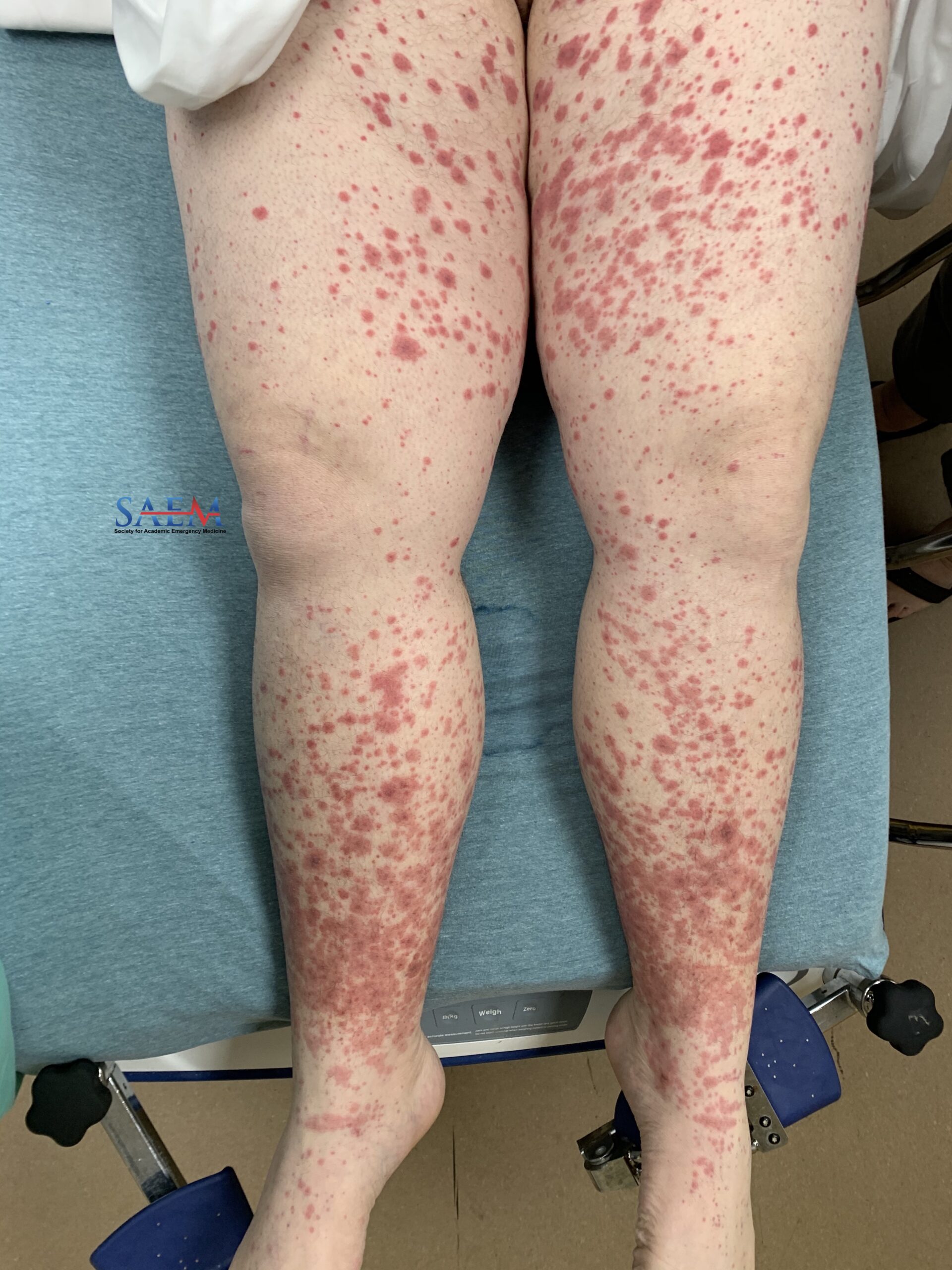
A 37-year-old male with a past medical history of type 2 diabetes presents to the Emergency Department (ED) with a rash. Initial symptoms began one week prior with small spots on the right leg with associated itching and burning. He initially presented to an outside facility where he was diagnosed with an allergic reaction versus scabies and was given a short course of oral steroids and topical permethrin that provided some relief. The rash progressed to bilateral lower extremities prompting re-presentation to the ED. He also reports associated dark urine and nausea.

GI: Abdomen soft, non-tender, non-distended.

MSK: No joint swelling, tenderness, erythema or warmth.

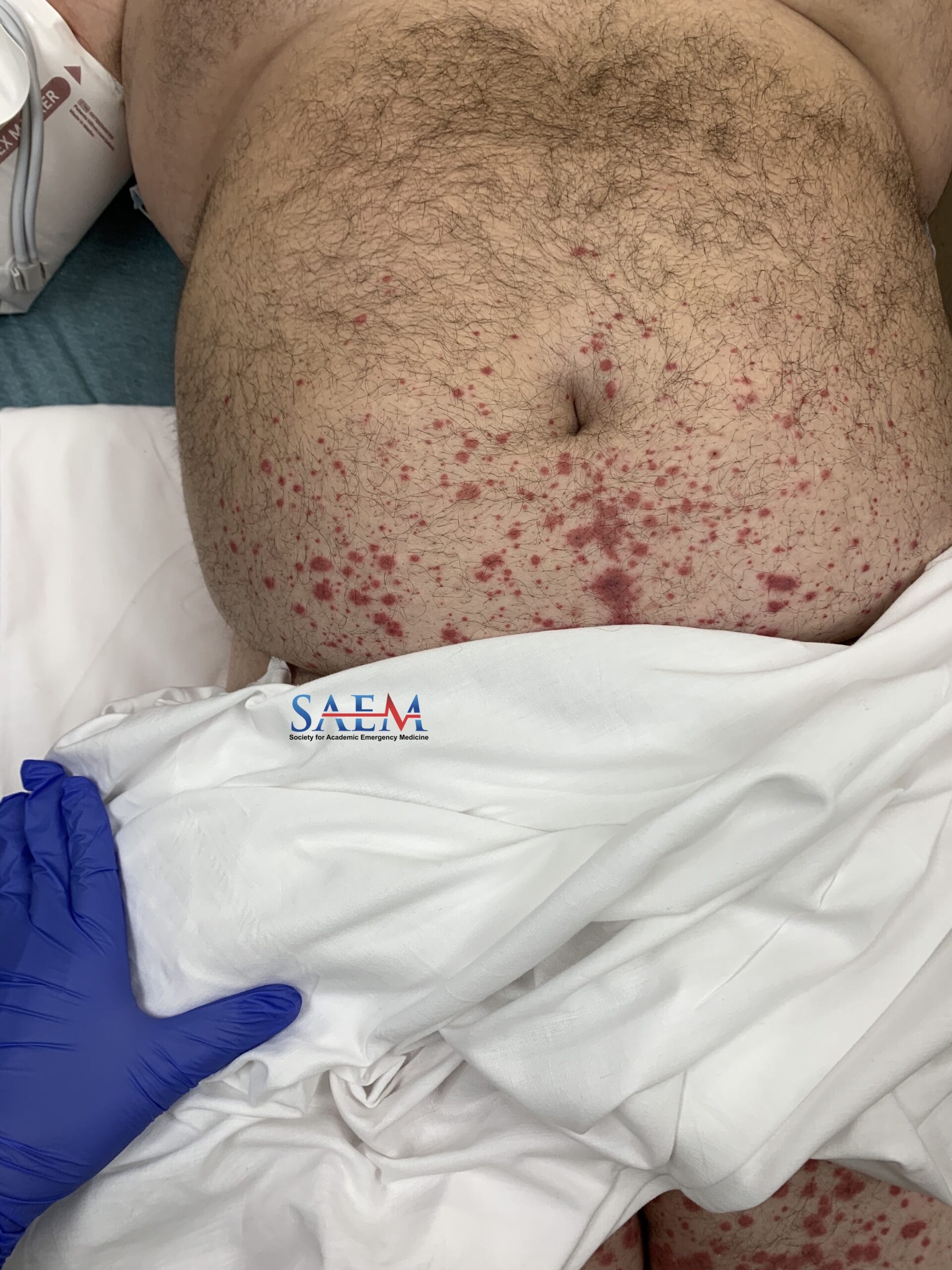
Skin: Numerous scattered bright red palpable purpuric papules and plaques, most concentrated on bilateral lower extremities extending to lower abdomen at the level of the umbilicus.

White blood cell (WBC) count: 14.5 k

Creatinine: 1.1 mg/dL on day of presentation, peaked at 2.2 mg/dL approximately 10 days later.

C-reactive protein (CRP): 32.7 mg/L

Erythrocyte sedimentation rate (ESR): 34 mm/hr

Urinalysis: 3+ protein, 2+ blood, 11-20 RBC, 26-50 WBC, rare bacteria

This is a case of IgA vasculitis, formerly called Henoch-Schonlein purpura or HSP. This diagnosis is suspected when a patient has purpuric skin lesions predominantly on the lower limbs as well as at least one of the following: abdominal pain, joint involvement, renal involvement (proteinuria/hematuria), and biopsy demonstrating IgA deposition. This vasculitis is more commonly seen in children and has a male predominance.

Similar to children with IgA vasculitis, adults presenting with this palpable purpuric rash can have associated joint involvement and GI involvement, though intussusception is less common in the adult population. Renal manifestations are more common in adults with this diagnosis and range from proteinuria and hematuria to renal failure. Our patient initially presented with hematuria/proteinuria and less than two weeks later had a doubled his creatinine. A renal biopsy later confirmed IgA nephropathy.

Take-Home Points

  • Consider IgA vasculitis in patients with lower extremity purpuric skin lesions with associated abdominal pain/GI bleed, arthralgia, renal involvement, and/or biopsy confirming IgA deposition.
  • In adults with IgA vasculitis, renal involvement is more common and often more severe.

  • Ozen S, Pistorio A, Iusan SM, Bakkaloglu A, Herlin T, Brik R, Buoncompagni A, Lazar C, Bilge I, Uziel Y, Rigante D, Cantarini L, Hilario MO, Silva CA, Alegria M, Norambuena X, Belot A, Berkun Y, Estrella AI, Olivieri AN, Alpigiani MG, Rumba I, Sztajnbok F, Tambic-Bukovac L, Breda L, Al-Mayouf S, Mihaylova D, Chasnyk V, Sengler C, Klein-Gitelman M, Djeddi D, Nuno L, Pruunsild C, Brunner J, Kondi A, Pagava K, Pederzoli S, Martini A, Ruperto N; Paediatric Rheumatology International Trials Organisation (PRINTO). EULAR/PRINTO/PRES criteria for Henoch-Schönlein purpura, childhood polyarteritis nodosa, childhood Wegener granulomatosis and childhood Takayasu arteritis: Ankara 2008. Part II: Final classification criteria. Ann Rheum Dis. 2010 May;69(5):798-806. doi: 10.1136/ard.2009.116657. PMID: 20413568.
  • Yaseen K, Herlitz LC, Villa-Forte A. IgA Vasculitis in Adults: a Rare yet Challenging Disease. Curr Rheumatol Rep. 2021 Jul 1;23(7):50. doi: 10.1007/s11926-021-01013-x. PMID: 34196893.

By |2023-01-20T15:48:31-08:00Jan 30, 2023|Dermatology, Renal, SAEM Clinical Images|

SAEM Clinical Images Series: Spicy Gum Leads to Spicy Gums

gums

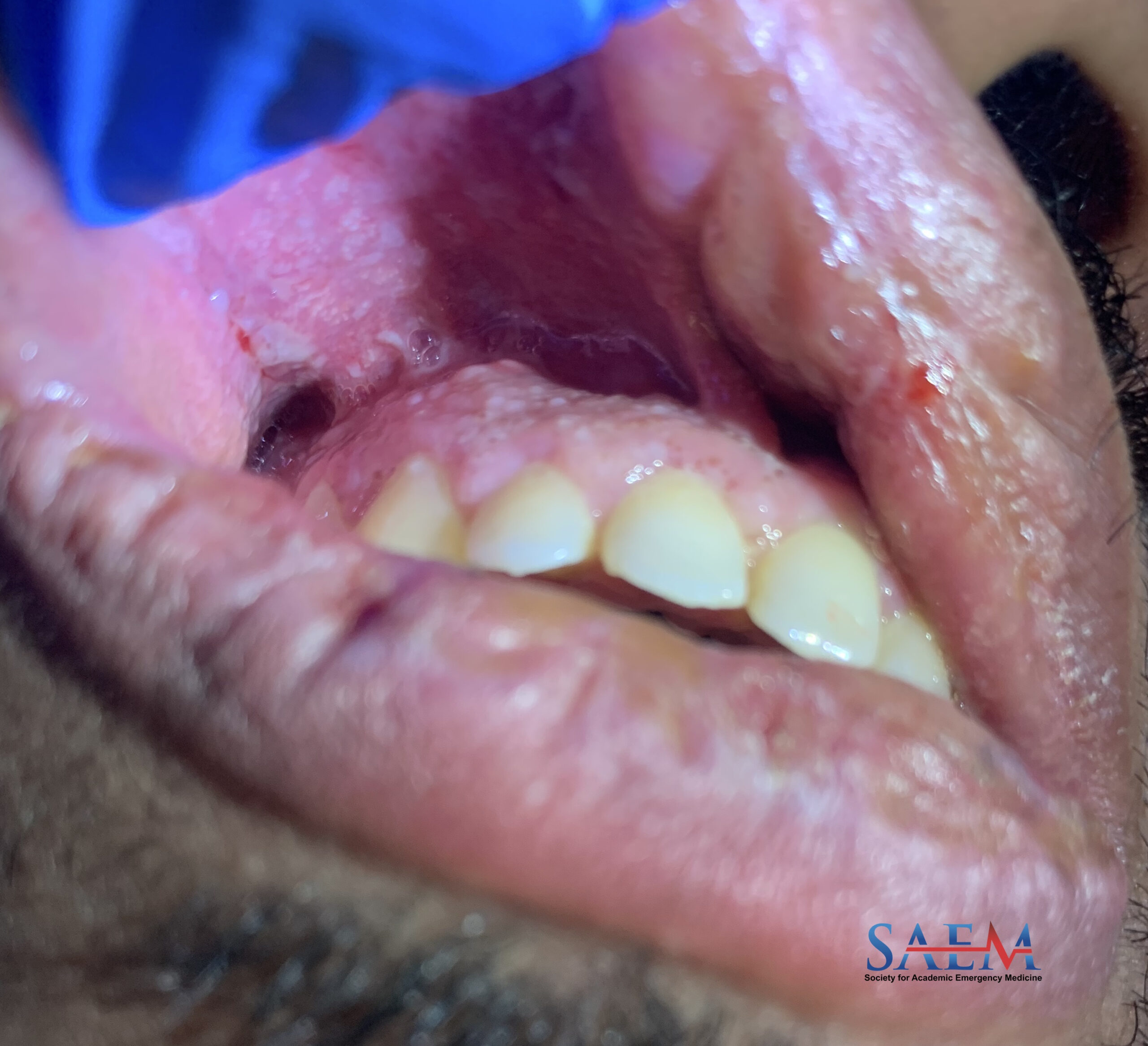
A 32-year-old male with a past medical history of asthma presents with a two-day history of cracked lips and progressively worsening oral pain, associated with white discharge, foul smell, and a metallic taste. The patient presented to urgent care and was sent to the Emergency Department (ED) for a sepsis workup. The worsening sores caused him to eat and drink less, including the gum he normally chews. He endorses oral sex with one female partner one week ago. No recent dental work. He recently completed a prednisone course for the same issue. Denies fevers, tooth pain, tongue pain, dysphagia, odynophagia, chest pain, difficulty breathing, abdominal pain, genitourinary discharge or lesions, sick contacts, trismus, facial swelling, or voice changes.

Vitals: T 102°F; HR 125; BP 114/81; RR 19; SPO2 94%

General: No distress. Alert and oriented.

Skin: Warm and dry, no rash.

Ears: Hearing grossly intact.

Nose: Bilateral nares patent, no bleeding.

Neck: Soft, symmetric, no adenopathy, non-tender.

Extraoral: Ulcerations on upper and lower lips.

Intraoral: 1 small ulcer on tip of the tongue on the right. Inflamed, erythematous and bleeding gingiva and interdental papilla. Uvula midline. Maximal interincisal opening ~ 40 mm. Teeth intact.

Heart: Regular rate and rhythm, no murmur.

Lungs: Clear to auscultation, air entry to bases.

Abdomen: Soft, non-tender, no guarding.

GU: Patient denied symptoms and declined exam.

White blood cell (WBC) count: 11.4

pH: 7.386

Lactic Acid: 1.7

Urinalysis (UA): Negative Blood. Culture sent.

STI workup including HSV titers and HIV testing obtained and pending.

The differential is broad, including ANUG (acute necrotizing ulcerative gingivitis) also known as “trench-mouth” and, more commonly, primary herpes gingivostomatitis and candidal infection. Consideration of periodontitis and dental abscess/pulpitis is necessary. The spectrum of erythema multiforme, Stevens-Johnson syndrome, and toxic epidermal necrolysis is important to include, as well as autoimmune disorders which commonly have mucosal involvement such as systemic lupus erythematosus (SLE), Behcet’s, and Crohn’s disease. Scurvy, although uncommon, can also present with gingival erythema and pain.

Consider the presence of a known autoimmune disorder, chronic systemic disease, or an immunocompromised state. History should include new sexual partners, dietary changes, and changes in dental hygiene. We were concerned given this patient’s vital signs on presentation, and alongside a sepsis workup, called dental to the bedside. They immediately asked the patient about the recent use of chewing gum and its flavor, and the patient described a recent preference for cinnamon gum, which he had been using for about 1-2 weeks. The dental consultant came to the diagnosis immediately. A literature search reveals a phenomenon called “cinnamon-contact stomatitis” which is believed to be caused by a delayed T-cell-mediated hypersensitivity reaction. It is characterized by white patches on the mucosa with erythema and erosions on the buccal mucosa and lateral tongue. Treatment consists of discontinuation of the offending agent, and corticosteroids in patients with severe symptoms. Lesions can take up to two weeks to heal, and appropriate follow-up with dental is needed to monitor for resolution.

Take-Home Points

  • The differential for ulcerated, painful gums is broad, and one must consider any history of systemic disease or an immunocompromised state.
  • Consider cinnamon-contact stomatitis in patients that present with extensive oral ulcerations in the absence of other risk factors.

  • Georgakopoulou EA. Cinnamon contact stomatitis. J Dermatol Case Rep. 2010 Nov 19;4(2):28-9. doi: 10.3315/jdcr.2010.1047. PMID: 21886744; PMCID: PMC3157809.
  • Vivas AP, Migliari DA. Cinnamon-induced Oral Mucosal Contact Reaction. Open Dent J. 2015 Jul 31;9:257-9. doi: 10.2174/1874210601509010257. PMID: 26312097; PMCID: PMC4541332.

SAEM Clinical Images Series: An Ominous Umbilical Lesion

umbilical

A 54-year-old male with a past medical history of atrial flutter and alcohol use disorder presents with an umbilical wound that has been bothering him for approximately six months. There is no history of trauma, prior infection, or umbilical surgery. There is intermittent mild pain and irritation that occurs randomly. No drainage or bleeding. He admits to picking at the wound regularly. He denies fever, chills, nausea, generalized abdominal pain, diarrhea, constipation, dysuria, and hematuria. The patient drinks four or more alcoholic beverages daily and has a long-standing history of tobacco use.


Vitals: BP 105/73; HR 70; RR 16; SpO2 97% on room air; Temp 36.1°C

Constitutional: Appears stated age, resting comfortably, well-appearing.

Abdominal: Soft, flat, non-tender.

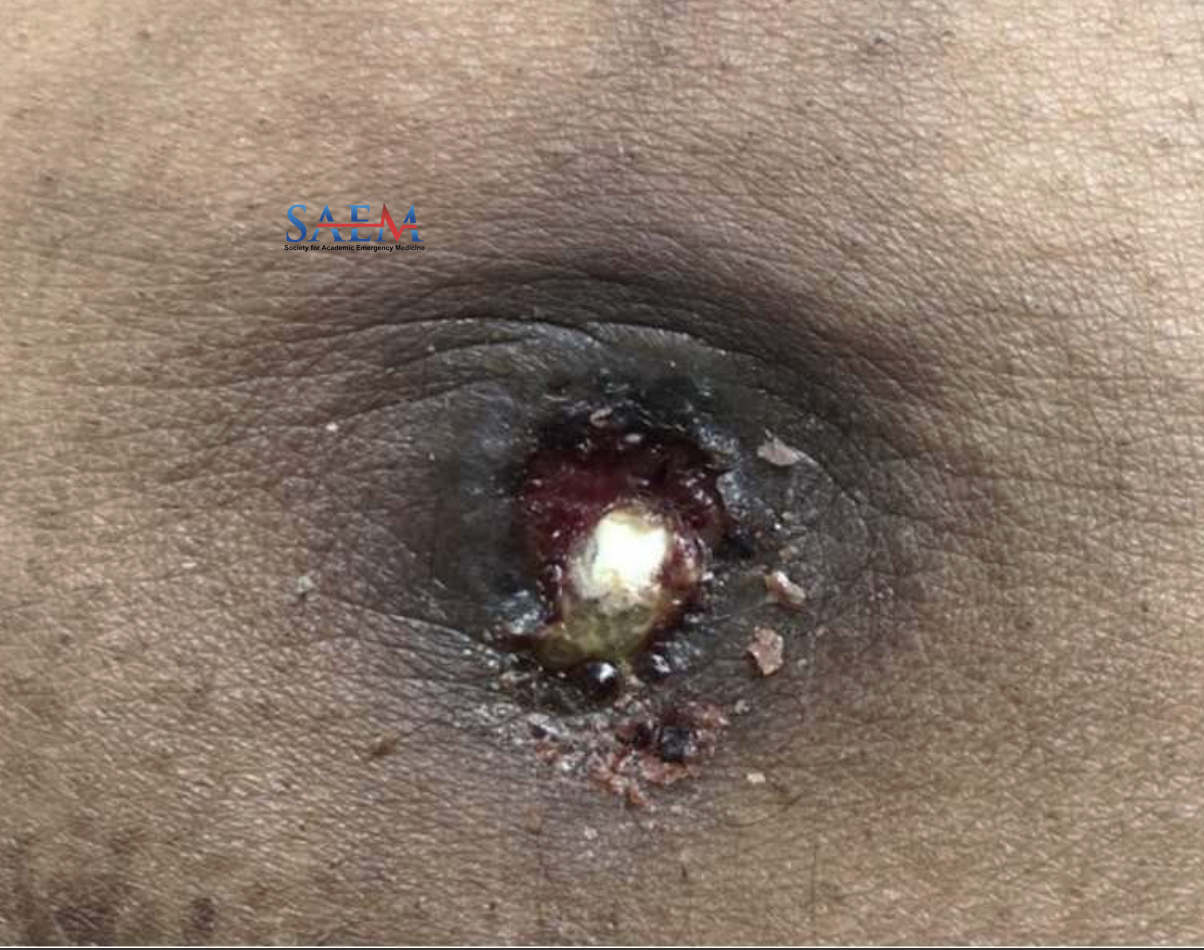
Skin: Umbilical wound characterized by a peripheral eschar and a central area of hyperpigmented and crusted tissue overlying an area of whiteish moist tissue that was uncovered by gentle cleansing. No surrounding erythema and no areas of fluctuance. No active drainage or malodor.

None available.

Sister Mary Joseph (SMJ) nodule is a rare cutaneous metastasis of gastrointestinal or genitourinary primary malignancies to the umbilicus [1,3]. They are typically firm, painful, indurated, and irregularly shaped, with sizes typically less than 2 cm [1]. They can be ulcerated or necrotic with variable presence of discharge ranging from purulent to serous or serosanguinous [1]. Sister Mary Joseph nodules typically arise late in disease and portend a poor prognosis [1]. Most primary malignancies are adenocarcinomas (75%), and pancreatic cancers represent approximately 9% of umbilical metastases [1]. Mean survival of patients with SMJ nodules is less than 12 months, and less than three in those with pancreatic primaries [1]. Prognosis is slightly less bleak if the SMJ nodule is the only metastatic site [1]. Sister May Joseph Dempsey was a nun and surgical assistant to Dr. William Mayo, the surgeon who developed the approach to umbilical hernia repair and the first to identify the connection between abdominopelvic cancers and umbilical nodules [2,3].

Abdominal CT imaging.

Our patient was discharged on the initial visit with wound care instructions. He returned to the Emergency Department two months later and was admitted for atrial flutter with rapid ventricular response and acute on chronic congestive heart failure. During that visit, the patient had a CT chest/abdomen/pelvis that demonstrated likely a pancreatic tail adenocarcinoma with metastasis to the peritoneal and abdominal walls. The patient declined any further intervention.

Take-Home Points

  • Sister Mary Joseph nodules are umbilical metastases from abdominopelvic primary malignancies.
  • Recognition of their features on clinical exam can lead to a more rapid diagnosis.
  • Prognosis is grim with an average survival of less than one year.

  1. Vekariya P, Daneti DB, Senthamizh Selvan K, Verma SK, Hamide A, Mohan P. Sister Mary Joseph Nodule as an Initial Presentation of Pancreatic Adenocarcinoma. ACG Case Rep J. 2020 Aug 25;7(8):e00453. doi: 10.14309/crj.0000000000000453. PMID: 32903972; PMCID: PMC7447472.
  2. Palazzi DL, Brandt ML. Care of the umbilicus and management of umbilical disorders. UpToDate. Updated August 27, 2021. Accessed January 2, 2022. https://www.uptodate.com/contents/care-of-the-umbilicus-and-management-of-umbilical-disorders?search=sister%20mary%20joseph%20nodule&source=search_result&selectedTitle=2~6&usage_type=default&display_rank=2#H25.
  3. Tso S, Brockley J, Recica H, Ilchyshyn A. Sister Mary Joseph’s nodule: an unusual but important physical finding characteristic of widespread internal malignancy. Br J Gen Pract. 2013 Oct;63(615):551-2. doi: 10.3399/bjgp13X673900. PMID: 24152477; PMCID: PMC3782795.

SAEM Clinical Images Series: Dermatology Deserving a Deeper Dive

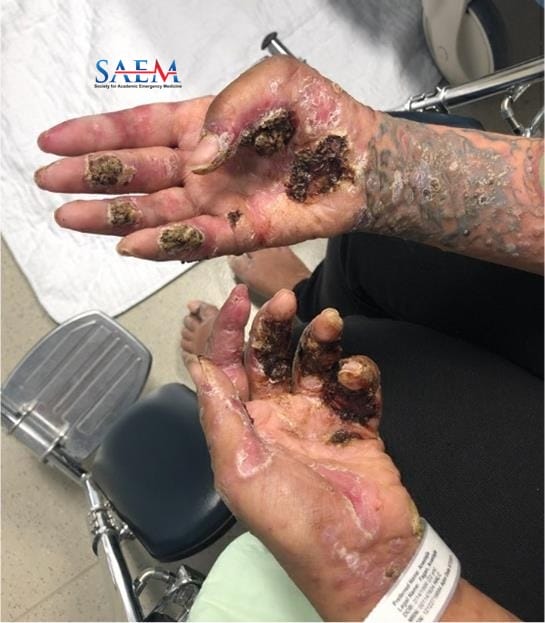
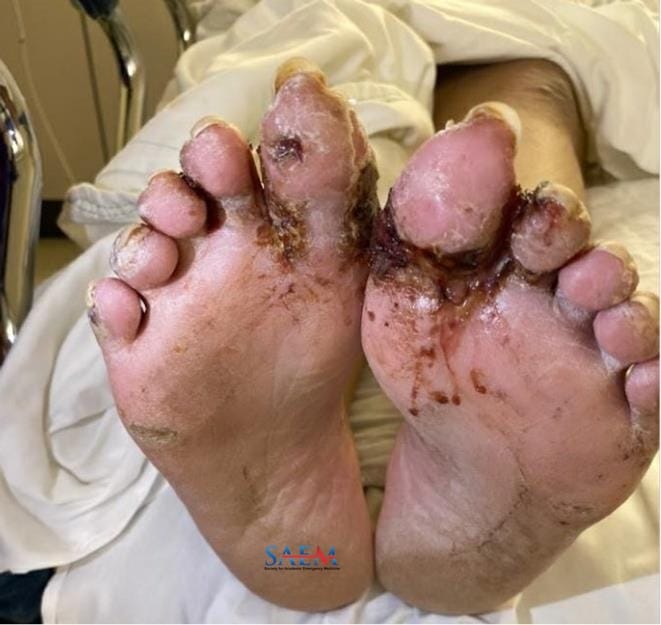
A 22-year-old female without significant past medical history presented to the Emergency Department (ED) for a progressive rash for the past six months. She had initially complained of dry and peeling skin on bilateral hands and feet and had multiple ED and dermatology encounters where topical steroids, acyclovir, and methotrexate were prescribed with no improvement. The rash continued to progress with worsening pain and inability to flex fingers secondary to lesions and scabbing at the joints. The patient also developed painful sores in her mouth primarily involving the tongue. More concerningly, she had lost 60 pounds since the onset of the rash and mouth lesions which she attributed to the inability to eat due to significant pain. Otherwise, she denied systemic symptoms, exposures, new medications, or previous illnesses.

Vitals: Within normal limits

HEENT: Swelling, erythema, and mild desquamation of the tongue mucosa with adherent white discharge present. Lesions are limited to the surface of the tongue with no buccal involvement.

Cardiovascular/Respiratory: Heart sounds within normal limits. Bilateral breath sounds without wheezes, rales, or rhonchi.

Abdomen: Soft, non-tender and non-distended.

Skin: The patient was noted to have desquamated, scabbing and oozing lesions on bilateral palms and fingers, soles of the feet, and web spaces between toes. The patient had no observable vesicles/bullae, or target lesions. Negative Nikolsky sign.

Complete Blood Count (CBC): Mild anemia, stable from baseline.

Basic Metabolic Panel (BMP): Within normal limits.

CT Abdomen/Pelvis with contrast (relevant findings only): Large solid right retroperitoneal mass lobulated in contour with heavy coarse calcifications measuring 21.2 x 8.5 x 10.4 cm, traversing the right hemidiaphragm and extending to the right lower mediastinum. The diaphragm itself is asymmetrically thickened as compared with the contralateral left side with a small volume of adjacent retroperitoneal fluid and there is extension into the right neural foramina.

The diagnosis of paraneoplastic pemphigus (PNP) was made after skin biopsy along with the constellation of findings including desquamating cutaneous lesions, painful mucosal erosions, and large retroperitoneal mass concerning for malignancy. Skin biopsy findings in this case include a distinct suprabasilar cleft, apoptotic keratinocytes, eosinophilic spongiosis, and superficial perivascular lymphocytic infiltrate with scattered eosinophils. Focally, there was full-thickness necrosis of the epidermis and dermis.

Patients with concern for PNP without known malignancy require a full neoplastic workup. In this case, a biopsy of the retroperitoneal mass and subsequently full resection was notable for Castleman’s disease, a rare lymphoproliferative disorder. PNP is an often fatal paraneoplastic mucocutaneous blistering disease that is most commonly caused by various lymphoproliferative disorders including non-Hodgkin’s lymphoma, chronic lymphocytic leukemia (CLL), and Castleman’s disease. It is an extremely rare condition with an unknown incidence rate. The mucosal erosions present are a requirement for the diagnosis. It typically presents as an erosive stomatitis involving the tongue and is characteristically chronic, progressive, and painful. These lesions are the initial disease manifestation in almost one-half of patients with PNP and often lead to malnutrition secondary to pain with attempts at oral intake. The cutaneous lesions in the disease are widely variable in morphology and can present with tense or flaccid bullae, as well as inflammatory papules or plaques.

Take-Home Points

  • In patients with a progressive rash involving the oral mucosa that have failed multiple outpatient regimens and have findings concerning for possible systemic involvement, dermatology consultation, tissue biopsy, and body imaging are often needed to confirm a diagnosis of complicated disease processes such as paraneoplastic pemphigus (PNP).
  • Significant unintentional weight loss may be due to a variety of reasons stemming from one unifying etiology. In this case, our patient had both mouth pain limiting oral intake as well as a lymphoproliferative disorder.
  • Anhalt GJ, Kim SC, Stanley JR, Korman NJ, Jabs DA, Kory M, Izumi H, Ratrie H 3rd, Mutasim D, Ariss-Abdo L, et al. Paraneoplastic pemphigus. An autoimmune mucocutaneous disease associated with neoplasia. N Engl J Med. 1990 Dec 20;323(25):1729-35. doi: 10.1056/NEJM199012203232503. PMID: 2247105.
  • Kaplan I, Hodak E, Ackerman L, Mimouni D, Anhalt GJ, Calderon S. Neoplasms associated with paraneoplastic pemphigus: a review with emphasis on non-hematologic malignancy and oral mucosal manifestations. Oral Oncol. 2004 Jul;40(6):553-62. doi: 10.1016/j.oraloncology.2003.09.020. PMID: 15063382.
By |2023-01-02T04:44:30-08:00Jan 2, 2023|Dermatology, Heme-Oncology, SAEM Clinical Images|
Go to Top