Must We Avoid Nitrofurantoin with Impaired Renal Function?

UrineBacteriaAcute uncomplicated cystitis is becoming more difficult to treat in the setting of increasing antimicrobial resistance. In the 2010 IDSA Guideline, as summarized in a PV Card on Cystitis and Pyelonephritis in Womennitrofurantoin is now listed as the first-line choice, surpassing ciprofloxacin and sulfamethoxazole/trimethoprim from the previous iteration.

(more…)

RUSH protocol: Rapid Ultrasound for Shock and Hypotension

Patients with hypotension or shock have high mortality rates, and traditional physical exam techniques can be misleading. Diagnosis and initial care must be accurate and prompt to optimize patient care. Ultrasound is ideal for the evaluation of critically ill patients in shock, and ACEP guidelines now delineate a new category of ultrasound (US)– “resuscitative.” Bedside US allows for direct visualization of pathology and differentiation of shock states.

The RUSH Protocol was first introduced in 2006 by Weingart SD et al, and later published in 2009. It was designed to be a rapid and easy to perform US protocol (<2 minutes) by most emergency physicians.

How do you perform the RUSH protocol?

(more…)

By |2019-09-10T13:38:55-07:00Jun 1, 2013|Cardiovascular, Ultrasound|

Out-of-Hospital Cardiac Arrest and Prehospital Intubation

Worldwide, death from cardiac arrest in the out-of-hospital setting remains the leading cause of mortality. Focuses have aimed at improving bystander CPR, public access to AEDs, minimizing chest compression interruptions, and decreasing the emphasis on advanced airway management. This latter concept has become so important that the AHA/ASA have now changed their “ABC” philosophy to “CAB.” Below is the review of the literature that has changed this philosophy.

(more…)

By |2019-09-10T13:38:46-07:00May 29, 2013|Cardiovascular|

On the Horizon: Propofol for Migraines

propofol

Propofol for the treatment of migraines in the ED might be on the horizon. This will possibly be a new practice in emergency medicine, although it has been known for some time. Propofol, when given at procedural sedation doses, seems to miraculously terminate migraines refractory to usual treatment. Patients awake with minimal to no headache and may be discharged from the ED much quicker than traditional treatment with possibly less side effects. The proposed mechanism of action is described in below papers, but in short,  propofol seems to “reboot” the brain and terminate the migraine.

(more…)

By |2016-11-11T18:37:24-08:00May 25, 2013|Neurology, Tox & Medications|

PV Card: Contraindications to Thrombolytics in Stroke

thrombolytics stroke

This Paucis Verbis (PV) card is an updated version of the PV card on Contraindications to Thrombolytics for CVA from September 10, 2010, based on the Stroke 2013 AHA/ASA new guidelines that were just published.1 Some changes include…

  1. There is new mention of new anticoagulants in the market with additional absolute exclusion criteria.
  2. A blood glucose < 50 mg/dL has been upgraded from a relative exclusion to an absolute exclusion criteria. There is no more mention of glucose > 400 mg/dL as an exclusion criteria.
  3. Seizure at onset of presentation has moved from an absolute to a relative risk.
  4. Post-AMI pericarditis is no longer a relative exclusion criteria.

PV Card: Contraindications for Thrombolytics in Stroke


Adapted from [1]
Go to ALiEM (PV) Cards for more resources.

Reference

  1. Jauch E, Saver J, Adams H, et al. Guidelines for the early management of patients with acute ischemic stroke: a guideline for healthcare professionals from the American Heart Association/American Stroke Association. Stroke. 2013;44(3):870-947. [PubMed]
By |2021-10-06T19:58:38-07:00May 23, 2013|ALiEM Cards, Neurology, Tox & Medications|

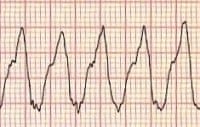
Calcium before Diltiazem may reduce hypotension in rapid atrial dysrhythmias


DiltiazemThe Case

A 56 y/o man presents to the ED via ambulance. He was sent from clinic for ‘new onset afib.’ His pulse ranges between 130 and 175 bpm, while his blood pressure is holding steady at 106/58 mm Hg. He has a past medical history significant for hypertension and hypercholesterolemia. His only medications are hydrochlorothiazide and atorvastatin. The decision is made to administer an IV medication to ‘rate control’ the patient with a goal heart rate < 100 bpm.

Calcium channel blockers, such as diltiazem and verapamil, can both cause hypotension. In the case above, the patient has borderline hypotension.

The Clinical Question

What is the evidence behind giving IV calcium as a pre-treatment to prevent hypotension from calcium channel blockers?

(more…)

Go to Top