


Brugada Syndrome: An ECG Pattern You Need to Know

Brugada Syndrome is an abnormal ECG (Right Bundle Branch Block Pattern with coved ST elevation over the right precordial leads of V1-V3), which leads to ventricular fibrillation (VF) and sudden cardiac death (SCD) in patients with structurally normal hearts. It has been recognized as a clinical entity since 1992. Why should all ED physicians know about this entity? Although a rare syndrome, it is often mistaken as a STEMI and more importantly the clinical spectrum can be asymptomatic to SCD.
(more…)
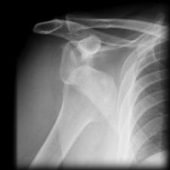 A patient comes into your department with an obvious shoulder dislocation. You know you can easily reduce the shoulder and have the patient discharged before the orthopedic consultant calls back. But what if there is a fracture? Do you need to get that plain film before popping it back into place?
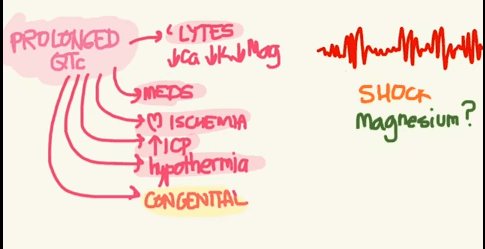 Torsades de pointes is a polymorphic form of ventricular tachycardia. Why does this occur? What does it characteristically look like? Why is this an important form of ventricular tachycardia to differentiate from the more classic monomorphic ventricular tachycardia? View this short 9 minute video on QT intervals and Torsades de Pointes.
 Wellen’s Syndrome was first described in 1982 in which 75% of patients with t wave inversions in V2-V4 went on to have an acute myocardial infarction (MI). This was again repeated in 1989, and showed that all patients with this morphology had >50% LAD stenosis. The incidence in the United States is about 10-15%.