Pediatric febrile seizure: When do I need to do a lumbar puncture?

LP_collect copyYou are in the ED when a 7 month old is brought in by EMS after a witnessed generalized seizure. The grandmother reports that the child has had URI symptoms for a couple of days and then developed a fever today. Shortly after giving ibuprofen, the child began to seize with arms and legs twitching. The episode lasted approximately 8 minutes and when EMS arrived, the child was sleepy, but arousable. The glucose was 92 mg/dL en route. On exam in the ED, child is awake and staring at you to make the next move…

Vitals: Temp 39C, P 136, RR 28, Sat 100%

(more…)

By |2016-11-11T19:02:46-08:00Aug 8, 2013|Neurology, Pediatrics|

Posterior Myocardial Infarction: How Accurate is the Flipped ECG Trick?

Mirror ImagePosterior myocardial infarction (MI) represents 3.3 – 21% of all acute MIs and can be difficult to diagnose by the standard precordial leads. Typically, leads V7 – V9 are needed to diagnose this entity. Luckily, leads V1 – V3, directly face the posterior wall of the left ventricle and are the “mirror image” of the posterior wall of the left ventricle.

(more…)

By |2019-09-10T13:36:42-07:00Aug 7, 2013|Cardiovascular, ECG|

Safe dosing of nebulized lidocaine

NebulizersmSerum lidocaine levels correlate well with observed clinical effects. As the concentration increases, lightheadedness, tremors, hallucinations, seizures, and cardiac arrest can occur. Levels > 5 mcg/mL are associated with serious toxicity. With so many concentrations (1%, 2%, 4%) and routes of administration available, the total dose of lidocaine is always a concern.

(more…)

Trick of the Trade: The PIPP for deep peripheral IVs in obese patients

SVT_Lead_II-2The Case

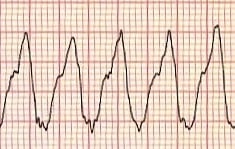
A 500-pound morbidly obese male presents to your ED complaining of mild shortness of breath and palpitations. A quick ECG shows SVT with a rate of 160 bpm. His BP is in the 130s systolic, and he is otherwise stable. You know you have a bit of time. Meanwhile, the nurses begin searching for veins to start an IV… 

(more…)

By |2016-11-11T19:02:44-08:00Aug 5, 2013|Tricks of the Trade, Ultrasound|

A time-based approach to elderly patients with altered mental status

clockIt’s 7 am on a Monday. Your first patient is an 82 year-old woman who was brought in by EMS from an assisted living facility. All EMS can tell you is that she was not acting herself. You enter her room and introduce yourself. “Hello Mrs. Jones. How are you today?” The woman startles, “Well, you see, I went to put my dog out, and then I was just walking, and couldn’t remember. So it’s all coming full circle, and then I ate a sandwich.” Just then EMS rolls in with another patient, a 75 year-old male coming from home, who was found by his wife in his recliner minimally responsive, with a GCS of 6.  He is followed by a 76 year-old female who had a fall from standing three days ago, and has been increasingly confused today, and is currently oriented only to person.

(more…)

PV Card: Intimate partner violence

cycle_of_violence

In the Emergency Department, we too often under-estimate our patients’ likelihood for intimate partner violence (IPV). Unfortunately, there is no perfect screening test to detect this. So one must maintain a high index of suspicion. Once you detect it, what questions should you ask to ensure her/his safety and how do you optimize the resources available to her/him?

Created by Trevor Wilson (UCSF medical student) and Dr. Beth Kaplan (UCSF/SFGH), the following PV pocket card reviews how to screen, document, intervene, and provide resources for the patient. Learn the “SAFE” questions.1,2

PV Card: Intimate Partner Violence

Go to ALiEM (PV) Cards for more resources.

References

  1. Ashur M. Asking about domestic violence: SAFE questions. JAMA. 1993;269(18):2367. [PubMed]
  2. Moyer V, U.S. P. Screening for intimate partner violence and abuse of elderly and vulnerable adults: U.S. preventive services task force recommendation statement. Ann Intern Med. 2013;158(6):478-486. [PubMed]
By |2021-10-06T19:50:43-07:00Jul 31, 2013|ALiEM Cards, Trauma|

Alarms from the ventilator: Troubleshooting high peak pressures

VentilatorAirway management is one of the defining skills of an emergency physician, but our role in the care of intubated patients may continue long after endotracheal tube placement is confirmed. In mechanically ventilated patients, acute elevations in airways pressures can be triggered by both benign and life-threatening causes. When the ventilator alarms, do you know how to tell the difference? What is your approach in troubleshooting the potential problems?

(more…)

Go to Top