Supraventricular Tachycardia (SVT): Are Troponins Necessary?
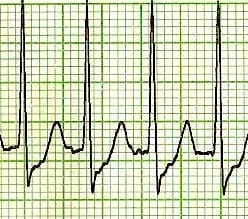
 More than one third of patients will have chest pain associated with SVT causing providers to order troponins and other cardiac enzymes. Elevated troponins are not pathognomonic for CAD/ACS and could represent other etiologies such as sepsis, subarachnoid hemorrhage, and pulmonary embolism. Also, subsequent coronary angiography is not necessary for risk stratification in all cases. SVT causes a rapid heart rate, which is well documented as a cause for modest troponin elevation secondary to cardiac stretch, poor diastolic perfusion, and/or coronary artery vasospasm.
 These two videos continue on the theme of envenomations. Watch these great videos on the consequences and management of bites by spiders and Hymenoptera species (bees, wasps, ants). Hymenoptera bites can cause all sorts of complications, but one of the most worrisome includes anaphylaxis, which is also reviewed in the video.
 You are in the ED when a 7 month old is brought in by EMS after a witnessed generalized seizure. The grandmother reports that the child has had URI symptoms for a couple of days and then developed a fever today. Shortly after giving ibuprofen, the child began to seize with arms and legs twitching. The episode lasted approximately 8 minutes and when EMS arrived, the child was sleepy, but arousable. The glucose was 92 mg/dL en route. On exam in the ED, child is awake and staring at you to make the next move…
 Posterior myocardial infarction (MI) represents 3.3 – 21% of all acute MIs and can be difficult to diagnose by the standard precordial leads. Typically, leads V7 – V9 are needed to diagnose this entity. Luckily, leads V1 – V3, directly face the posterior wall of the left ventricle and are the “mirror image” of the posterior wall of the left ventricle.