Suboxone and the Emergency Physician: Get Waivered Training
Clinical scenario: A 56-year-old male with a past medical history of opioid use disorder presents to the emergency department with acute on chronic right lower flank pain. The patient states the pain was exacerbated while shoveling snow over the weekend and worsens with movement. He feels nauseous but denies any chest pain, shortness of breath, vomiting, abdominal pain, or pain with urination. He denies any history of kidney stones, recent surgeries, and recent injuries. He does not smoke cigarettes, but does drink alcohol almost daily.
His pain actually first started 2 months ago due to a work incident, for which he was prescribed a 1-month supply of hydrocodone for the pain. Although his severe pain reduced in intensity over the first 3 days, he states that he was unable to resist his urge for the painkillers and finished the supply over the next month. The patient was seen in another emergency department one week ago.
On physical exam, the patient seems restless and anxious appearing, but is alert and oriented x 3. His pupils are dilated and reactive to light. His skin is warm and flushed. The patient is tender in the right lower flank region and grimaces upon palpation. The remainder of his exam and vital signs are normal, except for being slightly tachycardic.
Diagnostic testing revealed a normal complete blood count, comprehensive metabolic panel, and non-contrast abdomen/pelvis CT study. His urine toxicology report shows the presence of hydrocodone.
A Tale of 2 Possibilities in Management
Let us assume for a moment that 2 different providers are treating this patient.
- Physician A treats the patient’s flank pain and nausea in the emergency department, while monitoring him for several hours. Afterwards, the patient is discharged home and instructed to follow up with his primary care physician. After a few days, however, the patient returns with similar symptoms and again with normal lab results and imaging studies.
- Physician B treats the patient’s flank pain while also recognizing the patient’s opioid dependence by starting the patient on a suboxone treatment plan along with behavioral therapies to curb symptoms of withdrawal and cravings [1]. After a few days, his primary care physician notes that the patient drastically has reduced his dependence on opioids and was on the road to recovery.
Physician B’s approach illustrates the need for physicians to recognize themselves as opioid use disorder (OUD) providers. Part of this role involves understanding and recommending suboxone treatment plans to aid patients in their recovery from opioid addiction.
What is suboxone and why is it important?
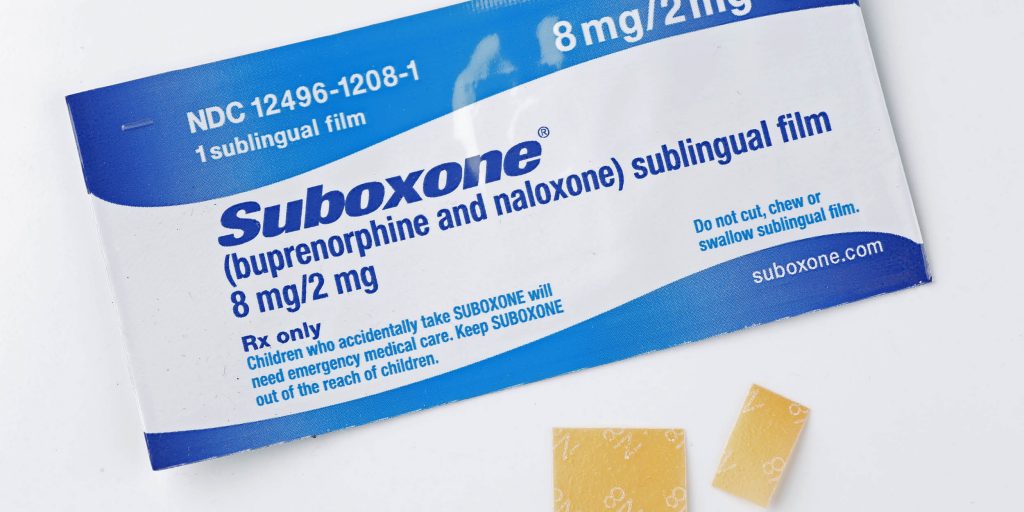
Suboxone is a prescription medication that is used to treat opioid addiction in individuals and is composed of buprenorphine and naloxone. Buprenorphine is a drug that blocks opioid receptors and reduces a person’s urges by acting as a partial opioid agonist, while naloxone reverses opioid overdoses. Both components work in conjunction to prevent withdrawal symptoms and thereby helping individuals on the road to recovery. The treatment plan using suboxone is supplemented with a behavioral counseling program to help individuals affected by opioid addiction by targeting the underlying reason for their opioid use and discovering new coping mechanisms [1].
Get X-Waivered to Prescribe Buprenorphine
Based on the Drug Addiction Treatment Act of 2000 (DATA 2000), the DEA-X waiver is a federal regulation that requires physicians to complete training followed by an administrative process in order to have the legal authority to prescribe buprenorphine [2]. Although the research that shows that buprenorphine is effective, only 5% of physicians nationwide are waivered, which limits access to life-saving medications and treatment for patients struggling with opioid addiction [3]. In a 2018 study, researchers demonstrated that 30% of rural Americans are without a buprenorphine provider, compared to the 2% of non-rural Americans [4]. Along with geographical disparities, other health disparities also exist. According to a study published by The Substance Abuse and Mental Health Services Administration (SAMHSA), among minority communities, African American and Latinx populations continue to have significantly lower access to substance-use treatment services [5]. In the wake of the COVID-19 pandemic, it has become increasingly urgent to find innovative ways to help healthcare providers obtain their X-waiver.
2021 Policy Changes
New policy changes under the Biden administration have allowed for expansion of buprenorphine treatment programs for patients with opioid use disorder [6]. As of April 2021, clinicians are now able to complete an exemption form to opt-out of the 8-hour training requirement to obtain the X waiver [2, 6]. Instead, clinicians can now submit a notice of intent form among other documents to SAMHSA that allows clinicians to treat up to 30 patients. When caring for more than 30 patients, X-waiver training is required [2]. Although this a promising start, emergency physicians should continue plans to obtain a DEA-X waiver in order to obtain more formal education, to adjust to any future policy changes, and to treat more than 30 patients. The Get Waivered program offers FREE training courses for healthcare providers to obtain a DEA-X waiver remotely.

Challenges for the Emergency Physician in Managing Opioid Use Disorder
In an emergency department, physicians are often met with several challenges when treating patients with opioid use disorder. These challenges include, but not limited to [7]:
- Absent Social Norms (Lack of norms around treating OUD may decrease motivation to obtain the waiver)
- Increased Hassle Bias (Irrelevant details make task of completing waiver process more difficult and challenging)
- Lack of Salience (Are there any success stories associated with treating patients with OUD with buprenorphine?)
Nudging Physician Behavior
Patients affected by opioid addiction can also be helped by making key changes to physician behaviors. As an example, behavioral researchers at the Nudge Unit at Massachusetts General Hospital recommend using principles of social norming and increasing salience in order to increase the number of physicians that can prescribe buprenorphine [8]. Below are examples that can have lasting effects on how clinicians perceive and approach the opioid epidemic moving forward.
- Implement a Get Waivered month at their clinical setting. This establishes a social norm and increases the possibility of more providers obtaining an X-waiver.
- Create presentations about the Get Waivered program with detailed instruction on the steps involved in obtaining an X-waiver to minimize hassle bias.
- Recruit patients with opioid use disorder to discuss their stories of recovery using buprenorphine during a training session to improve salience [7].
What’s next?
Please register for upcoming FREE training sessions at getwaivered.com/remote to obtain your DEA X-waiver.
| Region | Date | Time |
|---|---|---|
| Get Waivered Southeast | 10/21/2022 | 12 PM EST |
| Get Waivered Northwest | 11/18/2022 | 12 PM EST |
Note: The above dates/times are tentative and may be subject to change in the near future.
References
- “Suboxone.” Addiction Center, 20 Nov. 2020. Accessed May 26, 2022.
- “Buprenorphine.” SAMHSA. Accessed May 26, 2022.
- Berk, Justin. To Help Providers Fight The Opioid Epidemic, ‘X The X Waiver’: Health Affairs Blog. Health Affairs, 5 Mar. 2019. Accessed May 26, 2022.
- Andrilla C, Holly A, et al. Geographic Distribution of Providers With a DEA Waiver to Prescribe Buprenorphine for the Treatment of Opioid Use Disorder: A 5‐Year Update. Wiley Online Library, John Wiley & Sons, Ltd, 20 June 2018. Accessed May 26, 2022.
- Double Jeopardy: COVID-19 and Behavioral Health Disparities for Black and Latino Communities in the U.S. (Submitted by OBHE) (samhsa.gov). PDF file. Accessed May 26, 2022.
- Cornish A. Why new guidelines for opioid treatment are a ‘big deal’. NPR. Published April 27, 2021. Accessed May 26, 2022.
- Bruno M and GetWaivered. “Implementation Archives.” Get Waivered.. Accessed May 26, 2022.
- Nakagawa J. Nudging ER Doctors To Prevent Opioid Overdoses. Cognoscenti, WBUR, 30 Jan. 2018. Accessed May 26, 2022.