ACMT Visual Pearl: Seabather’s Eruption: The unexpected beach burn
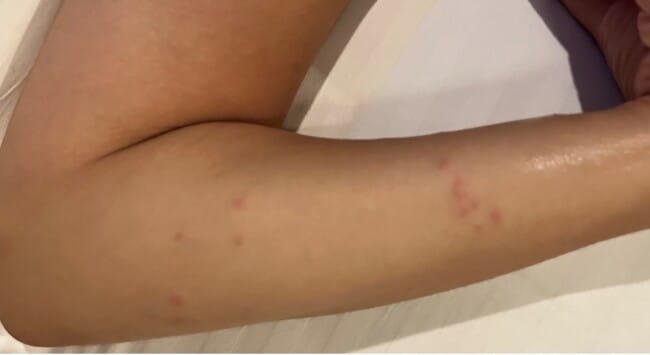
What organism causes seabather’s eruption?
- Jellyfish
- Nematodes
- Portuguese man-of-war
- Stonefish
[Author’s own image]



What organism causes seabather’s eruption?
[Author’s own image]

What is the predominant clinical effect of envenomation by this snake?
[Image courtesy of iStock. ID: 1311554579]
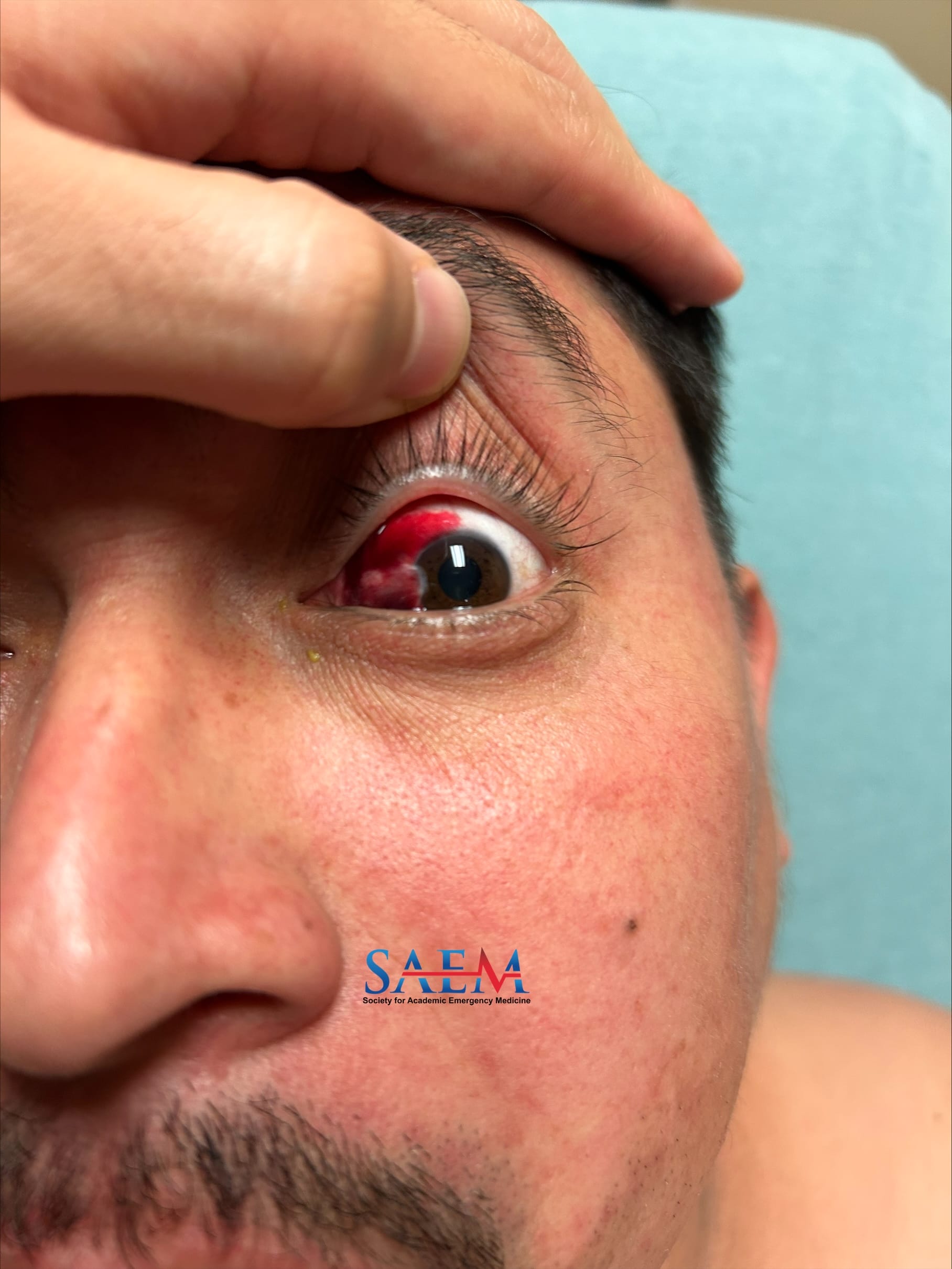
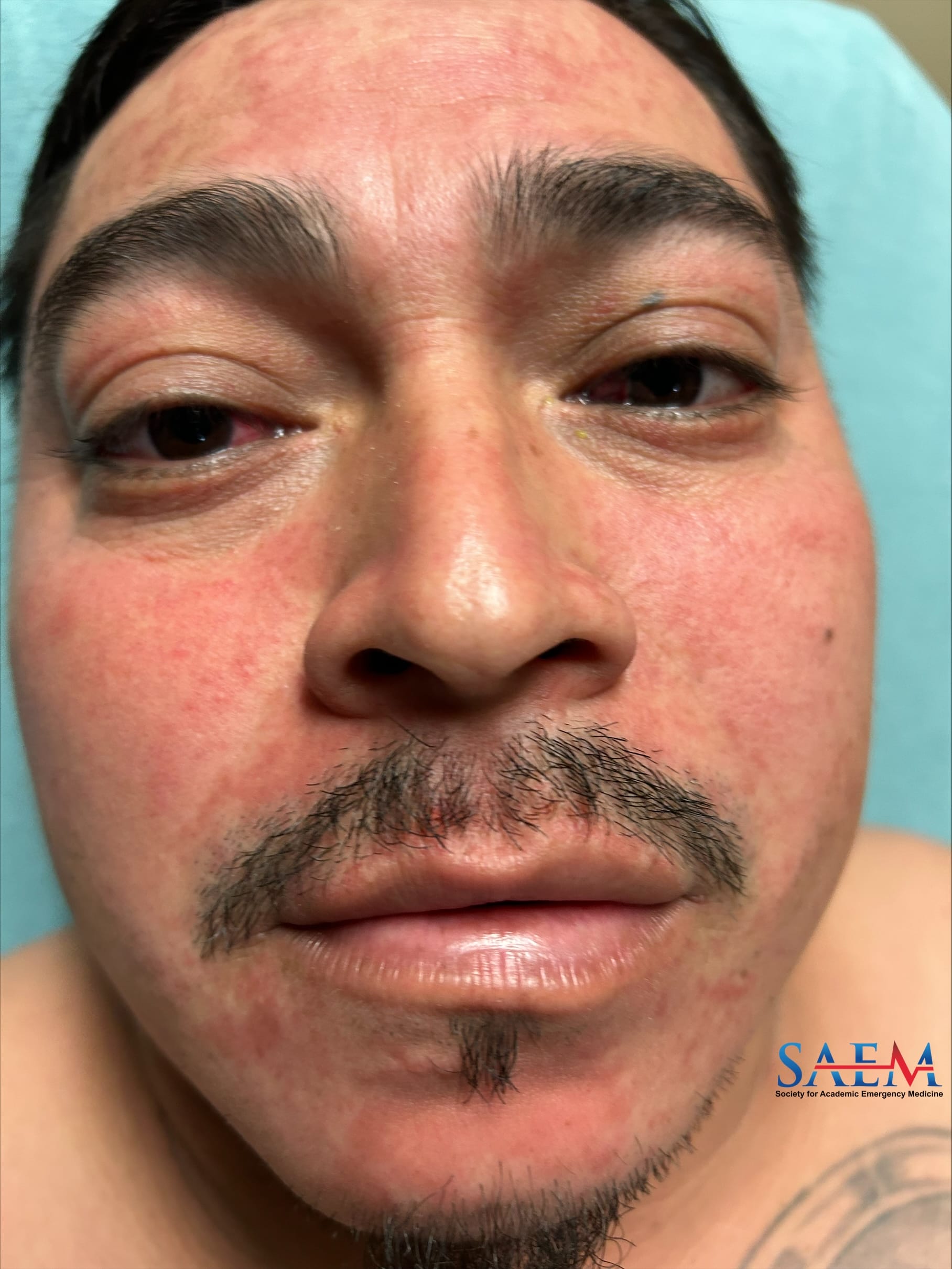
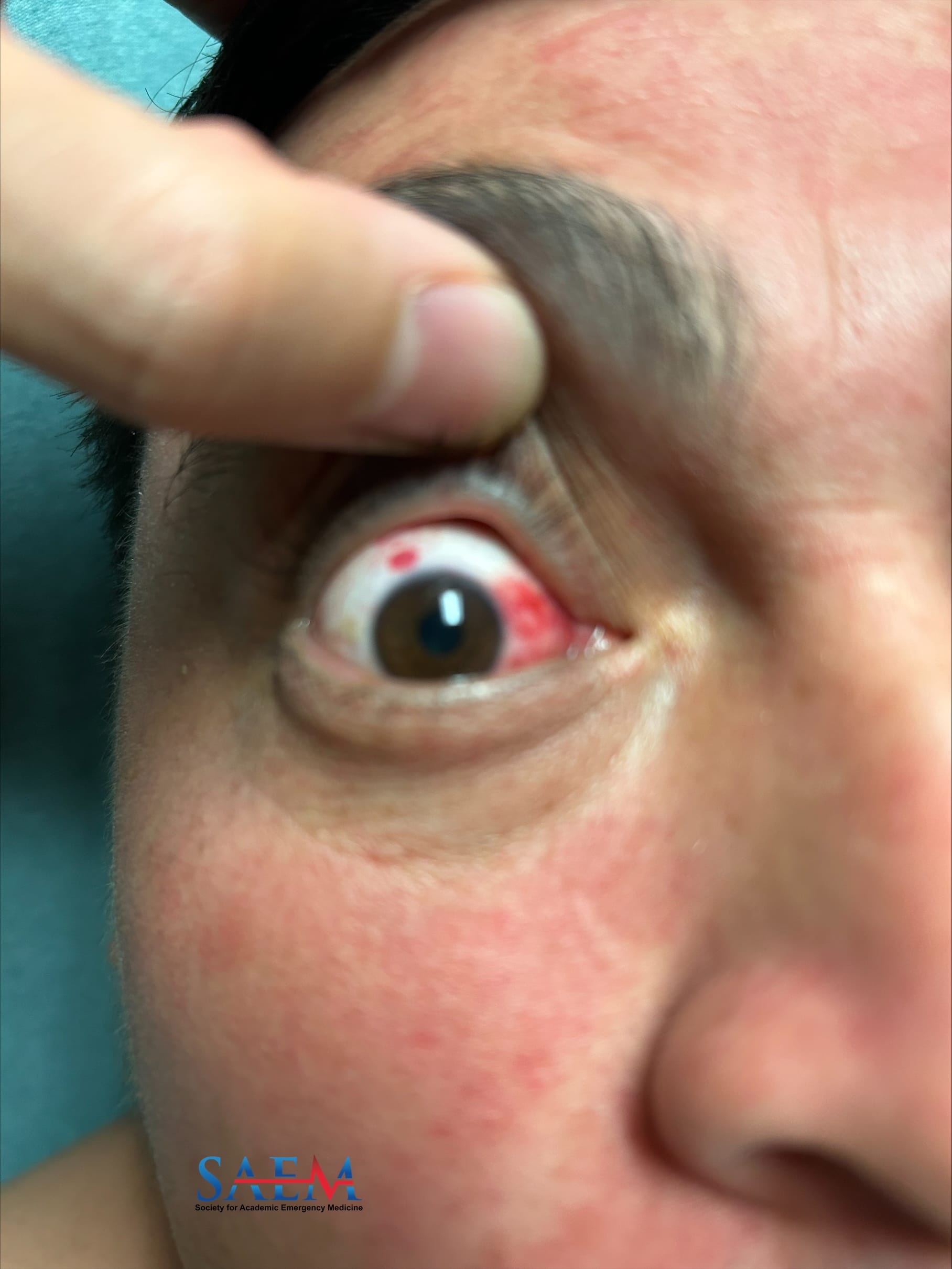
A 35-year-old male with no past medical history presented to the Emergency Department with eye redness. Two days prior, the patient reported he was cutting brush with a chainsaw when he felt something “spray” into his face. After inspecting the area, the patient found the remnants of a dead rattlesnake that unfortunately got in the way of his chainsaw. He subsequently developed bilateral eye redness without pain or vision changes, as well as a painless, pruritic facial rash. The patient denied any additional trauma, injury, snake bite, headache, fever, chills, cough, congestion, or other symptoms.
Vitals: T 36.8°F; BP 147/90 mmHg; HR 81; pulse ox 99% on room air; RR 20 Ophthalmic: OD (right eye) – Visual acuity: 20/20. Tonometry: 18 mmHg. Pupil equal and reactive to light. Conjunctiva: Nasal subconjunctival hemorrhage with small area of fluorescein uptake on the nasal conjunctiva. OS (left eye) – Visual acuity: 20/20. Tonometry: 20 mmHg. Pupil equal and reactive to light. Conjunctiva: Nasal subconjunctival hemorrhage with small area of fluorescein uptake on the nasal conjunctiva. Pterygium on the nasal side. HENT: Maculopapular, erythematous, blanching rash across the forehead and bilateral cheeks. The remainder of the body is spared. No other abnormal findings on physical examination. WBC: 8.97 x 10^9/L Platelets: 280 x 10^9/L Hemoglobin: 15.4 g/dL Fibrinogen: 203 mg/dL Diagnosis: Ophthalmic Envenomation. This is a case of ophthalmic envenomation causing subconjunctival hemorrhage. The patient also exhibits irritant contact dermatitis of the face related to topical cutaneous venom exposure. Ophthalmic envenomation is extremely rare in North America but occurs more commonly in areas of the world where “spitting” cobras are native species. Snake venom consists of a complex mixture of cytotoxins, including metalloproteinases and hyaluronidases. Topical ocular venom exposure can cause pain, photophobia, conjunctivitis, subconjunctival hemorrhage, keratitis, uveitis, corneal ulceration, angle-closure glaucoma, retinal hemorrhage, and rarely, blindness. The classic patient is a snake handler who lacks proper eye protection when encountering “spitting” cobras. However, inadvertent ocular exposure, such as accidental venom aerosolization after cutting through a rattlesnake’s head and venom glands with a chainsaw, can also cause ophthalmic envenomation. The treatment for suspected ophthalmic envenomation is copious ocular irrigation with neutral fluids to clear venom and reduce subsequent damage. Topical antibiotics and supportive care measures can then be applied to prevent infection and minimize irritation. Unlike venomous snake bites, there is usually no indication for antivenom unless the patient develops systemic symptoms. Ocular envenomation from aerosolized snake venom can cause pain, photophobia, conjunctivitis, subconjunctival hemorrhage, keratitis, uveitis, corneal ulceration, angle-closure glaucoma, retinal hemorrhage, and rarely, blindness. Dilution is the solution! Early ocular irrigation can decrease the morbidity of ophthalmic envenomation. There is no utility for antivenom for simple ocular envenomation. Save the CroFab for those with severe, systemic signs of envenomation. Eye protection is strongly recommended for those working with power tools, as well as snake handlers (especially when working with spitters!). Hoffman, R. S., Howland, M. A., Lewin, N. A., Nelson, L., Goldfrank, L. R., & Smith, S. W. (Eds.). (2019). Goldfrank’s toxicologic emergencies (Eleventh edition.). McGraw-Hill. Chu ER, Weinstein SA, White J, Warrell DA. Venom ophthalmia caused by venoms of spitting elapid and other snakes: Report of ten cases with review of epidemiology, clinical features, pathophysiology and management. Toxicon. 2010 Sep 1;56(3):259-72. doi: 10.1016/j.toxicon.2010.02.023. Epub 2010 Mar 21. PMID: 20331993. Chang KC, Huang YK, Chen YW, Chen MH, Tu AT, Chen YC. Venom Ophthalmia and Ocular Complications Caused by Snake Venom. Toxins (Basel). 2020 Sep 8;12(9):576. doi: 10.3390/toxins12090576. PMID: 32911777; PMCID: PMC7551025.
Take-Home Points
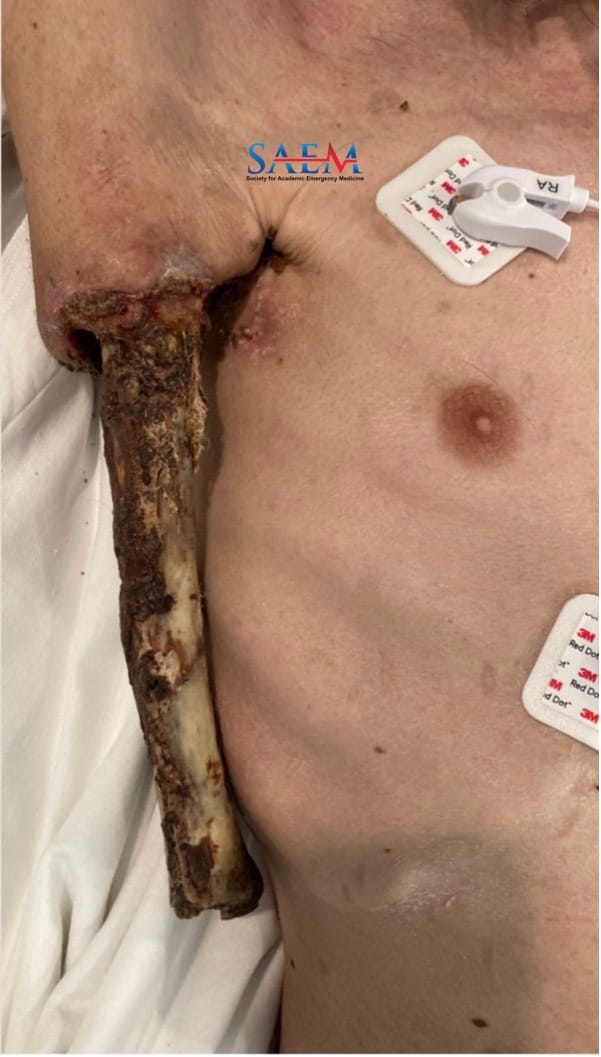
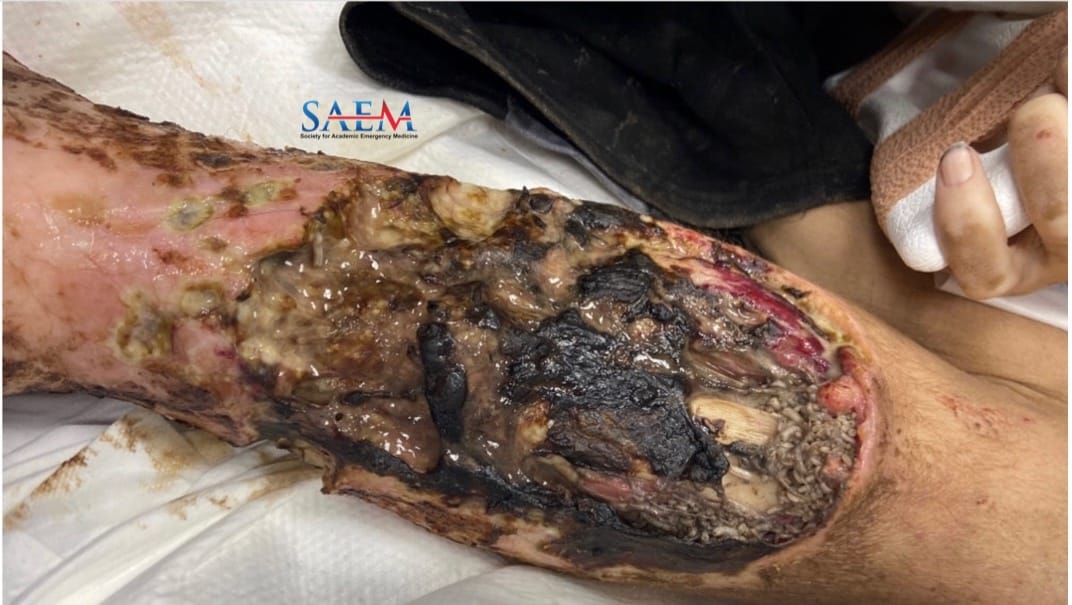
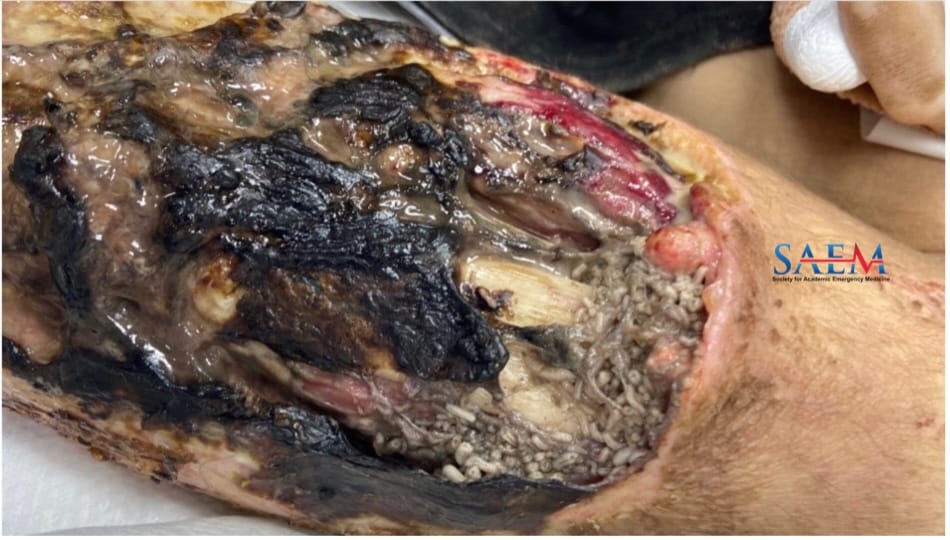
A 32 year-old male with PMH significant for opioid use disorder, a prior admission in 2021 for left-sided empyema s/p thoracotomy and decortication, gas bacteremia, and tricuspid endocarditis presented for a left leg wound. The patient reported a wound to his left leg that had become larger over the past 5 months. The pain worsened today, prompting him to come to the emergency department for evaluation. His mother, who was at his bedside, reported that the same type of wound occurred on his right arm “many months ago” and resulted in his arm “falling off”. He injects heroin into his leg and denies licking his needles. He reported intermittent subjective fevers for the few days prior to presentation. He last used heroin 2 hours prior to arrival.
General: Patient appears very pale, cachectic, chronically ill.
HEENT: Mucus membranes dry.
Extremity: Right arm with exposed bone, wet gangrene noted to stump. Left calf with large wound, exposed muscle, and tendon noted. Movement of numerous maggots also noted throughout wound site. Patient unable to move leg secondary to pain.
CBC: Hgb 2.74 (compared to baseline of 9.0); WBC count 17.39
BMP: Na 126; K+ 5.9; Cr 2.7 (up from 0.69)
ESR: >100
CRP: 15.94
Necrotizing fasciitis
No, xylazine is a non-narcotic drug and is not an opioid, thus, Narcan will not specifically reverse acute xylazine intoxication. However, fentanyl is the most common drug combined with xylazine. Thus, Narcan is reasonable to administer in the setting of a suspected overdose since the patient’s presentation can be due to combined use.
Xylazine, commonly known as “tranq”, is causing an emerging public health concern that is not only associated with severe respiratory and central nervous system depression but as illustrated by this case, is infamous for disfiguring and life-threatening skin ulcers. Xylazine is a non-narcotic drug mainly utilized for sedation, pain relief, and muscle relaxation in veterinary medicine. In more recent human use, it can be injected into muscles and veins, insufflated, ingested, or smoked. It has a large volume of distribution due to its lipophilicity and is rapidly concentrated in the CNS and kidney, with an elimination half-life of approximately 23-50 minutes.
In regard to treating resulting wounds, antibiotic coverage for secondary infection of xylazine wounds must cover MRSA and coverage for group A streptococci should also be considered.
For managing xylazine withdrawal symptoms, the Philadelphia Department of Public Health’s most recent recommendations include replacement therapy with alpha-2-adrenergic agonists such as clonidine, dexmedetomidine, tizanidine, or guanfacine paired with symptom management for pain using short-acting opioids, ketamine, gabapentin, ketorolac, acetaminophen, or NSAIDs.
When treating xylazine wounds, assess for potential secondary infection including necrotizing fasciitis.
Use medications such as clonidine (alpha 2 receptor agonists) to manage symptoms of withdrawal, along with symptom management agents like short-acting opioids, ketamine, and NSAIDs.
Papudesi, Bhavani Nagendra, et al. Xylazine Toxicity – Statpearls – NCBI Bookshelf, www.ncbi.nlm.nih.gov/books/NBK594271/. Accessed 14 Dec. 2023.

‘Dope’ is no longer heroin in an increasing number of our communities. The biggest change has been the gradual replacement of diacetylmorphine (heroin) by fentanyl and other synthetic opioids. Due in large part to the proliferation of anonymous chemical factories able to produce industrial volumes of inexpensive synthetic opioids without opium or other controlled precursors, fentanyl spilled into the United States, Canada, and Europe, heroin soon fell to market forces [1, 2]. Along the same time, a veterinary sedative, xylazine, became popular in Puerto Rico in individuals who used injection drugs [3]. An alpha-2 receptor agonist mechanistically similar to clonidine, dexmedetomidine, and tetrahydrozoline, xylazine made its way to the U.S. and settled in the metropolitan areas of the Northeast, especially my community, Philadelphia. The combination of the two now represents more than 98% of samples tested by the City of Philadelphia and has been given the moniker ‘tranq dope’ [4].
A patient arrives via EMS from the bus station complaining of fever, vomiting, and back pain. Their back has worsened significantly over the past 24 hours with radiation down the left leg. They report insufflating ‘a bundle’ of tranq dope per day. They report occasional cocaine and amphetamine use more than 72 hours ago, but no other substances. They report an allergy to ‘bupe,’ describing a prior episode of ‘precipitated withdrawal’ when given buprenorphine, despite already withdrawing.

The patient is likely experiencing opioid withdrawal [MDCalc Clinical Opioid Withdrawal Scale (COWS) score] and some degree of xylazine withdrawal. We recently published a retrospective observational study of a novel implementation medication order set for fentanyl & xylazine withdrawal, which provide insights into managing this case [16].
1. Xylazine withdrawal is controversial.
There are no prospectively developed or articulated xylazine withdrawal scales. Some experts wonder if what we deem xylazine withdrawal is actually due in large part to the large doses of synthetic opioids consumed, or due to coexisting stimulant withdrawal. We have certainly seen patients who have pain which is controlled and still have psychomotor agitation and sympathetic activation, leading some to require ICU admission for dexmedetomidine and/or ketamine infusion. In our study, we used COWS alone in the ED, which does utilize restlessness, anxiety, and tachycardia as part of the formula, as the sole evaluation tool for tranq dope withdrawal.
2. Medication opioid use disorder (MOUD) induction needs to be done carefully.
We advocate for an approach that uses low dose (or micro-induction) of buprenorphine. We use a product that contains solely buprenorphine at a range of low doses, called Belbuca. This allows us to administer a safe dose of buprenorphine. This low dose initiation strategy did not result in any cases of precipitated withdrawal, and still provided kappa opioid receptor antagonism, which is postulated to help modulate psychological components of dependence.
Alternatively, one can cut the 2 mg Suboxone (buprenorphine + naloxone combination) strips into 4 pieces after waiting for a longer washout period (72-96 hours of abstinence from non-medical opioids) before starting the induction. Or one can start methadone induction.
3. Short-acting, full mu agonist opioids are part of the solution.
In our study, we administer full mu agonists for tranq dope withdrawal, but others in our community also use a combination of short and long-acting full mu agonists.
In our study protocol, dosing started at oxycodone 10 mg PO (update: I now recommend 20 mg) or hydromorphone 2 mg IV for more severe cases. These doses do not come close to replacing their daily opioid use. Some patients require re-dosing in the ED. Most admitted patients end up on patient-controlled analgesia (PCA) pumps early in their course of admission when their use patterns are severe (≥ 1 bundle/day).
4. Acknowledge that short-acting opioids are insufficient on their own.
In our study order set, we intentionally incorporated the concepts of potentiation and synergism to stretch the effects of short-acting opioids (oxycodone PO or hydromorphone IV) while also treating the associated symptoms of opioid and xylazine withdrawal. We also incorporated:
Differentiation was based on severity, presence of an IV, and concern for prolongation of the QTc >450 msec (Table 1).
We did not use clonidine, despite its known alpha agonist utility in opioid withdrawal, due to the undifferentiated nature of our patients receiving the pathways, not wanting to give an antihypertensive agent to patients who sometimes are experiencing shock and other critical illness. Clonidine is often added back to their regimens inpatient as their vital signs tolerate.
When patients received treatment with one of our four our pathways, there was an association with a significant decrease in post-treatment COWS scores and the risk of patient-directed discharge (renamed from ‘against medical advice’ disposition to remove the stigmatizing connotation [17]) .
| Pathway Condition | Bupre-norphine | Opioid | Anti-psychotic | Alpha 2 Agonist | Ketamine | Diphen-hydramine | Lactated Ringers IV Fluids |
|---|---|---|---|---|---|---|---|
| 1. Mild (or no IV) AND normal QTc | 150 mcg buccal | Oxycodone 10 mg PO liquid | Olanzapine 5 mg PO ODT | Tizanidine 4 mg PO | – | – | – |
| 2. Mild (or no IV) AND prolonged/ unknown QTc | Guanfacine 2 mg PO | – | – | – | |||
| 3. Severe AND normal QTc | Hydromorphone 2 mg IV | Droperidol 2.5 mg IVP | Tizanidine 4 mg PO | 0.15 mg/kg up to 15 mg (rounded to nearest 5 mg) IVP over 2 minutes | 25 mg IVP | 1L bolus | |
| 4. Severe AND prolonged/ unknown QTc | Olanzapine 10 mg PO ODT | Guanfacine 2 mg PO |
5. Treatment protocol update: Adding gabapentin with concurrent stimulant use
In our study, more than 70% of our patients used multiple substances, including cocaine and amphetamines [16]. Because the withdrawal syndromes from stimulants can also produce anxiety and sympathetic activation, we have now added GABAergic medications (gabapentin 300 mg PO) to our pathways, given the commonality of coexisting stimulant use disorders.
6. When all else fails, choose harm reduction.
Even in the best-case scenarios, some patients may not be able or willing to stay for their full treatment. While we may not convince them, it does not mean we cannot make a positive contribution to their health. Consider the following discharge adjuncts to give the patient:
For the patient with back pain and severe tranq dope withdrawal symptoms, you order the following:
With an unknown QTc interval, you avoid droperidol IV. Your patient ultimately is diagnosed with a spinal epidural abscess requiring operative care. Post-operatively, the care team includes an addiction medicine consultant and certified recovery specialist (an individual with lived experience of addiction, who advocates for and connects others to recovery services; also called peer recovery specialists or recovery coaches [20, 21]).
The patient’s buprenorphine doses are titrated up as their pain stimulus decreases. They are also given screening exams for viral hepatitis, HIV and STIs, and are offered PrEP (pre-exposure prophylaxis for HIV). Despite myriad challenges due to out of state insurance, the patient is connected with a rehabilitation center that provides both physical and substance recovery services. A dedicated addiction and medical bridge clinic is available to the patient following their rehabilitation stay, connecting them to long term care, including treatment for their newly diagnosed hepatitis C. They reconnect with family and community members who were lost to them, building a sustainable support system.
Substance use disorders (SUD) are similar to other chronic relapsing medical conditions such as diabetes mellitus, congestive heart failure/cardiomyopathy, chronic obstructive pulmonary disorder, and cancer. While all share a combination of genetic, developmental, and cognitive risk factors, only SUD has been demonized societally as a behavioral failure, rather than just another consequence of cascading social and medical determinants of health.
Treating patients with SUD can be incredibly challenging, especially without a foundation in trauma-informed care principles [20]. Stigma occurs on both sides of the therapeutic relationship, and the poor coping strategies that lead individuals to use injection drugs can malign even tolerant clinicians in such highly charged situations. Strategies to mitigate these challenges include adding certified recovery specialists to care teams, standardizing/improving withdrawal management, and having a holistic addiction medicine team that can provide patient-centered, tailored MOUD and comorbidity guidance.
We are now seeing further contamination in our drug supply, such as other veterinary sedatives (such as medetomidine), novel benzodiazepines (such as bromazolam) and even an industrial solvent (called BTMPS or Tinuvin 770). Psychosis is now being witnessed with naloxone reversal in some cases, and the impact of these novel contaminants on withdrawal syndromes and wounds remain unknown.
If this is reaching your community and you have additional questions, feel free to contact me. I am happy to help how I can.
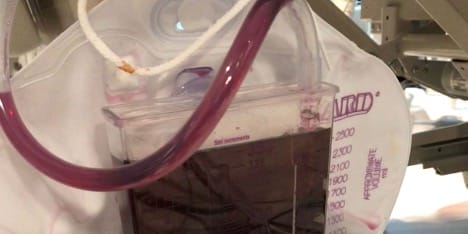
What is most likely responsible for this urinary discoloration seen in a critically ill patient in the ICU?
[Authors own image]
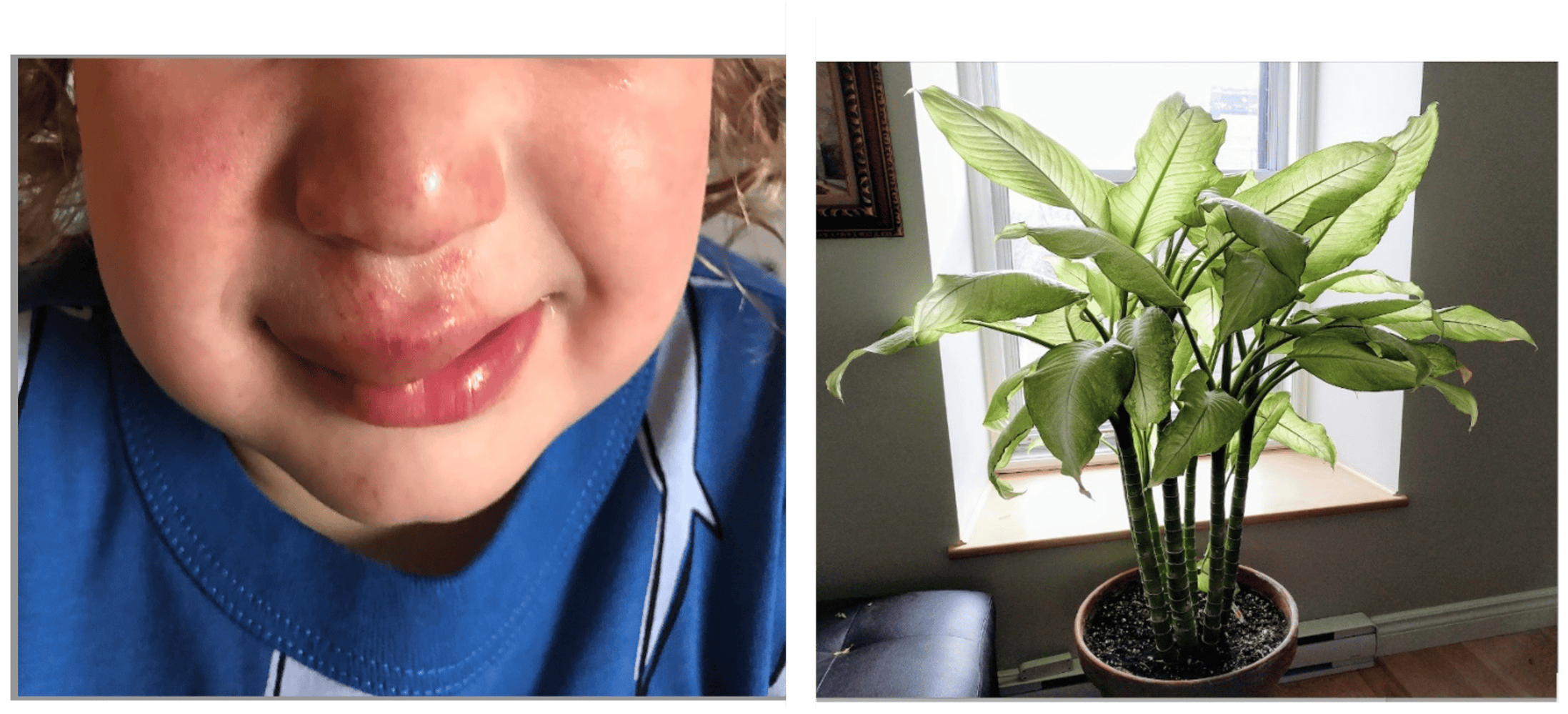
What toxic substance found in common houseplants (such as this one pictured) causes intense irritation of skin and mucous membranes?
[Left image from Dr. Bryant Allen, MD, and right image from AJ West -Wikimedia Commons]